
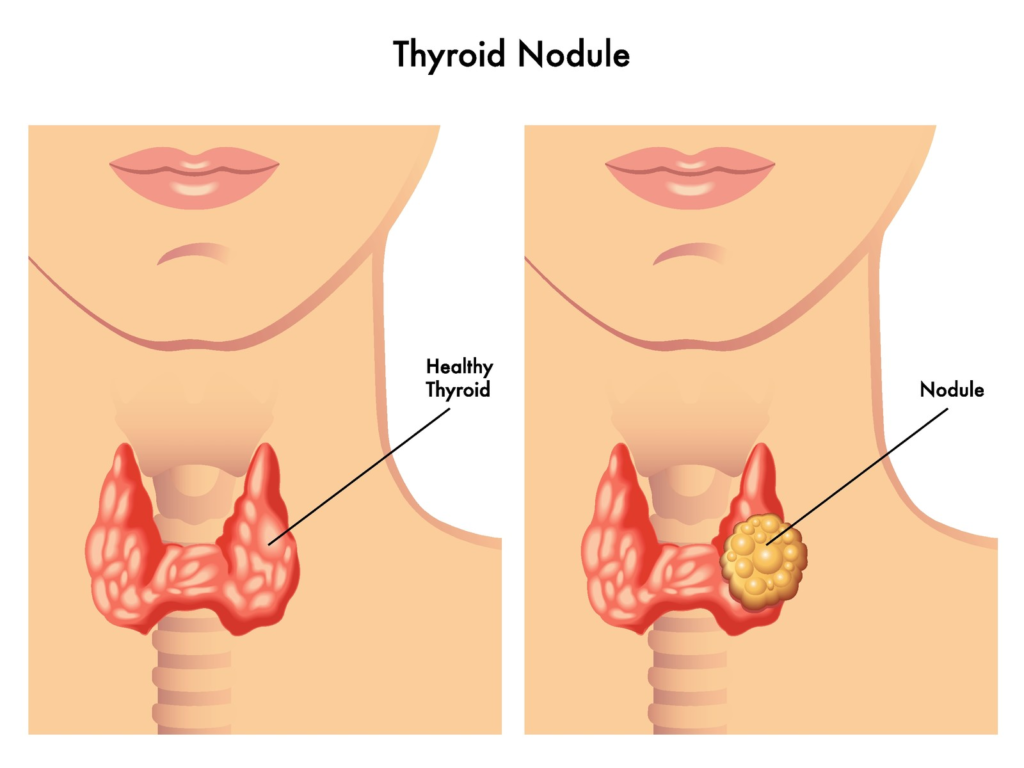
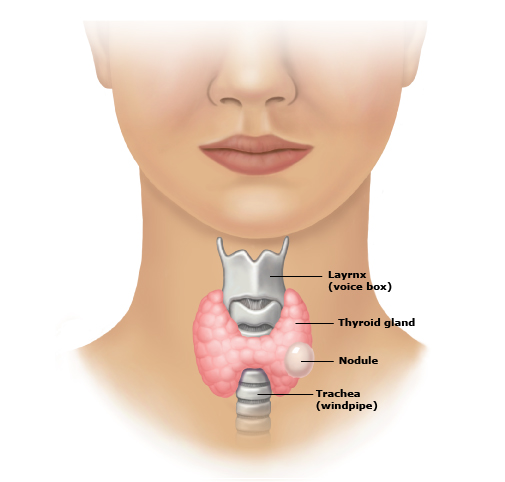
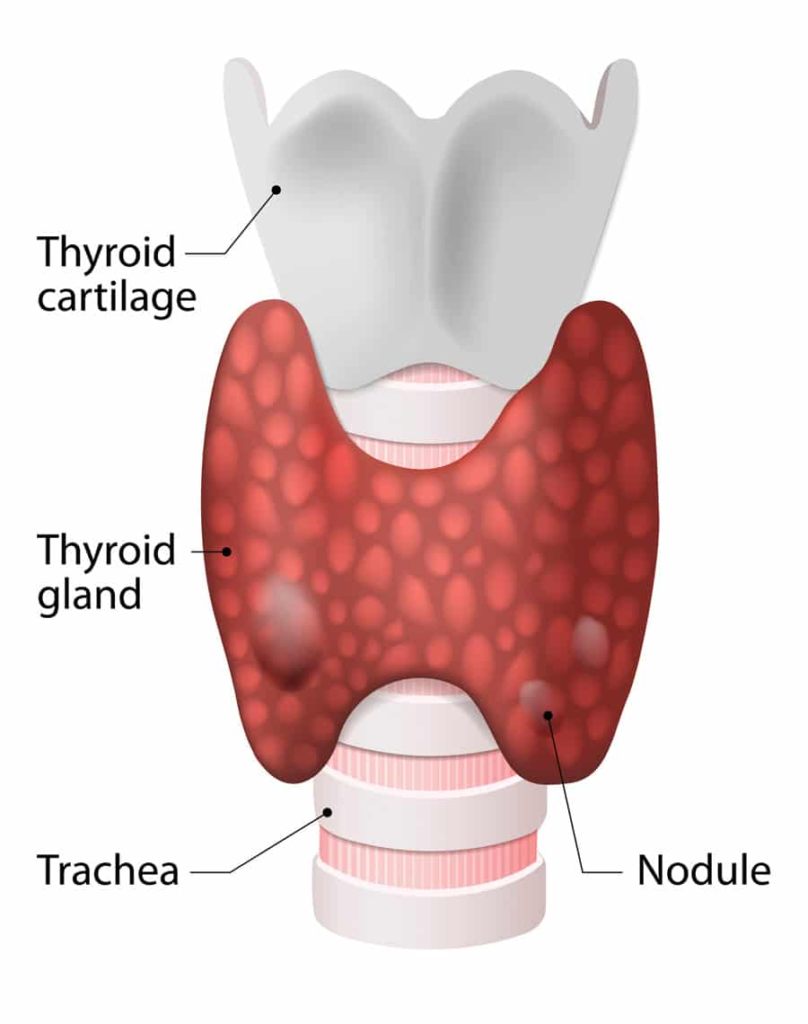
A thyroid nodule is a lump or swelling in the thyroid gland (a butterfly-shaped gland in the front of your neck). Many people have thyroid nodules and never feel any problem. But sometimes a nodule becomes large, causes pressure symptoms, affects confidence due to visible neck swelling, or creates hormone imbalance. In such cases, treatment becomes important.
In the past, surgery was the most common option. Today, many patients can avoid surgery with minimally invasive treatments like Thyroid Embolization and Radiofrequency Ablation (RFA). These options are often done without cutting the neck, usually with faster recovery and fewer scars.
In this blog, we will explain in simple words:
- What thyroid nodules are
- When treatment is needed
- How Thyroid Embolization works
- How RFA works
- Which one may be better for you
- Why expert guidance matters (including Dr. ALOK KUMAR UDIYA, Care CHL Hospital Indore)
Understanding Thyroid Nodule
A thyroid nodule is a growth inside the thyroid gland. Nodules can be:
- Solid (tissue-like)
- Cystic (fluid-filled)
- Mixed (solid + fluid)
Most nodules are benign (non-cancerous). Some nodules grow slowly and cause no symptoms. But some grow faster and create problems.
Read More – Embolization for Varicocele: Step-by-Step Guide for Patients
Common symptoms of a thyroid nodule
You may need treatment if you have:
- A visible swelling in the neck
- Pressure in the throat or choking feeling
- Trouble swallowing (dysphagia)
- Voice change or hoarseness
- Breathlessness, especially when lying down
- Anxiety due to cosmetic appearance
- Hyperthyroid symptoms (palpitations, sweating, weight loss) if the nodule is “hot” (overactive)
Also Read: Varicocele Embolization vs Surgery: Best Treatment Option Explained
When do thyroid nodules need treatment?
Not every nodule needs treatment. Doctors usually recommend treatment when:
- The nodule is large and causing pressure symptoms
- It is growing on follow-up ultrasound
- Cosmetic concern is high (visible lump)
- The nodule causes hyperthyroidism (toxic nodule)
- You want a non-surgical option and the nodule is suitable
- You are not fit for surgery or want to avoid general anesthesia
Before choosing treatment, the doctor usually advises:
- Ultrasound
- Thyroid function tests (TSH, T3, T4)
- FNAC/biopsy in many cases (to confirm it is benign)
- Sometimes special scans for overactive nodules
Also Read: Brain AVM Embolisation in Indore – Advanced Treatment at CARE CHL Hospital
Treatment Options for Thyroid Nodule: Surgery vs Minimally Invasive
Surgery (Traditional option)
Surgery may be needed if:
- Cancer is suspected/confirmed
- Large multinodular goiter causing severe pressure
- Nodules not suitable for ablation/embolization
But surgery can have:
- Neck scar
- General anesthesia
- Longer recovery
- Risk (though uncommon) of voice nerve injury
- Risk of low calcium if parathyroid glands affected
- Some patients need lifelong thyroid hormone tablets
That’s why many patients today ask about Thyroid Embolization or RFA.
Option 1: Thyroid Embolization
What is Thyroid Embolization?
Thyroid Embolization is a minimally invasive procedure where the doctor reduces the blood supply to the thyroid nodule (or enlarged thyroid area). When blood supply is reduced, the nodule gradually shrinks over weeks to months.
This treatment is performed by an Interventional Radiologist using imaging guidance (like ultrasound/angiography).
Simple idea:
Less blood flow → less nutrition → nodule shrinks naturally.
How Thyroid Embolization is done (step-by-step)
While exact steps can vary by patient, the process generally includes:
- Evaluation & planning
Ultrasound and blood tests are checked. Sometimes CT/MRI or thyroid scan is also advised. - Local anesthesia
The procedure is usually done under local anesthesia (no major surgery cut on neck). - Tiny access (usually through a blood vessel)
A small tube (catheter) is guided into the artery supplying the thyroid. - Embolic material is released
Special medical particles/agents are used to block selected blood vessels feeding the nodule. - Completion check
Blood flow reduction is confirmed, and the catheter is removed. - Recovery
Many patients can go home the same day or after short observation (depending on doctor’s advice).
Who may benefit most from Thyroid Embolization?
Thyroid Embolization can be considered when:
- Nodules are benign but large
- There is goiter or vascular nodules
- Some patients have toxic nodules (overactive areas)
- You want to avoid surgery and scar
- You are a high-risk surgical candidate
Benefits of Thyroid Embolization
- Minimally invasive (no neck cutting)
- May avoid surgery in suitable benign cases
- Usually faster recovery than surgery
- Can reduce symptoms and cosmetic swelling over time
- Helpful for selected cases of goiter/toxic nodules
Possible side effects / risks
Every medical procedure has some risks. The doctor will explain what applies to you. Possible issues may include:
- Neck discomfort/pain for a few days
- Mild fever or inflammation (temporary)
- Temporary change in thyroid hormone levels
- Rarely, non-target embolization (blocking a nearby vessel)
- Very rarely, voice changes or complications (depends on anatomy and technique)
Choosing an experienced doctor and proper case selection reduces risk.
Option 2: Radiofrequency Ablation (RFA) for Thyroid Nodule
What is RFA?
RFA (Radiofrequency Ablation) is a procedure where heat energy is used to destroy thyroid nodule tissue from inside. A thin needle-like probe is inserted into the nodule under ultrasound guidance. The probe generates controlled heat, and the nodule tissue gradually reduces in size.
Simple idea:
Controlled heat → nodule cells shrink/die → body absorbs it → size reduces.
How RFA is done (step-by-step)
- Ultrasound assessment
The nodule’s size, type (solid/cystic), and location are checked. - Local anesthesia
Neck area is numbed. - Probe insertion
A thin RFA probe is inserted into the nodule under ultrasound guidance. - Ablation
Heat energy is delivered in a controlled way. The doctor moves the probe carefully to cover the whole nodule (moving-shot technique). - Observation & discharge
Many patients can go home after a short observation period.
Who is RFA best for?
RFA is often best for:
- Benign solid thyroid nodules
- Nodules causing cosmetic issues or pressure symptoms
- Patients who want a non-surgical option
- Patients who want quick recovery and no scar
RFA may be less suitable if:
- Cancer is suspected
- Nodule is too close to critical structures without safe margin
- Certain very large multinodular goiters (depends on assessment)
Benefits of RFA
- No surgical scar
- Usually day-care procedure
- Fast recovery (many people return to routine quickly)
- Effective size reduction over months
- Preserves most normal thyroid tissue (lower chance of needing lifelong thyroid medicines compared to surgery in many cases)
Possible side effects / risks
- Temporary pain or swelling
- Mild bruising
- Temporary voice change (rare, usually temporary)
- Skin burn (very rare with proper technique)
- Need for repeat session in some large nodules
Thyroid Embolization vs RFA: Which is Better?
Both are excellent non-surgical treatments, but the best choice depends on your nodule type, size, symptoms, hormone status, and anatomy.
Here’s a simple comparison:
1) How they work
- Thyroid Embolization: Reduces blood supply → nodule shrinks gradually
- RFA: Uses heat energy → destroys nodule tissue directly
2) Best suited for
- Embolization: Selected vascular nodules, goiter components, some toxic nodules
- RFA: Commonly for benign solid nodules causing symptoms/cosmetic concern
3) Recovery
- Both are usually faster than surgery
- RFA often feels like a “quick procedure” with fast return to routine
- Embolization may need short observation depending on patient factors
4) Result timeline
- Both show gradual shrinkage over weeks to months
- Many patients notice improvement in symptoms and appearance over time
5) Scar and anesthesia
- Both are minimally invasive
- Usually no big neck scar
- Often done with local anesthesia
Bottom line:
- If your nodule is a typical benign solid nodule, RFA is often a strong choice.
- If your case involves special vascular patterns, goiter blood supply issues, or selected hormone-related nodules, Thyroid Embolization may be considered.
Your doctor will decide after evaluation.
Why Expert Evaluation Matters (Very Important)
Choosing between Thyroid Embolization and RFA is not a “one-size-fits-all” decision. A proper workup is needed, including ultrasound features, biopsy results (when required), thyroid hormone profile, and symptom assessment.
If you are in Indore or nearby, consult an experienced specialist like Dr. ALOK KUMAR UDIYA at Care CHL Hospital Indore for proper diagnosis and the right treatment plan.
A specialist will help you understand:
- Is your thyroid nodule benign?
- Do you need treatment or just monitoring?
- Which procedure is safer for your nodule location?
- Expected size reduction and symptom relief
- Follow-up schedule and long-term outcomes
What to Expect After Treatment
After Thyroid Embolization
- Mild discomfort for a few days
- Follow-up ultrasound at intervals
- Nodule size reduces gradually over months
- Thyroid tests may be repeated
After RFA
- Mild soreness in the neck is common
- Avoid heavy exercise for a short period (as advised)
- Follow-up ultrasound to measure shrinkage
- Many people return to routine quickly
Can these treatments avoid surgery?
In many benign cases, yes—they can reduce size and symptoms so that surgery becomes unnecessary. But if cancer is suspected, or nodules are not suitable for these procedures, surgery may still be recommended.
FAQs
1) Is Thyroid Embolization safe for thyroid nodules?
For properly selected benign cases and when done by an experienced specialist, Thyroid Embolization can be a safe minimally invasive option. Your doctor will evaluate suitability based on imaging and tests.
2) Is RFA painful?
Most patients feel only mild discomfort because local anesthesia is used. Some soreness after the procedure is normal and usually improves quickly.
3) Will I need thyroid medicine after Embolization or RFA?
Many patients do not need lifelong thyroid medicine because these procedures aim to preserve normal thyroid tissue. However, it depends on your thyroid function and how much thyroid tissue is affected.
4) How long does it take to see results?
Nodule shrinkage is gradual. Many patients see improvement over weeks to a few months, and further reduction can continue with time.
5) Which is better: Thyroid Embolization or RFA?
Both are effective. The better option depends on your nodule type, size, blood supply, symptoms, and hormone status. A consultation with Dr. ALOK KUMAR UDIYA at Care CHL Hospital Indore can help decide the best plan.
Conclusion: Best Treatment Options for Thyroid Nodule in Indore
If you have a Thyroid Nodule and want a non-surgical option, Thyroid Embolization and RFA are two advanced treatments that can reduce nodule size, improve symptoms, and avoid surgery in many benign cases.
The key is correct diagnosis and choosing the right procedure based on your condition. For patients looking for advanced minimally invasive thyroid nodule treatment, consult Dr. ALOK KUMAR UDIYA at Care CHL Hospital Indore for expert guidance.