
Back pain is almost a universal human experience. Most of us have felt it after a long drive, a bad night’s sleep, lifting something the wrong way, or simply sitting too long at a desk. It’s so common that it’s easy to reach for a painkiller, apply some heat, and assume it will pass — because, in the vast majority of cases, it does.
So let’s start with real reassurance: the overwhelming majority of back pain has nothing to do with cancer. Studies of patients presenting with low back pain in general clinics find that cancer is the underlying cause in roughly 0.1% to 1.6% of cases. Ordinary strain, disc problems, arthritis, and poor posture explain the vast majority of back pain.
But that small percentage matters — because when back pain is caused by a spine tumor, catching it early can be the difference between straightforward treatment and a serious neurological emergency. The challenge is that early spine tumor pain can feel deceptively similar to routine back pain, at least at first.
This guide will help you understand what a spine tumor actually is, the specific warning signs that separate it from ordinary back pain, how it’s diagnosed, and the modern, minimally invasive treatments now available right here in Indore. You’ll also meet Dr. Alok Kumar Udiya, an Interventional Radiologist at CARE CHL Hospital, near LIG Square, Indore, who treats spinal tumors and their complications using advanced, image-guided techniques.
What Is a Spine Tumor?
A spine tumor is an abnormal growth of cells in or around the spinal column — the vertebrae (bones), spinal cord, nerve roots, or surrounding tissues. Tumors can be benign (non-cancerous, not spreading) or malignant (cancerous), and they fall into two broad categories based on where they originate.
Primary Spine Tumors
These originate directly in the spine itself. They are relatively rare and include conditions such as vertebral hemangiomas (usually benign), osteoid osteomas, giant cell tumors, chordomas, and primary bone cancers. Multiple myeloma, a cancer of plasma cells, also frequently involves the spine.
Metastatic (Secondary) Spine Tumors
These are cancers that started elsewhere in the body and spread (“metastasized”) to the spine through the bloodstream. This is, by far, the more common scenario: metastatic cancer accounts for an estimated 70% of all spinal tumors. In other words, if a spine tumor is found, it is more likely to have travelled from another organ than to have started in the spine itself.
The cancers most likely to spread to the spine, in descending order of frequency, are:
- Breast cancer (~21%)
- Lung cancer (~19%)
- Prostate cancer (~7.5%)
- Kidney (renal) cancer (~5%)
- Gastrointestinal cancers (~4.5%)
- Thyroid cancer (~2.5%)
Anywhere from 5% to 30% of people living with systemic cancer will develop spinal metastasis at some point during their illness, making it one of the more common complications oncologists and interventional radiologists manage together.
Also Read: Sudden Back Pain in Older Adults? It Could Be a Spine Fracture

Where in the Spine Do Tumors Usually Occur?
Spinal metastases most commonly affect the thoracic spine (mid-back), accounting for roughly 70% of cases, followed by the lumbar spine (lower back) at around 20%, and the cervical spine (neck) at around 10%.
How Is Spine Tumor Back Pain Different From Regular Back Pain?
This is the single most useful thing to understand from this entire guide. Doctors look for specific “red flag” features that separate tumor-related back pain from the ordinary, mechanical kind.
Features That Point Toward a Possible Spine Tumor
- Pain that is worse at night or while lying down — ordinary mechanical back pain usually improves with rest; tumor-related pain often does not, and may even worsen when lying flat
- Pain that doesn’t improve after about 6 weeks of rest, physiotherapy, or standard pain medication
- Pain unrelated to movement or position — it doesn’t clearly get better or worse with specific activities, unlike a muscle strain or disc issue
- Progressive, unrelenting pain that steadily worsens rather than fluctuating
- Radiating pain, numbness, or tingling into the arms or legs
- Progressive muscle weakness, difficulty walking, or problems with balance and coordination
- Unexplained weight loss and fatigue
- A personal history of cancer — even cancer treated and considered “cured” years earlier
- Age over 50, which raises baseline risk
Features More Typical of Ordinary Back Pain
- Pain that started after a specific activity, lift, or movement
- Pain that improves with rest and worsens with specific activities
- Pain that responds to standard treatment within a few weeks
- No associated weight loss, fever, or neurological symptoms
If your back pain fits the first list more than the second — especially if you notice more than one red flag together — it’s time to see a specialist for imaging, rather than waiting it out.
When to Seek Immediate Care: Cord and Nerve Compression Warning Signs
A spine tumor can occasionally cause a genuine emergency if it grows large enough to compress the spinal cord or the bundle of nerves at its base (the cauda equina). Seek emergency care immediately if back pain is accompanied by:
- Sudden loss of bladder or bowel control
- Numbness in the groin, inner thighs, or “saddle” area
- Rapidly progressive weakness or numbness in one or both legs
- Sudden difficulty walking or standing
These symptoms mean nerve function is being actively threatened, and rapid treatment gives the best chance of preventing permanent damage.
How Is a Spine Tumor Diagnosed?
If your symptoms and history raise suspicion, your doctor will typically recommend:
- MRI of the spine — the gold-standard test, providing detailed images of the vertebrae, spinal cord, nerves, and any tumor tissue, without radiation
- CT scan — useful for assessing bone destruction and planning procedures like biopsy or cement augmentation
- Bone scan or PET-CT — helpful for detecting multiple sites of metastatic spread throughout the skeleton
- Image-guided biopsy — a needle biopsy performed under CT or ultrasound guidance to sample tissue and confirm the exact type of tumor, which is essential for planning the right treatment
At CARE CHL Hospital, Indore, this full range of imaging and image-guided biopsy is available, allowing an accurate diagnosis to be reached quickly.
Modern, Minimally Invasive Treatment Options for Spine Tumors
Treating a spine tumor is almost always a multidisciplinary effort — involving oncologists, radiation oncologists, spine surgeons, and interventional radiologists working together. Interventional radiology, in particular, has expanded the toolkit considerably over the past two decades, often providing fast pain relief and stabilization without open surgery.
Vertebroplasty and Kyphoplasty
When a tumor weakens a vertebra to the point of collapse or fracture, bone cement (vertebroplasty) or a balloon-assisted cement procedure (kyphoplasty) can be injected directly into the vertebra through a needle. This stabilizes the weakened bone and provides significant, often rapid, pain relief — a technique offered as part of MSK and Orthopedic Interventions.
Radiofrequency Ablation (RFA)
RFA uses controlled heat delivered through a needle electrode to destroy tumor tissue within the vertebra, shrinking the tumor and reducing pain. It is frequently combined with vertebroplasty or kyphoplasty in the same session — the ablation treats the tumor, while the cement stabilizes the bone.
Tumor Embolization
For vascular spinal tumors (some metastases, particularly from kidney and thyroid cancers, carry a rich blood supply), embolization can block the tumor’s blood supply. This is used either before open surgery, to reduce bleeding risk, or on its own to relieve pain and slow tumor growth.
Also Read: Sharp Face Pain That Comes and Goes? It Could Be Trigeminal Neuralgia

Image-Guided Biopsy
Beyond treatment, precise CT- or ultrasound-guided biopsy of a spinal lesion is often the first interventional radiology step, confirming the diagnosis so the wider medical team can plan the most effective combination of surgery, radiation, and systemic therapy.
When Surgery or Radiation Is Still Needed
Larger tumors causing significant spinal instability or cord compression, and certain tumor types, still require open spinal surgery or radiation therapy — sometimes combined with the minimally invasive techniques above. The right combination depends on tumor type, location, extent of spread, and overall health, which is why an experienced, multidisciplinary team matters so much.
Meet Dr. Alok Kumar Udiya — Interventional Radiologist, Indore
If you or a loved one has been found to have a spine tumor, or has back pain with red-flag features that need urgent evaluation, Dr. Alok Kumar Udiya offers the image-guided expertise this condition requires.
Education and Training
- MBBS — M.G.M. Medical College, Indore
- MD (Radiodiagnosis) — Lady Hardinge Medical College, Delhi University
- PDCC (Neuro-Intervention) — Sanjay Gandhi Post Graduate Institute of Medical Sciences (SGPGIMS), Lucknow
- PDCC (Hepatobiliary Interventional Radiology) — Institute of Liver and Biliary Sciences (ILBS), New Delhi
- FINR — Fellowship in Interventional Neuroradiology, University of Zurich, Switzerland
- EBIR — European Board of Interventional Radiology certified
He is a life member of the Indian Radiological and Imaging Association (IRIA) and the Indian Society of Vascular and Interventional Radiology (ISVIR), with a strong record of peer-reviewed publications and 8+ years of dedicated experience across neuro, vascular, musculoskeletal, and oncology intervention.
Relevant Areas of Expertise
- Image-guided (CT/USG) biopsy of spinal and other lesions
- Tumor embolization, including pre-operative embolization of vascular tumors
- Radiofrequency ablation for liver, breast, lung, and other lesions
- Vertebroplasty and kyphoplasty for painful vertebral fractures
- Close coordination with oncology, spine surgery, and radiation therapy teams for complex cases
Learn more on the About Us page or explore MSK and Ortho Interventions and Oncology Interventions.
Why Choose Intervention Radiology Indore at CARE CHL Hospital (LIG Square)?
For a condition that benefits from a coordinated, multi-specialty approach, being treated at a well-equipped hospital matters.
Intervention Radiology Indore operates from CARE CHL Hospital, a NABH-accredited, 225-bed multi-specialty hospital serving central India since 2001, offering:
- Advanced MRI, CT, and image-guidance technology for precise diagnosis and treatment planning
- On-site oncology, orthopedic, and neurosurgery departments for true multidisciplinary care
- A dedicated interventional suite for biopsy, ablation, cement augmentation, and embolization procedures
- Consultations available in Hindi and English
Clinic Locations, Timings & How to Book
CARE CHL Hospital (near LIG Square) 📍 AB Road, near L.I.G. Square, RSS Nagar, Indore, Madhya Pradesh – 452008 🕙 OPD consultation hours: 10:00 AM – 5:00 PM
Evening Clinic — Panama Tower 📍 403, Panama Tower, Geeta Bhawan Square, near Crown Palace, South Tukoganj, Indore, Madhya Pradesh – 452001 🕕 Consultation hours: 6:00 PM – 8:00 PM
📞 Call/WhatsApp: +91 99993 78980 ✉️ Email: dralokudiya@gmail.com 🌐 Website: interventionradiologyindore.com
The LIG Square location on AB Road is a well-known Indore landmark, easily accessible from across the city as well as Dewas, Ujjain, and the wider Malwa region.
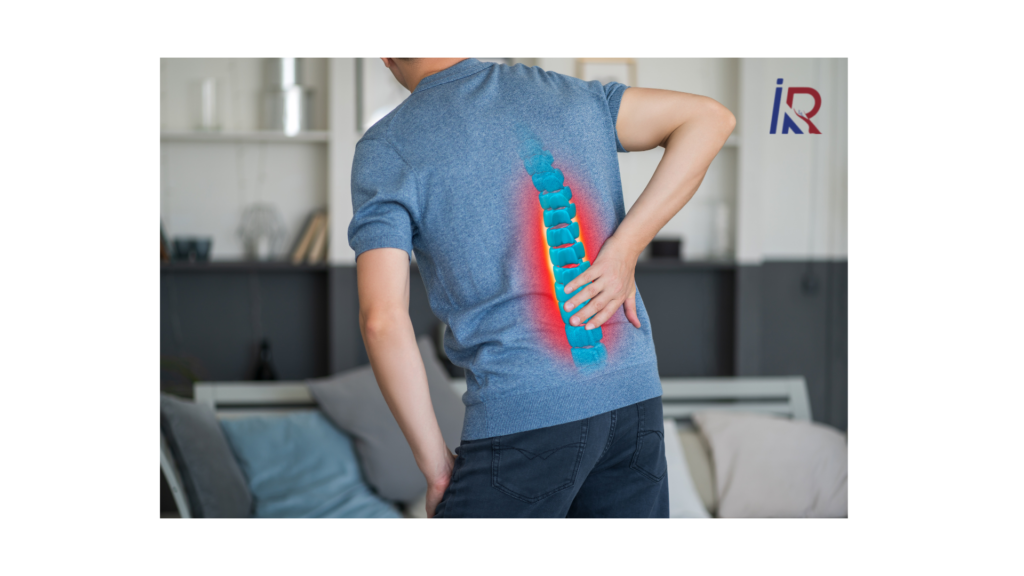
Myths and Facts About Back Pain and Spine Tumors
Myth: Persistent back pain almost always means cancer. Fact: Cancer is found in only a small fraction — roughly 0.1% to 1.6% — of people evaluated for low back pain. Most persistent back pain has a non-cancerous cause.
Myth: If it were a spine tumor, rest would make it feel better, like ordinary back pain. Fact: Tumor-related back pain classically does not improve with rest and often worsens at night — the opposite pattern of typical mechanical back pain.
Myth: Spine tumors are almost always cancers that started in the spine. Fact: About 70% of spine tumors are metastatic — cancer that has spread to the spine from elsewhere, most often the breast, lung, or prostate.
Myth: A spine tumor always means major open surgery. Fact: Many spine tumors are managed with minimally invasive techniques like vertebroplasty, kyphoplasty, radiofrequency ablation, and embolization — often alongside, not instead of, other treatments.
Myth: Young, otherwise healthy people don’t need to worry about spine tumors. Fact: While risk rises with age and a cancer history, red-flag symptoms deserve evaluation at any age, particularly progressive neurological symptoms.
Also Read: Best Thyroid Swelling Treatment in Indore: Safe, Painless & Non-Surgical Care
Frequently Asked Questions
Is back pain that won’t go away always a sign of a spine tumor?
No. Most persistent back pain is caused by common issues like muscle strain, disc degeneration, or arthritis. However, back pain lasting more than 6 weeks, worsening at night, or accompanied by weight loss or neurological symptoms should be evaluated to rule out a spine tumor.
What does spine tumor back pain feel like?
It’s often described as a deep, constant ache that doesn’t fully ease with rest and may worsen at night or when lying flat — unlike typical mechanical back pain, which usually improves with rest and worsens with specific movements.
Are most spine tumors cancerous?
Spine tumors can be benign or malignant. However, when a spine tumor is found, it is more often metastatic (spread from another cancer, such as breast, lung, or prostate) than a tumor that originated in the spine itself.
Can spine tumors be treated without major surgery?
Often, yes. Techniques such as vertebroplasty, kyphoplasty, radiofrequency ablation, and tumor embolization can relieve pain and stabilize the spine with minimally invasive, image-guided procedures, sometimes combined with surgery or radiation depending on the case.
What symptoms mean I should go to the emergency room right away?
Sudden loss of bladder or bowel control, numbness in the groin or inner thighs, or rapidly worsening leg weakness alongside back pain are emergency warning signs of spinal cord or nerve compression and need immediate care.
Who should I consult for persistent back pain or a suspected spine tumor in Indore?
Dr. Alok Kumar Udiya, Interventional Radiologist at CARE CHL Hospital, near LIG Square, Indore, offers advanced imaging, image-guided biopsy, and minimally invasive treatment for spinal tumors. Call or WhatsApp +91 99993 78980 to book a consultation.
Conclusion
Most back pain will get better with time, rest, and simple care. But back pain that persists beyond six weeks, worsens at night, comes with weight loss or neurological symptoms, or occurs in someone with a history of cancer deserves a closer look — because catching a spine tumor early genuinely changes the treatment path and the outcome.
If your back pain fits that description, don’t wait it out hoping it resolves on its own. Dr. Alok Kumar Udiya at CARE CHL Hospital, LIG Square, offers the advanced imaging and minimally invasive treatment options — from image-guided biopsy to vertebroplasty, kyphoplasty, and tumor embolization — to get you an accurate answer and an effective treatment plan, close to home.
Book Your Consultation Today
🚨 Sudden bladder/bowel changes, saddle numbness, or fast-worsening leg weakness? Go to the nearest emergency room immediately.
📍 CARE CHL Hospital, AB Road, near LIG Square, RSS Nagar, Indore, MP 452008 (OPD: 10 AM-5 PM) 📍 Evening Clinic, 403 Panama Tower, Geeta Bhawan Square, Indore, MP 452001 (6 PM-8 PM) 📞 +91 99993 78980 🌐 interventionradiologyindore.com 👨⚕️ Dr. Alok Kumar Udiya — Interventional Radiologist, Indore
Persistent back pain that isn’t adding up? Book a consultation with Intervention Radiology Indore for a clear, expert evaluation.
Disclaimer: This blog is intended for educational purposes only and does not constitute medical advice, diagnosis, or emergency guidance. Sudden neurological symptoms with back pain require immediate emergency care. Please consult a qualified medical professional for diagnosis and treatment of any health condition.