
Have you ever noticed thick, twisted, blue or purple veins on your legs? Do your legs feel heavy, tired, or painful at the end of a long day? Do you sometimes get itching, burning, or swelling in the lower legs? If your answer is yes, you may be dealing with a very common but often ignored condition called Varicose Veins.
Many people think Varicose Veins are only a beauty problem. But the truth is very different. They are a real medical condition that can become serious if left untreated. The good news is that in 2026, you do not need to worry about big cuts, long hospital stays, or painful surgery to get rid of them. Modern medicine, especially the field of Interventional Radiology, has changed everything. Today, Varicose Veins can be treated in a safe, painless, and minimally invasive way, often as a daycare procedure.
This detailed guide will help you understand what Varicose Veins really are, why they happen, what symptoms to watch out for, when to see a doctor, and which are the best non-surgical treatments available today. We will also discuss how Interventional Radiology Indore is making world-class care available to people in central India, with special focus on the work of Dr. Alok Kumar Udiya at Care CHL Hospital Indore.
What Are Varicose Veins?
To understand Varicose Veins, you need to know a little about how veins work. Veins are blood vessels that carry blood back to the heart. In the legs, this is a hard job because the blood has to flow upwards against gravity. To help the blood move in the right direction, veins have small one-way valves inside them. These valves open to let the blood flow up and close to stop it from flowing back down.
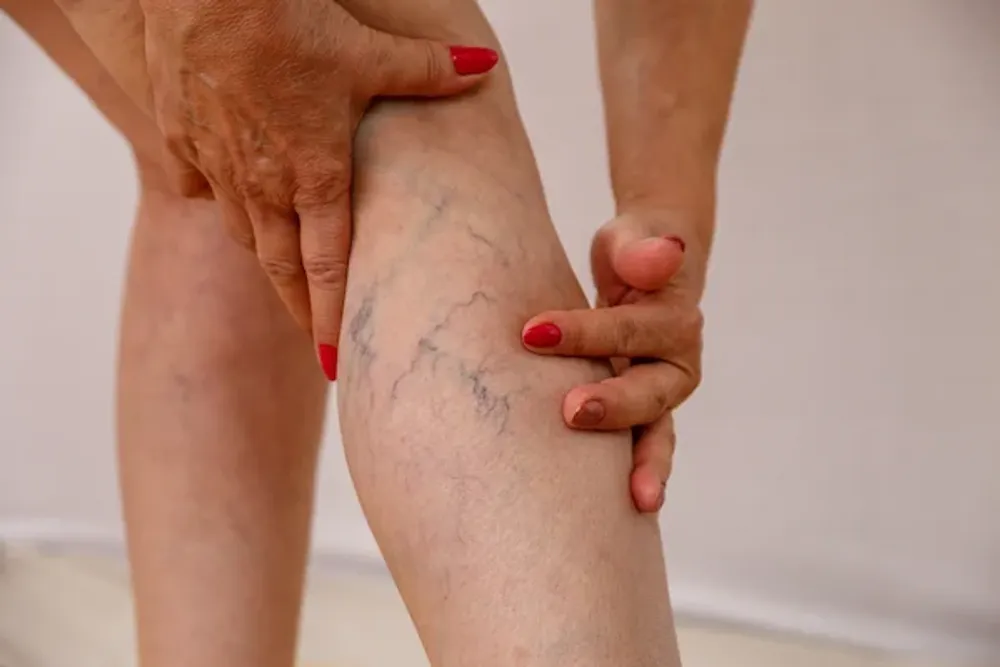
When these valves become weak or damaged, blood starts pooling inside the veins instead of going back to the heart. The veins then swell, stretch, and twist. They become large, ropey, and visible under the skin. These swollen, twisted veins are what we call Varicose Veins. They are most often seen in the legs, but they can appear in other parts of the body too.
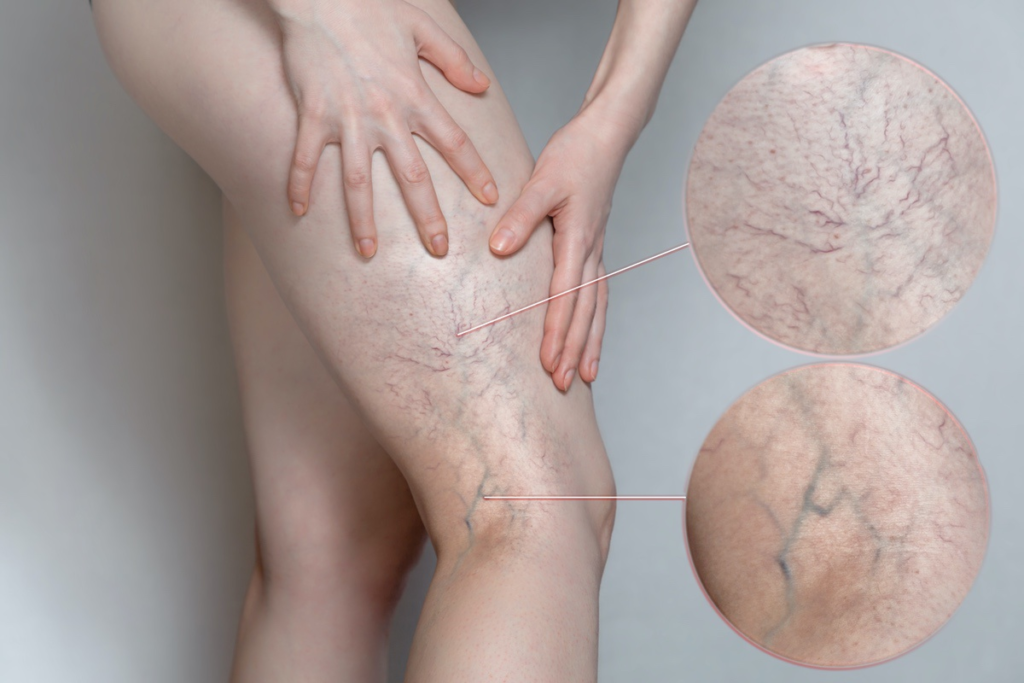
Smaller versions of this problem are known as spider veins. They look like fine red, blue, or purple lines on the skin, similar to a spider’s web. Spider veins are usually only a cosmetic problem, while Varicose Veins can lead to real health issues.
Also Read: Varicose Veins Pain Relief | Complete Guide to Reduce Pain, Swelling & Discomfort
Who Is at Risk of Varicose Veins?
Varicose Veins can affect almost anyone, but some people are more likely to develop them. Common risk factors include:
- Age: As we get older, the valves in our veins become weaker. People over 40 are more at risk.
- Gender: Women are more likely to get Varicose Veins because of hormonal changes during pregnancy, menstruation, and menopause.
- Family History: If your parents or close relatives have Varicose Veins, your chances are higher.
- Pregnancy: Increased blood volume and pressure on the leg veins during pregnancy can lead to Varicose Veins.
- Standing or Sitting for Long Hours: Teachers, nurses, traffic police, salespeople, IT workers, and others who stand or sit for hours are at higher risk.
- Obesity: Extra body weight puts more pressure on the veins of the legs.
- Lack of Exercise: Inactive muscles do not help push blood back to the heart.
- Wearing Tight Clothes: Very tight clothes around the waist or legs may slow down blood flow.
- Smoking: Smoking damages blood vessels and increases the risk of vein problems.
If you have one or more of these risk factors, it is wise to take care of your leg health and watch for early signs.
Also Read: Laser Treatment for Varicose Veins in Indore
What Causes Varicose Veins?
The main reason behind Varicose Veins is a problem called Chronic Venous Insufficiency (CVI). In this condition, the valves inside the leg veins do not close properly. Blood that should be moving up towards the heart starts flowing backwards and pooling in the veins. Over time, this extra pressure stretches the vein walls and creates the visible, twisted shape we call Varicose Veins.
Other contributing factors include hormonal changes, especially in women, frequent pregnancies, jobs that need long standing or sitting, and a family history of weak veins. In some cases, deep vein thrombosis (a clot in a deep leg vein) can also lead to Varicose Veins later in life.
Understanding the cause is important because most modern treatments aim at fixing the faulty veins so blood can flow properly through the healthy ones.
Also Read: Varicose Veins Treatment Without Surgery – Safe & Advanced Non-Surgical Options
Symptoms You Should Not Ignore
Varicose Veins do not always cause pain in the early stages. Many people only notice the cosmetic look at first. But as the problem grows, several symptoms appear. Common signs and symptoms include:
- Visible blue, purple, or dark green veins on the legs.
- Veins that look twisted, bulging, or rope-like.
- Heaviness or tiredness in the legs, especially after standing for long.
- Aching, throbbing, or burning pain in the legs.
- Swelling of the ankles or lower legs at the end of the day.
- Itching or dry skin around the veins.
- Muscle cramps, mostly at night.
- Restless legs, with a strong urge to move them.
- Skin colour changes near the ankles.
- Hard or thick skin in the lower leg in long-standing cases.
If you notice any of these signs, it is best not to ignore them. Early treatment is easier, safer, and gives better results than treatment in late stages.
Why Untreated Varicose Veins Can Become Dangerous
Many people delay treatment because Varicose Veins are not painful in the early stage. However, when left untreated for many years, they can lead to several complications:
- Skin Changes: The skin near the ankles may become dark, dry, hard, or itchy.
- Eczema and Inflammation: Long-term pooling of blood can cause skin rash and inflammation.
- Bleeding: Sometimes a swollen vein may burst under the skin or even break the skin and bleed.
- Superficial Thrombophlebitis: A clot can form in a varicose vein and cause pain and redness.
- Venous Ulcers: Open, slow-healing wounds may develop near the ankles. These ulcers can be very painful and difficult to heal.
- Deep Vein Thrombosis (DVT): In some cases, a clot may form in a deep vein, which is a serious medical condition.
These complications are exactly why doctors today encourage early treatment, especially when modern, simple, and safe options are easily available through Interventional Radiology Indore.
How Varicose Veins Are Diagnosed
Diagnosis of Varicose Veins is usually simple and painless. The doctor first examines your legs while you are standing. The veins are easier to see in this position. The doctor asks about your symptoms, work pattern, family history, and lifestyle.
To confirm the diagnosis and study the deeper veins, a special test called Doppler Ultrasound is done. This is a painless scan, similar to a normal ultrasound, that shows how blood is flowing through your veins. It helps the doctor find which valves are leaking, how big the affected veins are, and whether there are any clots inside.
Modern centres like Care CHL Hospital Indore have advanced ultrasound machines and trained vascular experts who can complete this evaluation quickly and accurately, helping you start treatment without delay.
Stages of Varicose Veins
Doctors often describe Varicose Veins using a system called CEAP. In simple words, this divides the disease into stages, from very mild to very severe:
- Stage 1: Spider veins or small blue veins only, with no symptoms.
- Stage 2: Visible, bulging Varicose Veins.
- Stage 3: Swelling of the legs and ankles.
- Stage 4: Skin changes such as darkening, dryness, or eczema.
- Stage 5: Healed venous ulcer.
- Stage 6: Active venous ulcer that has not healed.
The earlier you reach the doctor, the simpler the treatment. Even in advanced stages, modern Interventional Radiology can offer a lot of relief.
Why People Are Choosing Non-Surgical Treatments in 2026
Many years ago, the only treatment for severe Varicose Veins was open surgery, called vein stripping. In this procedure, the affected vein was pulled out through several cuts in the leg. While this worked, it had many drawbacks like long cuts, pain, scars, hospital stay, time off work, and a risk of recurrence.
In 2026, things are very different. Most patients with Varicose Veins can now be treated with simple, walk-in procedures using needles and tiny tubes, with no major cuts at all. These modern non-surgical treatments are done under local anesthesia, take less than an hour, and allow the patient to walk home the same day. There is no big scar, no long bed rest, and very little pain.
These advances have made Varicose Veins treatment much more comfortable, safer, and effective. This is a perfect example of how Interventional Radiology has changed the patient’s experience for the better.
The Best Non-Surgical Treatments for Varicose Veins in 2026
There are several modern, minimally invasive options available today. The best treatment for each patient depends on the size of the veins, the location, the stage of disease, and the overall health of the person. Let us look at the most popular options.
1. Endovenous Laser Ablation (EVLA)
Endovenous Laser Ablation, often called EVLA or laser treatment for Varicose Veins, is one of the most popular and effective treatments today. It uses laser energy to close the damaged vein from the inside.
During the procedure, the doctor uses ultrasound to find the faulty vein. A small needle puncture is made on the skin and a thin laser fibre is gently passed inside the vein. Local anesthesia is given around the vein, and the laser is then activated. The heat from the laser closes the vein. Blood is naturally redirected to the healthy veins, and the closed vein slowly disappears over time.
EVLA takes about 30 to 60 minutes. There are no cuts, no stitches, and no scars. Most patients walk out of the hospital the same day and can return to office work within 24 to 48 hours.
2. Radiofrequency Ablation (RFA)
Radiofrequency Ablation, or RFA, is very similar to EVLA. Instead of laser, it uses radiofrequency energy to gently heat and close the damaged vein. The procedure is done under ultrasound guidance and local anesthesia.
RFA is known for being very gentle. Many patients report less pain and less bruising compared to older techniques. Recovery is fast, and the cosmetic result is excellent. Both EVLA and RFA are considered the gold standard treatments for Varicose Veins in 2026.
3. Sclerotherapy
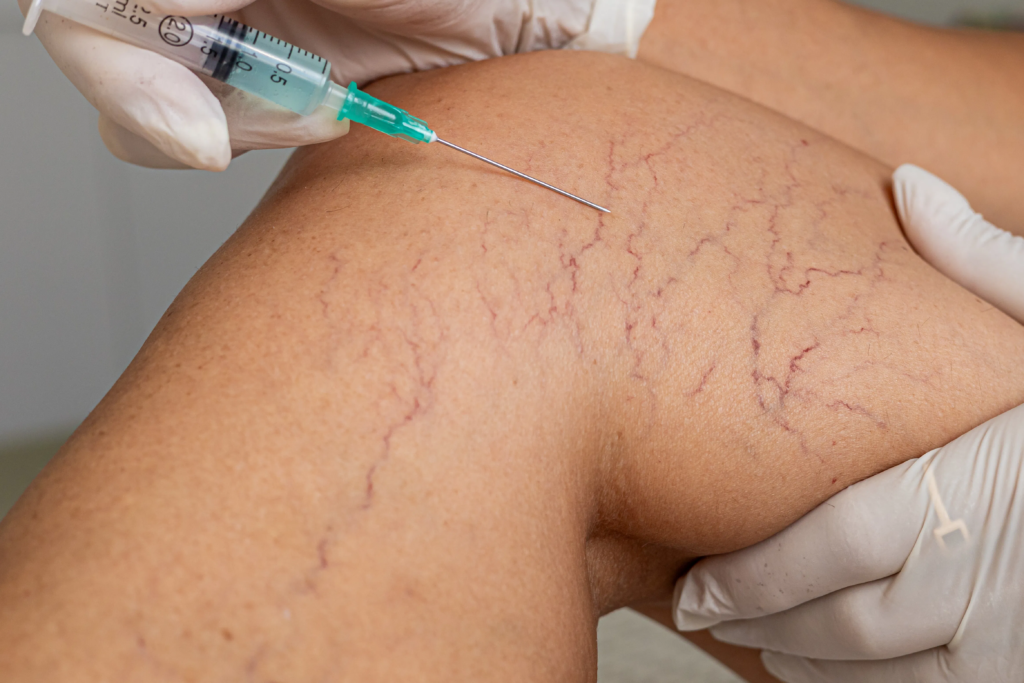
Sclerotherapy is a needle-based treatment used mainly for smaller Varicose Veins and spider veins. The doctor injects a special medicine called a sclerosant directly into the vein. This medicine irritates the inner wall of the vein and makes it close. Over weeks, the closed vein turns into a thin scar tissue and fades from view.
There are different types of sclerotherapy, including liquid sclerotherapy and foam sclerotherapy. Foam sclerotherapy is often used for medium-sized veins because the foam covers more surface area inside the vein. Sclerotherapy is quick, painless, and does not need any cuts or anesthesia in most cases.
4. Vein Glue (Cyanoacrylate Closure)
Vein glue treatment is one of the most modern options. A medical-grade glue is injected inside the vein through a thin tube. The glue sticks the vein walls together, and the vein is closed. Blood flow is naturally redirected to healthy veins.
This procedure has many advantages. It does not need heat, so the patient feels less discomfort. Compression stockings may not even be needed for long after the procedure. Recovery is very smooth, and the cosmetic result is excellent. Vein glue is becoming a favourite choice for many patients with Varicose Veins.
5. Mechanochemical Ablation (MOCA)
MOCA is another advanced option. A special rotating wire is placed inside the damaged vein, and a sclerosant is injected at the same time. The rotation and the medicine together close the vein. MOCA does not use heat, so it is comfortable, and the chance of nerve injury is very low.
6. Ambulatory Phlebectomy
In some cases, large bulging surface veins are removed through tiny pinhole openings in the skin. This is called ambulatory phlebectomy. The procedure is done under local anesthesia and leaves only very small marks that fade with time. It is often combined with EVLA, RFA, or glue treatment for the best result.
7. Compression Stockings and Lifestyle
Compression stockings are special tight socks that gently squeeze the legs and help blood move upwards. They do not cure Varicose Veins, but they can give a lot of relief and slow the disease, especially in early stages or after a procedure. They are often used together with other treatments.
Lifestyle steps such as regular walking, leg exercises, weight control, and avoiding long standing also play a strong supporting role.
How Doctors Decide the Right Treatment for You
Choosing the right treatment is a careful decision. The doctor takes into account several factors:
- The size and number of affected veins.
- The location of the veins (thigh, calf, ankle, etc.).
- The stage of the disease.
- Skin condition and presence of ulcers.
- The patient’s age, work pattern, and overall health.
- Patient’s personal preference and concerns.
Often, a combination of methods gives the best result. For example, EVLA may be used for the main faulty vein, sclerotherapy for smaller veins, and phlebectomy for any large bulging branches. This personalised approach is one of the strengths of modern Interventional Radiology Indore.
A Patient’s Journey: What to Expect
To make things clearer, let us walk through what a patient may experience when they choose non-surgical treatment for Varicose Veins at a centre like Care CHL Hospital Indore.
Step 1: First Consultation
The doctor listens to your problem, examines your legs, and asks about your daily routine. You can talk freely about your symptoms, your work, and your worries. The doctor explains what Varicose Veins are, why they happen, and what your options are.
Step 2: Doppler Ultrasound
A painless ultrasound scan is done to check the veins in detail. This shows the exact location and severity of the problem. Based on the report, the doctor decides the best treatment plan.
Step 3: Procedure Day
On the day of the procedure, you arrive at the hospital, usually in the morning. There is no need for general anesthesia in most cases. After local anesthesia, the doctor performs EVLA, RFA, glue, or sclerotherapy under ultrasound guidance. Most procedures finish within 30 to 60 minutes.
Step 4: Walking Out the Same Day
After a short rest, you can walk out of the hospital. Compression stockings may be advised. Mild pain medicines, if needed, are given. Most patients return to normal life within a day or two.
Step 5: Follow-Up Visits
Follow-up scans are usually done after a few weeks and then after a few months to check that the treated veins have closed properly. The doctor also gives advice on lifestyle and care to prevent the problem from coming back.
Key Benefits of Non-Surgical Varicose Veins Treatment
Modern, minimally invasive treatments offer many advantages compared to old-style surgery:
- No major cuts, no stitches, and no big scars.
- Done under local anesthesia, so you stay awake and relaxed.
- Daycare procedure, no long hospital stay.
- Very little pain during and after the procedure.
- Quick return to work, often within 1 to 2 days.
- Excellent cosmetic results.
- Lower risk of infection or complications.
- Long-lasting relief from heaviness, pain, and swelling.
- Can be safely repeated if needed in the future.
Are There Any Risks?
Modern Varicose Veins treatments have a strong safety record. The most common side effects are mild bruising, slight redness, or a feeling of tightness along the treated vein, all of which usually settle in a few days. In rare cases, there may be a small skin reaction, mild numbness, or formation of small blood clots in surface veins. Serious complications are very uncommon when treatment is done by a trained interventional radiologist using high-quality equipment.
This is why selecting an experienced specialist is so important. Patients in central India can rely on the skill and care of Dr. Alok Kumar Udiya at Care CHL Hospital Indore for safe and effective treatment.
Lifestyle Tips to Protect Your Veins
Whether you have already been treated or you want to prevent Varicose Veins, healthy lifestyle habits make a big difference. Some simple but powerful steps include:
- Walk for at least 30 to 45 minutes a day.
- Avoid standing in one position for very long periods. Take small walking breaks.
- Avoid sitting cross-legged for long hours.
- Keep your weight in a healthy range.
- Eat a balanced diet rich in fibre, fruits, and vegetables.
- Drink enough water through the day.
- Reduce salt to lower swelling.
- Wear compression stockings if your doctor advises.
- Raise your legs above heart level for 10 to 15 minutes a day.
- Avoid smoking, which damages blood vessels.
- Choose comfortable footwear and avoid very high heels for long hours.
- Practice simple leg exercises such as ankle rotations and calf raises.
These habits not only protect against Varicose Veins, but also improve your overall heart and circulation health.
Interventional Radiology Indore: Modern Vein Care Close to Home
Earlier, patients with Varicose Veins often had to travel to big cities for advanced laser or RFA treatment. Many people kept suffering at home because they were scared of surgery or could not travel. Today, the picture has changed completely. Interventional Radiology Indore has grown into a strong, modern specialty offering world-class vein treatments right in central India.
Modern centres in Indore are now equipped with high-end ultrasound machines, laser and radiofrequency systems, and the latest vein glue technology. With expert teams of interventional radiologists, vascular specialists, anesthesia experts, and trained nurses, complete care for Varicose Veins is now available locally. This means faster appointments, easy follow-up, and lower travel cost for the patient and the family.
This local growth of Interventional Radiology is a real gift to the people of Indore and surrounding areas. Patients can now get top-quality treatment without leaving their city.
About Dr. Alok Kumar Udiya
Dr. Alok Kumar Udiya is one of the leading interventional radiologists in central India. He is well known for his deep experience in minimally invasive treatments for many vascular and non-vascular conditions, including Varicose Veins, deep vein thrombosis, brain aneurysms, uterine fibroids, prostate enlargement, liver tumours, and more.
With years of training and a strong record of successful procedures, Dr. Alok Kumar Udiya has helped many patients regain comfort and confidence in their legs. His approach is based on careful diagnosis with Doppler ultrasound, clear discussion with the patient, and the use of the latest technology like EVLA, RFA, sclerotherapy, glue, and MOCA.
Patients who visit him often share that they felt at ease because he takes the time to explain everything in simple words. He treats not just the veins but also the worries and questions of the patient and their family. This warm and patient-friendly approach is one of the reasons he is widely trusted in central India.
Care CHL Hospital Indore: A Trusted Centre for Vein Care
Care CHL Hospital Indore is one of the most respected multi-specialty hospitals in central India. It is well known for its modern technology, well-equipped operation theatres, advanced imaging department, and a strong team of specialists in many fields.
The Interventional Radiology unit at Care CHL Hospital Indore offers a complete range of vein-related treatments under one roof. From basic Doppler scans to advanced laser, radiofrequency, glue, and sclerotherapy procedures, every step is handled with care and accuracy. The hospital also pays special attention to patient comfort, clean rooms, friendly staff, and clear communication.
Patients from Indore, Bhopal, Ujjain, Dewas, Khandwa, Ratlam, and many other cities visit Care CHL Hospital Indore for treatment of Varicose Veins because of its modern setup and expert team.
Frequently Asked Questions (FAQs)
Q1. Are Varicose Veins only a cosmetic problem?
No. While Varicose Veins do change the look of the legs, they are also a real medical condition. They can cause pain, swelling, skin changes, ulcers, and clots if not treated.
Q2. Can Varicose Veins go away on their own?
In most cases, Varicose Veins do not go away by themselves. They tend to slowly get worse over time. Lifestyle and stockings can help, but treatment is needed for a proper cure.
Q3. Are non-surgical treatments painful?
No. Modern treatments like EVLA, RFA, glue, and sclerotherapy are done under local anesthesia. Most patients feel only a small pinch and a feeling of pressure. Real pain is rare.
Q4. Will I have scars after treatment?
There are no big scars. Most procedures use needle punctures, not cuts. Tiny marks usually fade with time, leaving the legs looking smooth and natural.
Q5. How long do I need to stay in the hospital?
Most patients are treated as a daycare case. You arrive in the morning, undergo the procedure, and walk out within a few hours.
Q6. When can I go back to work?
Many patients return to office work within 1 to 2 days. Heavy work or long-standing jobs may need a longer break. The doctor will give you specific advice.
Q7. Can Varicose Veins come back after treatment?
In some cases, new Varicose Veins may appear in another area, especially if risk factors continue. Following healthy habits and regular follow-up greatly lowers this chance.
Q8. Is treatment safe for older patients and people with other illnesses?
Yes. Because most procedures are done under local anesthesia and are minimally invasive, they are usually safe even for elderly patients and those with diabetes, blood pressure, or heart problems. The doctor checks each case carefully.
Q9. Will my insurance cover Varicose Veins treatment?
Many insurance companies cover treatment when Varicose Veins are causing medical problems and not just cosmetic concerns. The hospital staff at Care CHL Hospital Indore can help you check your policy.
Q10. How do I know which treatment is best for me?
The best way is to consult an experienced interventional radiologist. After a Doppler scan and discussion of your symptoms, the doctor will suggest the best plan. In central India, you can consult Dr. Alok Kumar Udiya at Care CHL Hospital Indore for expert advice.
Conclusion: Healthy Legs, Happy Life
Varicose Veins are far more than a beauty problem. They are a sign that the veins of your legs are not working as well as they should. Ignoring them can lead to heaviness, pain, swelling, skin changes, and even ulcers in the long run. The good news is that in 2026, treatment is no longer a frightening journey. With the rise of modern Interventional Radiology, you can say goodbye to old-style surgery and welcome safe, simple, and effective non-surgical options.
From laser treatment (EVLA) and radiofrequency ablation (RFA) to vein glue, sclerotherapy, and MOCA, today’s treatments offer comfort, fast recovery, and excellent results. There are no big cuts, no long hospital stay, and very little pain. Most patients walk in and walk out the same day, ready to start fresh with healthier legs.
In central India, Interventional Radiology Indore has reached a strong level of expertise. Patients no longer need to travel far for top-quality vein care. With trusted specialists like Dr. Alok Kumar Udiya and modern centres like Care CHL Hospital Indore, you can find the right treatment, the right guidance, and the right support, all under one roof.
If you have been ignoring those tired, heavy, or twisted veins on your legs, it is time to take that first step. Consult an expert, get your veins checked, and learn about your options. Your legs carry you through every important journey of your life. They deserve the best care. With early attention and modern non-surgical treatments, you can step into the rest of 2026, and many years beyond, with healthy, comfortable, and confident legs.
Disclaimer: This blog is for general information and awareness only. It is not a substitute for professional medical advice, diagnosis, or treatment. Always consult a qualified doctor for any health-related concerns.