
The human brain is one of the most delicate and important parts of the body. It needs a steady supply of blood to work properly. This blood is carried by special blood vessels called arteries. One of the most important arteries that supplies blood to the brain is the Internal Carotid Artery, often called ICA. When the wall of this artery becomes weak, a small balloon-like swelling can form on it. This swelling is called an aneurysm.
An aneurysm in the Internal Carotid Artery may sound scary, and in many cases, it is indeed serious. If it bursts, it can cause heavy bleeding inside the brain, which is life threatening. The good news is that modern medicine has a very advanced and minimally invasive treatment for this problem. It is called Internal Carotid Artery Aneurysm Coiling.
This detailed guide is written in simple English to help patients and their families understand what an Internal Carotid Artery aneurysm is, how it is found, why coiling is one of the safest treatment options, and what to expect during the procedure and after it. We will also discuss the role of Interventional Radiology Indore and how Dr. Alok Kumar Udiya at Care CHL Hospital Indore is helping people get this advanced treatment close to home.
What Is an Internal Carotid Artery Aneurysm?
To understand the problem, let us first understand the artery. There are two Internal Carotid Arteries in the body, one on each side of the neck. They travel up from the neck and enter the skull, where they branch into smaller arteries that supply blood to large parts of the brain. These arteries are like the main highways carrying blood to the brain.
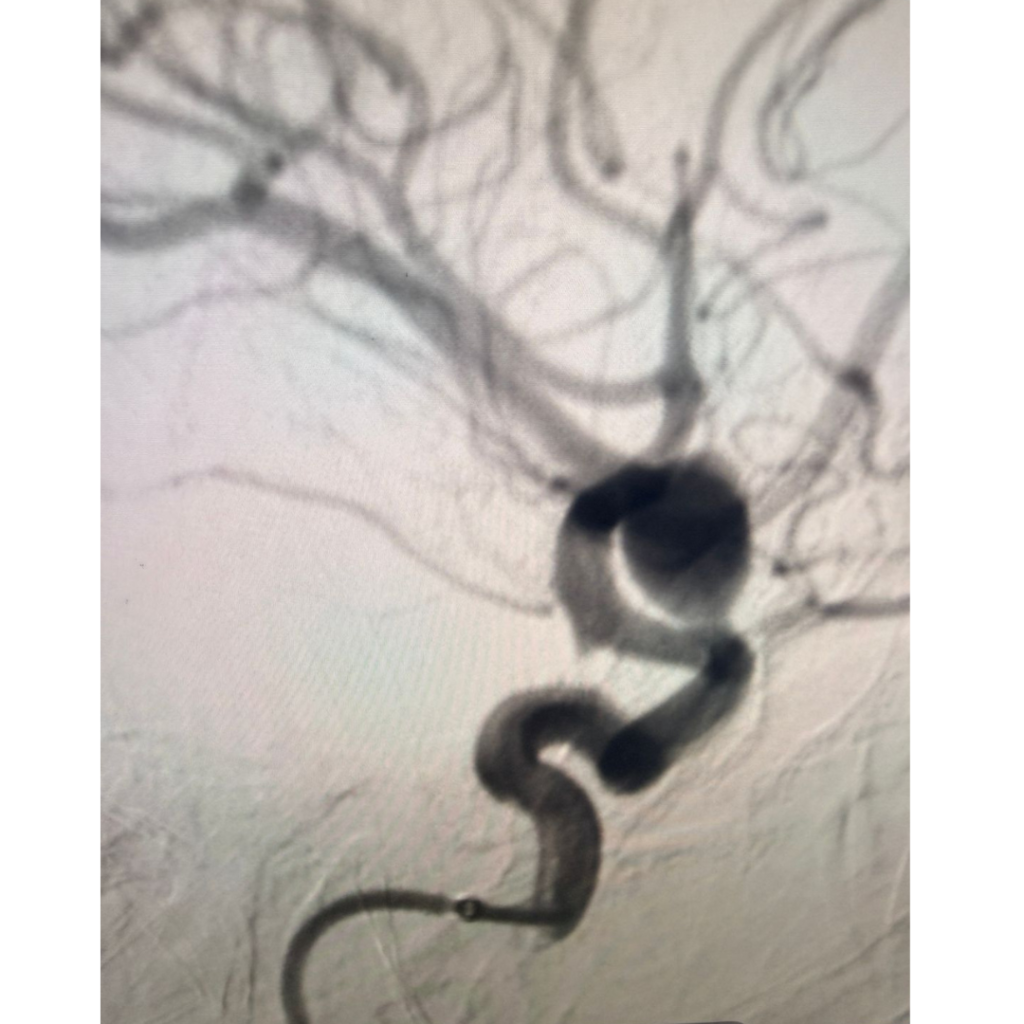
Sometimes, due to weakness in the wall of this artery, a small bulge or pouch forms. This bulge is called an aneurysm. It is filled with blood and looks like a tiny balloon attached to the side of the artery. As long as it is small and stable, it may not cause any symptoms. But if it grows in size, it can press on nearby parts of the brain. If the wall becomes too thin, it can burst, which is called a ruptured aneurysm. A rupture leads to bleeding inside the skull and is a medical emergency.
Internal Carotid Artery aneurysms are among the more common types of brain aneurysms. They can happen at any age but are usually seen in adults between 40 and 60 years. Women are slightly more likely to develop them than men.
Also Read: Carotid Stenting: A Modern Solution for Stroke Prevention
What Causes an Internal Carotid Artery Aneurysm?
There is no single cause for an aneurysm. It usually develops slowly over many years due to a combination of factors that weaken the artery wall. Some of the most common causes and risk factors include:
- High Blood Pressure: Long-term high pressure inside arteries can stretch and weaken their walls.
- Smoking: Tobacco damages blood vessels and is one of the strongest risk factors.
- Family History: If close family members have had an aneurysm, the risk is higher.
- Atherosclerosis: Build-up of fatty deposits inside arteries can weaken their walls.
- Head Injury: A serious injury can sometimes cause damage to the artery wall.
- Infection: Rarely, infections can weaken the artery and create an aneurysm.
- Genetic Conditions: Some inherited disorders, like polycystic kidney disease, increase the risk.
- Heavy Alcohol Use and Drug Abuse: These habits raise blood pressure and damage vessels.
Often, the aneurysm grows quietly without giving any sign for years. This is why it is sometimes called a silent danger.
Also Read: Best Carotid Stenting Doctor in Indore: Advanced Stroke Prevention with Minimal Invasion
Symptoms You Should Not Ignore
Many small Internal Carotid Artery aneurysms cause no symptoms and are found by chance during a scan done for some other reason. However, when an aneurysm grows in size or starts pressing on nearby nerves and brain tissue, it can produce warning signs. Common symptoms include:
- Sudden severe headache, often described as the worst headache of life.
- Pain above or behind one eye.
- Drooping of one eyelid.
- Double vision or blurred vision.
- Dilated pupil on one side.
- Numbness or weakness on one side of the face.
- Loss of balance or sudden dizziness.
- Confusion, nausea, or vomiting.
- Loss of consciousness in severe cases.
If a person suddenly gets a very strong headache that is unlike any headache they have had before, this is a medical emergency. It may mean the aneurysm has burst. The person should be taken to a hospital at once.
Also Read: Carotid Stenting: A Lifesaving Solution for Stroke Prevention
How Is an Internal Carotid Artery Aneurysm Diagnosed?
To plan the right treatment, doctors first need to confirm the presence of the aneurysm and study its size, shape, and location. This is done through a careful examination and a few advanced imaging tests.
- CT Scan of the Brain: A quick scan that can show bleeding inside the skull if the aneurysm has burst.
- CT Angiography (CTA): A special scan that uses dye to show the blood vessels in detail.
- MRI and MR Angiography (MRA): These give clear pictures of the brain and its blood vessels without radiation.
- Digital Subtraction Angiography (DSA): Considered the most accurate test, this is a live X-ray of the blood vessels using a thin tube and dye. It is also used as a guide during coiling.
At a well-equipped centre such as Care CHL Hospital Indore, all these advanced tests are available under one roof. This helps the doctor make a fast and correct diagnosis, which is the first step towards a safe treatment plan.
Treatment Options for Internal Carotid Artery Aneurysm
There are mainly two types of treatments for a brain aneurysm. The choice depends on the size of the aneurysm, its shape, its location, the age of the patient, and the overall health of the person.
1. Surgical Clipping
In this method, the surgeon opens a part of the skull and places a tiny metal clip at the base of the aneurysm. The clip closes off the aneurysm so blood cannot enter it. While this method works well, it is open brain surgery, which means a longer hospital stay, more pain, and longer recovery.
2. Endovascular Coiling
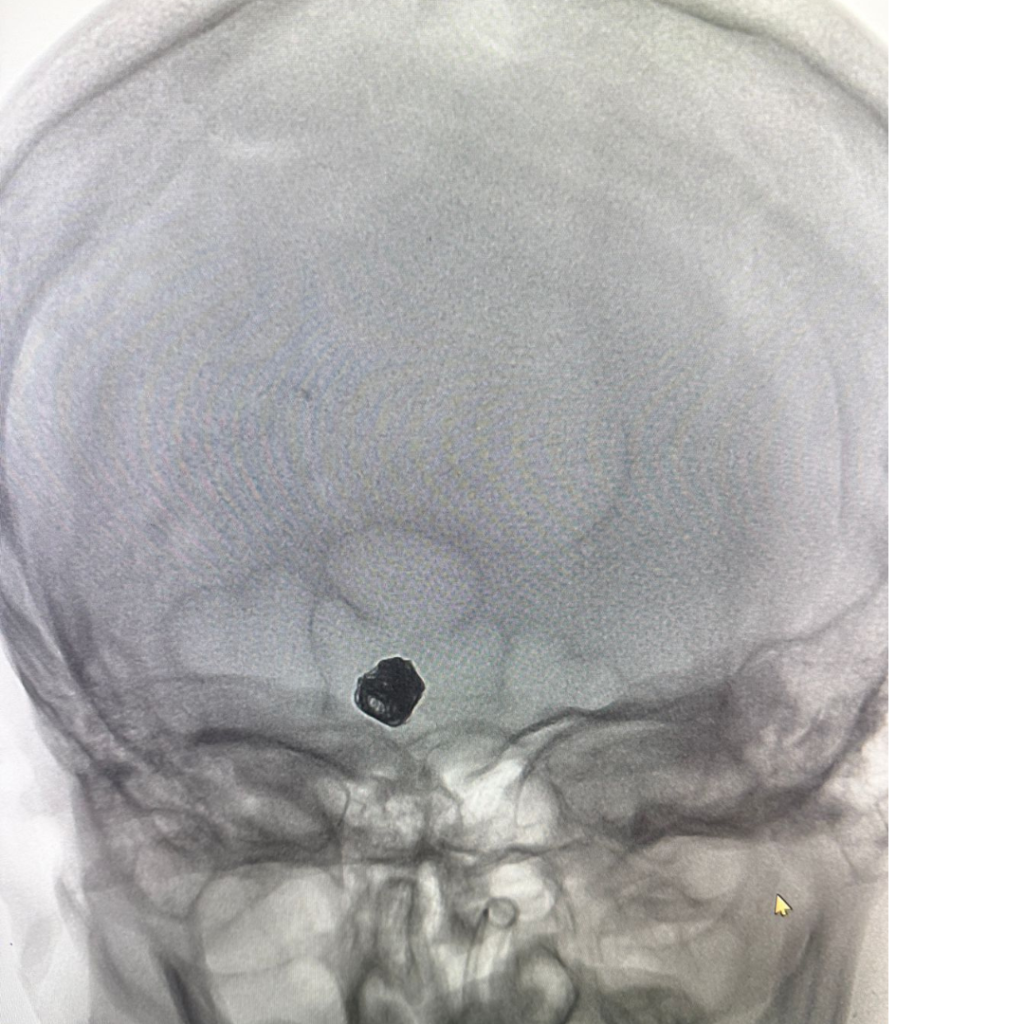
This is the modern, minimally invasive option. The aneurysm is treated from inside the artery itself, without opening the skull. Tiny soft platinum coils are placed inside the aneurysm to block blood flow into it. This procedure is called Internal Carotid Artery Aneurysm Coiling.
Today, endovascular coiling is the first choice for many patients because it is safer, less painful, and helps the patient recover much faster than open surgery. This is the heart of modern Interventional Radiology.
What Is Internal Carotid Artery Aneurysm Coiling?
Internal Carotid Artery Aneurysm Coiling is a minimally invasive treatment in which the doctor reaches the aneurysm from inside the blood vessels using a very thin tube called a catheter. The catheter is gently guided up from the leg or wrist, through the body’s blood vessels, all the way into the brain. Once the tip of the catheter reaches the aneurysm, soft platinum coils are pushed into the bulge.
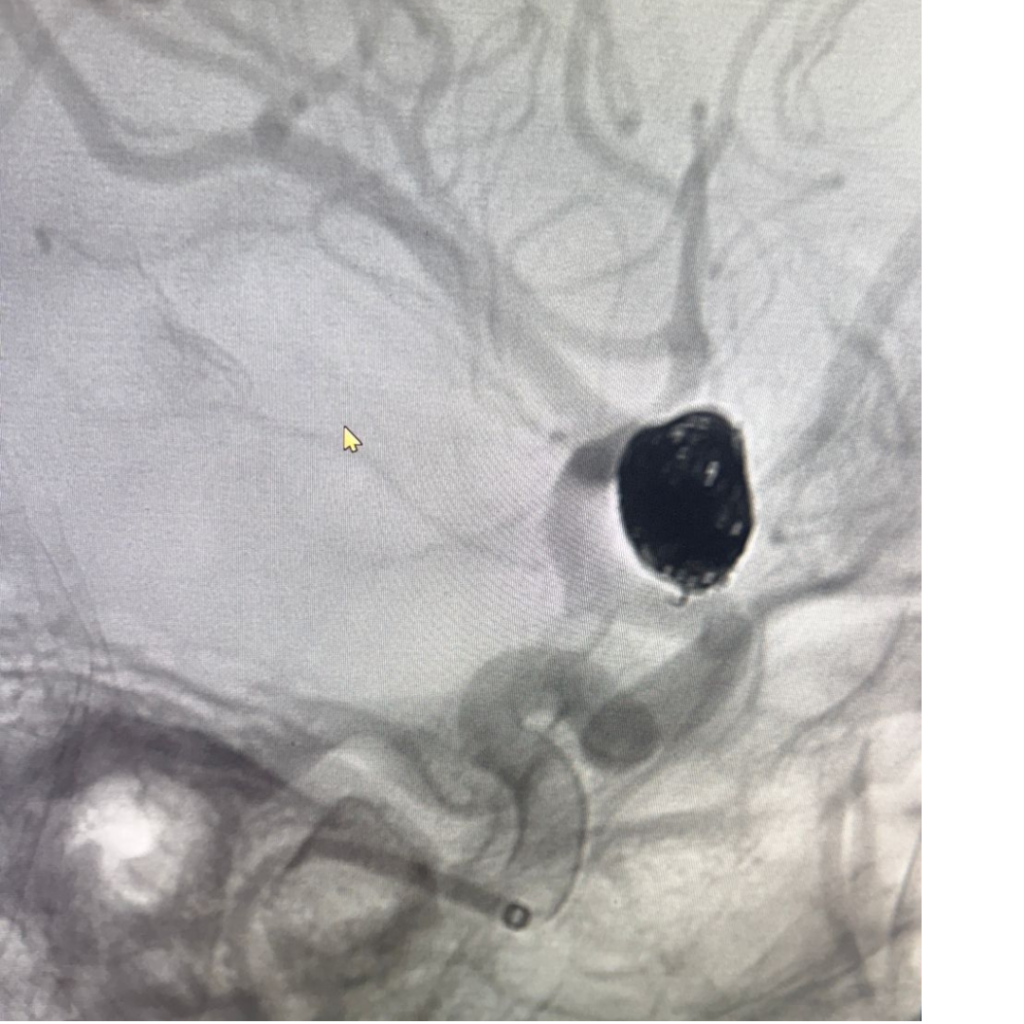
These tiny coils are like soft springs. They fill up the space inside the aneurysm. Once the aneurysm is packed with coils, the blood flow into it stops. Over time, a clot forms around the coils, sealing the aneurysm permanently. This stops the aneurysm from growing or rupturing in the future.
All of this is done without opening the skull, without large cuts, and without disturbing the brain tissue. It is one of the most advanced examples of how Interventional Radiology has changed modern medicine.
Why Many Patients Prefer Coiling
There are many reasons why patients and doctors today often prefer endovascular coiling over open surgery. Some of the key benefits include:
- No Skull Opening: There is no need to cut and open the skull bone.
- No Brain Disturbance: The brain tissue is not touched, so risks are reduced.
- Smaller Wound: Only a tiny puncture is made in the leg or wrist.
- Less Pain: Most patients have very little pain after the procedure.
- Shorter Hospital Stay: Many patients go home within a few days.
- Faster Recovery: Daily activities can be started much sooner.
- Lower Risk in High-Risk Patients: It is often safer for elderly people or those with other health problems.
- Effective in Difficult Locations: Coiling can reach aneurysms that are hard to access by open surgery.
Of course, the final choice depends on each individual case. The doctor studies the scans, talks to the patient, and explains the safest option.
Who Needs Internal Carotid Artery Aneurysm Coiling?
Coiling may be suggested for both ruptured and unruptured aneurysms. The decision depends on a careful study of the patient. It is usually advised in the following cases:
- A ruptured Internal Carotid Artery aneurysm causing brain bleed.
- An unruptured aneurysm that is growing in size.
- An aneurysm with a high risk of rupture based on its shape and location.
- Aneurysms in elderly patients or those who cannot tolerate open surgery.
- Aneurysms in deep or hard-to-reach areas of the brain.
- Patients with other medical issues that make open surgery risky.
Some smaller aneurysms with a very low risk of rupture may be observed without immediate treatment. The doctor decides this on a case-by-case basis.
Step-by-Step Procedure of Coiling
Many people feel anxious before any procedure on the brain. Knowing what will happen, step by step, can help reduce fear. Here is a simple explanation of how Internal Carotid Artery Aneurysm Coiling is performed at a modern centre like Care CHL Hospital Indore.
Step 1: Preparation Before the Procedure
Before the procedure, the patient is admitted to the hospital. Some basic tests like blood tests, ECG, and imaging are repeated if needed. The doctor explains the procedure in simple terms and answers all questions. The patient may need to stop certain medicines like blood thinners as advised.
The patient is asked to fast for a few hours before the procedure. The skin near the groin or wrist, where the catheter will be inserted, is cleaned and shaved. An IV line is placed for fluids and medicines.
Step 2: Anesthesia
Most coiling procedures are done under general anesthesia. This means the patient is fully asleep and does not feel anything during the treatment. In some cases, only local anesthesia with mild sedation may be used. A trained anesthesia team monitors the patient throughout.
Step 3: Inserting the Catheter
A small needle is used to puncture an artery, usually in the groin (femoral artery) or sometimes in the wrist (radial artery). Through this puncture, a thin plastic tube called a sheath is placed in the artery. The catheter is then passed through the sheath.
Step 4: Reaching the Brain
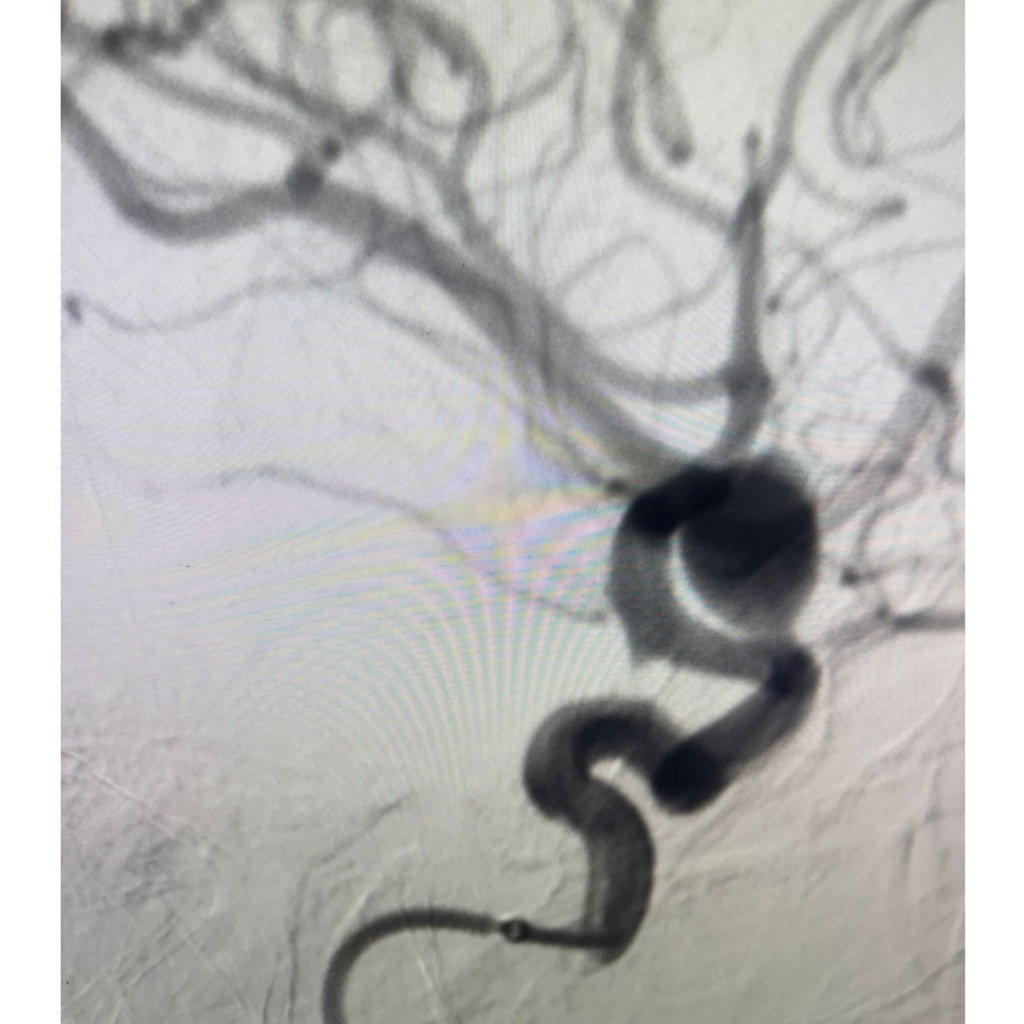
Using live X-ray pictures, the doctor carefully guides the catheter up through the body’s blood vessels. The path goes from the leg, through the abdomen, into the chest, then up the neck, and finally into the Internal Carotid Artery in the brain. A special dye is injected to make the blood vessels and the aneurysm clearly visible on the screen.
Step 5: Placing the Microcatheter
A much thinner tube called a microcatheter is then advanced through the main catheter. The tip of the microcatheter is gently placed inside the aneurysm. Special care is taken so that nearby healthy vessels are not disturbed.
Step 6: Filling with Coils
Now the coils are introduced one by one through the microcatheter into the aneurysm. The coils take the shape of the aneurysm and fill it up. The doctor watches everything on the screen in real time. Coils of different sizes are used until the aneurysm is fully packed.
In some cases, a small mesh tube called a stent or a balloon is also used to support the coils, especially if the neck of the aneurysm is wide. This is known as stent-assisted or balloon-assisted coiling.
Step 7: Final Check and Closure
Once the aneurysm is sealed off, the doctor takes a final set of pictures to confirm that the blood is no longer entering the aneurysm. The catheters are then carefully removed. The puncture site is closed using pressure or a small closure device. Sometimes a tiny dressing is placed.
The whole procedure usually takes about 1 to 3 hours, depending on the case.
Recovery in the Hospital
After the procedure, the patient is shifted to a recovery area or ICU for close monitoring. The medical team checks blood pressure, pulse, oxygen, and the puncture site. The patient is asked to keep the leg straight for a few hours to prevent bleeding from the groin site.
Most patients stay in the hospital for 1 to 3 days for an unruptured aneurysm. For a ruptured aneurysm, the stay may be longer, often 1 to 2 weeks, because additional care is needed for the brain bleed. The team gives medicines for pain, prevents blood clots, and watches for any complications.
Soft food and plenty of fluids are usually started a few hours after the procedure. The patient can walk slowly under guidance the next day, depending on the recovery.
Benefits of Coiling Over Open Surgery
Modern Internal Carotid Artery Aneurysm Coiling offers many advantages compared to open clipping surgery. The main benefits include:
- No skull opening, so the head stays untouched.
- Tiny puncture site that heals quickly.
- Less risk of infection.
- Less blood loss during the procedure.
- Lower risk of damage to brain tissue.
- Quicker return to normal life.
- Suitable for many elderly and high-risk patients.
- Helps reduce the chance of future rupture.
These benefits have made coiling the preferred choice in many of the world’s leading neuro centres.
Are There Any Risks?
Like every advanced procedure, coiling also has some risks, although serious problems are rare in expert hands. Possible risks may include reaction to the dye, bleeding at the puncture site, blood clot formation, stroke, or rupture of the aneurysm during the procedure. There is also a small chance that the aneurysm may open again later and need a second treatment.
These risks are reduced when the procedure is done by a trained interventional radiologist using high-quality equipment. This is why the choice of doctor and hospital is very important. Patients in central India can rely on the experience of Dr. Alok Kumar Udiya and the modern setup at Care CHL Hospital Indore.
Recovery at Home After Coiling
Once the patient goes home, recovery continues for a few weeks. With proper care, most people return to their daily routine quickly. Some general recovery tips include:
- Take all medicines as prescribed, including blood thinners if advised.
- Keep the puncture site clean and dry for a few days.
- Avoid heavy lifting and strenuous activity for at least 2 weeks.
- Avoid driving until the doctor allows it.
- Drink plenty of water and eat healthy food rich in fruits and vegetables.
- Quit smoking and avoid alcohol.
- Manage blood pressure with regular check-ups and medicines.
- Get enough rest and good sleep to help the brain heal.
- Attend all follow-up visits and scheduled scans.
Most patients can return to office work within 2 to 4 weeks if their job is not physically demanding. Patients who have had a ruptured aneurysm may need a longer recovery and sometimes physiotherapy or rehabilitation.
Long-Term Follow-Up
Even after a successful coiling, regular follow-up is very important. The doctor may advise an angiogram, MRA, or CTA after a few months and then once a year for some time. These tests check that the aneurysm remains sealed and that no new aneurysm has formed.
During follow-up, the doctor also checks blood pressure, lifestyle habits, and overall health. Patients are advised to control risk factors like high blood pressure, high cholesterol, and stress. With this care, most patients live a normal, full life.
Lifestyle Changes That Protect the Brain
After Internal Carotid Artery Aneurysm Coiling, a few simple lifestyle changes can greatly reduce the risk of new problems and improve overall well-being:
- Eat a balanced diet with plenty of fresh fruits, vegetables, whole grains, and lean protein.
- Reduce salt, fried food, and extra sugar to keep blood pressure under control.
- Exercise daily with light activity such as walking, yoga, or stretching, as advised.
- Quit smoking completely.
- Limit or avoid alcohol.
- Manage stress through meditation, hobbies, and time with family.
- Sleep for 7 to 8 hours every night.
- Take regular medicines for blood pressure, sugar, and cholesterol if prescribed.
- Get a yearly health check-up after the age of 40.
These habits not only protect the treated aneurysm but also lower the risk of stroke, heart disease, and other vessel problems.
Interventional Radiology Indore: Advanced Care Close to Home
In the past, patients with a brain aneurysm often had to travel to big metro cities for advanced treatment. This was difficult for many families because of cost, distance, and emotional stress. Today, the picture has changed. Interventional Radiology Indore has grown into a strong specialty offering world-class minimally invasive treatments for the brain, heart, liver, kidneys, uterus, and many other organs.
Modern centres in Indore are equipped with high-end angiography machines, advanced microcatheters, and the latest coil technology. With expert teams of interventional radiologists, neurologists, neurosurgeons, anesthesia experts, and trained nurses, complex treatments such as Internal Carotid Artery Aneurysm Coiling are now performed safely in the city itself.
This local availability means faster help during emergencies, better follow-up, and a lighter burden on the family. It is a true example of how technology and expertise are coming closer to the patient.
About Dr. Alok Kumar Udiya
Dr. Alok Kumar Udiya is a well-known interventional radiologist in central India, recognized for his skill and experience in advanced minimally invasive procedures. He has dedicated himself to a field that uses imaging guidance to treat serious diseases through tiny openings in the skin, sparing patients from the pain and risks of major surgery.
His areas of expertise include brain aneurysm coiling, stroke treatment, uterine fibroid embolization, varicose vein treatment, prostate artery embolization, liver tumour treatment, and many more. With years of training and a strong track record, Dr. Alok Kumar Udiya has helped many patients with Internal Carotid Artery aneurysms find a safer path to recovery.
Patients and families value his calm and clear way of explaining complex problems in simple words. He believes that an informed patient heals better, so he takes the time to discuss every step, every option, and every concern before treatment.
Care CHL Hospital Indore: A Centre for Modern Neuro and Vascular Care
Care CHL Hospital Indore is one of the most respected multi-specialty hospitals in central India. The hospital has a strong record in advanced neuro, cardiac, and vascular care. With modern operation theatres, a high-end Cath Lab, and a 24×7 emergency team, it is well prepared for both planned procedures and urgent cases like ruptured aneurysms.
The Interventional Radiology unit at Care CHL Hospital Indore offers a complete range of life-saving and life-improving procedures. The team works closely with neurologists, neurosurgeons, and critical care experts to give the best results to each patient. The hospital is also focused on patient comfort, clean rooms, friendly staff, and clear communication, making the journey of treatment less stressful for both the patient and the family.
Patients from Indore, Bhopal, Ujjain, Dewas, Khandwa, Ratlam, and many other cities trust this centre for advanced procedures such as Internal Carotid Artery Aneurysm Coiling.
Frequently Asked Questions
Q1. Is coiling safer than open brain surgery?
In many cases, yes. Coiling avoids the need to open the skull and disturb brain tissue. However, the right choice depends on the size, shape, and location of the aneurysm, and on the patient’s overall health. The doctor decides after careful study.
Q2. How long does the procedure take?
Most coiling procedures take about 1 to 3 hours. The exact time depends on the complexity of the case.
Q3. Will I feel pain during the procedure?
No. The procedure is usually done under general anesthesia, so the patient is asleep and feels nothing. Some patients may have only local anesthesia with sedation.
Q4. How long do I need to stay in the hospital?
For an unruptured aneurysm, the stay is usually 1 to 3 days. For a ruptured aneurysm, the stay may be longer because additional care is needed.
Q5. When can I go back to work after coiling?
Most patients with desk jobs can return to work in 2 to 4 weeks. Heavy work or strenuous activity may need a longer break. The doctor will guide each person.
Q6. Can the aneurysm come back after coiling?
In a small number of cases, the aneurysm can open again over time. This is why regular follow-up scans are important. If needed, additional coiling can be done.
Q7. Are coils harmful for the body?
No. The coils are made of soft platinum, which is safe for the body. They stay inside the aneurysm permanently and do not cause any reaction in most patients.
Q8. Can I have an MRI after coiling?
Yes. The platinum coils used today are MRI-safe. The doctor will guide the timing and the type of MRI scan.
Q9. How can I lower the chance of another aneurysm?
Control blood pressure, do not smoke, eat healthy food, exercise, manage stress, and take all medicines as advised. Regular check-ups also help in early detection.
Q10. Where can I get this treatment in central India?
Advanced Internal Carotid Artery Aneurysm Coiling is available at modern centres in Indore. Patients can consult Dr. Alok Kumar Udiya at Care CHL Hospital Indore for expert care and the latest technology.
Conclusion: A New Hope for Brain Aneurysm Patients
An Internal Carotid Artery aneurysm can sound frightening, but modern medicine has changed what was once a high-risk problem into a manageable condition. With early diagnosis and the right treatment, many patients now lead a normal, healthy life. The most important step is to listen to the body, take warning signs seriously, and reach a trained specialist in time.
Internal Carotid Artery Aneurysm Coiling stands out as one of the greatest gifts of modern Interventional Radiology. By treating the aneurysm from inside the blood vessel, doctors can seal off the danger without opening the skull, without disturbing the brain, and with much faster recovery. For many patients, this means returning home to their loved ones in just a few days, instead of weeks of struggle.
In central India, the rise of Interventional Radiology Indore has made this advanced treatment available to many more families. With caring specialists like Dr. Alok Kumar Udiya and trusted institutions like Care CHL Hospital Indore, world-class care is now within easy reach. If you or your loved one has been told about a brain aneurysm, do not lose hope. Talk to an expert, understand the options, and take the first step towards a safer tomorrow. Modern coiling is not just a treatment, it is a chance to live life again with confidence.
Disclaimer: This blog is for general information and awareness only. It is not a substitute for professional medical advice, diagnosis, or treatment. Always consult a qualified doctor for any health-related concerns.