
Your doctor has just told you that the pain in your calves while walking is due to PAD (peripheral artery disease). After the diagnosis, one question often stays in the mind: can someone with PAD live a long life? Or, put more directly, how long will I live with PAD?
It is a natural worry, and it deserves an honest, clear answer. In this guide, Dr. Alok Kumar Udiya, Interventional Radiologist at Intervention Radiology Indore, Care CHL Indore, explains:
- What PAD is and why it matters for your whole body, not just your legs
- What affects life expectancy with PAD
- The stages of PAD and the warning signs to watch for
- Modern treatments, including minimally invasive angioplasty
- The daily habits that help people with PAD live longer, more active lives
The quick answer
Yes, many people with PAD live long, active lives, especially when it is found early and managed well. PAD itself is rarely what shortens life. The real concern is that PAD is a sign of narrowed arteries elsewhere in the body too, including the heart and brain. That is why people with untreated PAD have a higher risk of heart attack and stroke.
The encouraging part is that most of this risk can be reduced. Stopping smoking, controlling sugar, blood pressure and cholesterol, taking prescribed medicines, walking regularly and treating badly blocked arteries on time can make a big difference to both how long and how well you live.
In short, PAD life expectancy depends far more on what you do after diagnosis than on the diagnosis itself.
Also Read: Can You Have PAD Without Diabetes?
What is PAD?
Peripheral artery disease (PAD) is a condition in which the arteries that carry blood to the legs (and sometimes the arms) become narrowed or blocked. The main cause is atherosclerosis: a slow build-up of fat, cholesterol and calcium (plaque) inside the artery walls.
When less blood reaches the leg muscles, you may notice:
- Pain, cramping or heaviness in the calves, thighs or hips while walking, which eases with rest (called claudication)
- Cold feet or one foot colder than the other
- Numbness or weakness in the legs
- Shiny skin and hair loss on the legs
- Slow-growing toenails
- Sores on the feet or toes that heal slowly
- In advanced cases, pain at rest, especially at night
Many people have PAD with no symptoms at all, or think their leg pain is simply “old age” or “weakness”. That is why PAD is often found late.
PAD is common in people with diabetes, but it does not only affect diabetics. Read our blog on PAD without diabetes to understand the other causes. If you also have diabetes, it is worth knowing the difference between diabetic nerve pain vs poor circulation, as the two often occur together.
Why PAD affects life expectancy
Think of PAD as a warning light on your car’s dashboard. The light itself is not the problem; it tells you something is wrong with the engine.
The plaque that blocks the leg arteries rarely stays only in the legs. It usually affects arteries throughout the body, including:
- The heart (coronary arteries), raising the risk of angina and heart attack
- The brain (carotid and brain arteries), raising the risk of stroke
- The kidneys, affecting kidney function
This is why doctors treat PAD as a whole-body condition. Protecting your heart and brain is as important as relieving leg pain.
In advanced PAD, a second risk appears: critical limb ischaemia (CLI). Here the blood supply is so poor that wounds cannot heal, and there is a risk of gangrene and amputation. Untreated CLI is a serious condition that can affect survival. With timely treatment to restore blood flow, many limbs, and lives, can be saved.
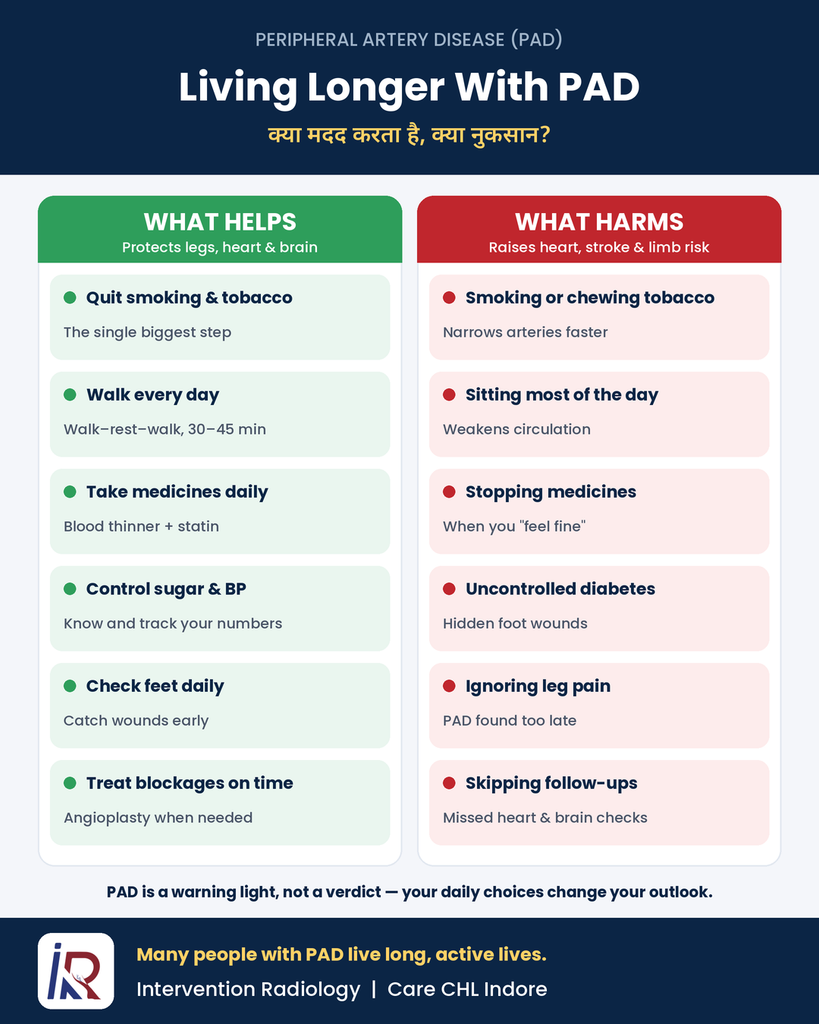
PAD life expectancy: what makes the biggest difference?
There is no single number for PAD life expectancy. Two people with the same diagnosis can have very different outlooks. These are the factors that matter most.
| Factor | Helps you live longer | Raises the risk |
|---|---|---|
| Smoking | Quitting completely, as early as possible | Continuing to smoke or chew tobacco |
| Diabetes | Sugar well controlled, regular foot checks | Poorly controlled sugar, unnoticed foot wounds |
| Blood pressure | Kept within your doctor’s target | High and untreated |
| Cholesterol | Statin taken daily as prescribed | Stopping medicines when you “feel fine” |
| Activity | Regular, structured walking | Sitting most of the day |
| Stage at diagnosis | Found early, with leg pain only on walking | Found late, with rest pain, wounds or gangrene |
| Follow-up | Regular check-ups and timely treatment | Ignoring symptoms until an emergency |
| Heart and brain health | Checked and treated together with PAD | Hidden heart or carotid disease left untreated |
Most items in the left column are within your control. That is the most hopeful message about PAD: your daily choices change your outlook.
Smoking: the single biggest factor
Smoking is the strongest risk factor for PAD getting worse. It narrows arteries, makes blood stickier and reduces the success of treatments such as angioplasty. People with PAD who stop smoking have a much lower chance of amputation, heart attack and stroke than those who continue. It is never too late to quit, and your doctor can help.
Also Read: Top 7 Proven Peripheral Artery Disease (PAD) Treatments to Regain Your Health
Diabetes: protect your feet
In people with diabetes, PAD often affects the smaller arteries below the knee. Nerve damage may also hide pain, so foot wounds can go unnoticed. Good sugar control, daily foot checks and early treatment of any wound are essential. Learn the warning signs in our blogs on symptoms of diabetic neuropathy in the feet and infected diabetic foot vs gangrene.
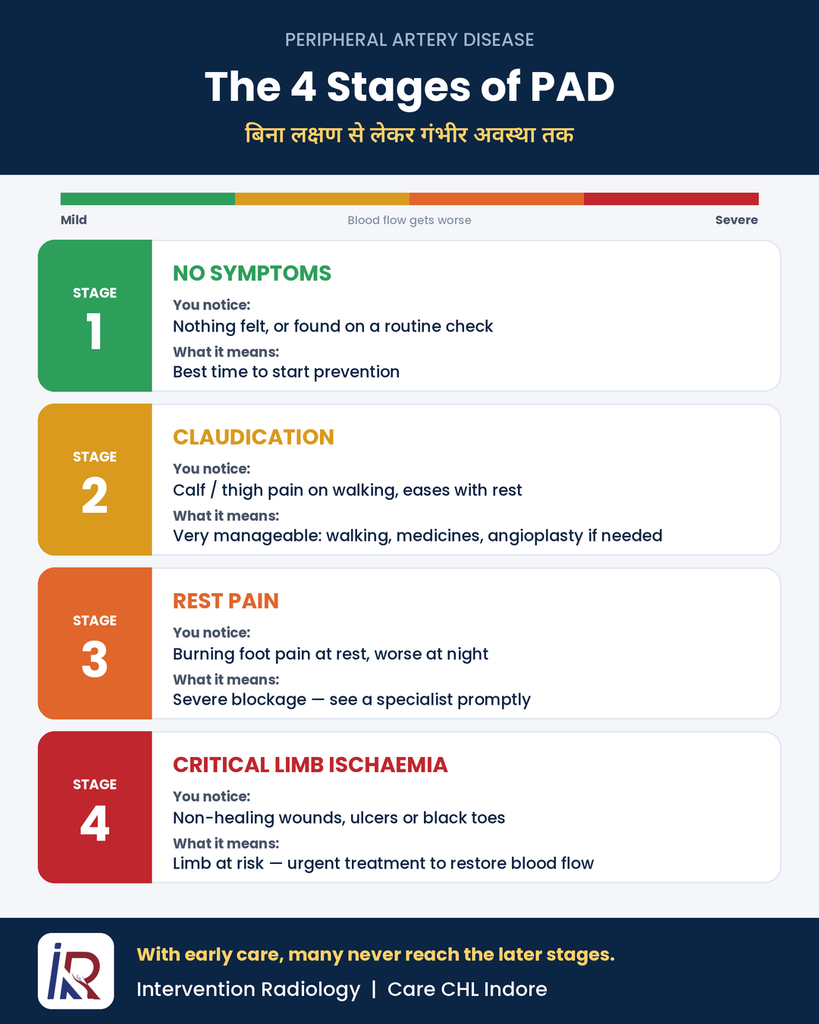
The stages of PAD
Doctors often describe PAD in stages. Knowing your stage helps you understand your outlook and the urgency of treatment.
| Stage | What you notice | What it means |
|---|---|---|
| 1. No symptoms | Nothing, or found on a routine check | Arteries are narrowing; the right time to start prevention |
| 2. Claudication | Calf, thigh or hip pain on walking that eases with rest | Blood flow cannot keep up with exercise; very manageable with treatment |
| 3. Rest pain | Burning pain in the foot at rest, often at night; relief by hanging the leg down | Severe blockage; needs prompt specialist review |
| 4. Tissue loss (CLI) | Non-healing wounds, ulcers or black toes (gangrene) | Limb at risk; urgent treatment to restore blood flow is needed |
Most people diagnosed with PAD are in the earlier stages. With proper care, many never progress to the later stages.
PAD warning signs that need urgent care
Go to a hospital or contact your doctor straight away if you notice:
- Sudden, severe pain in a leg, with the leg turning pale, cold or numb. This can be a sudden blockage (acute limb ischaemia) and is an emergency.
- A wound on the foot or leg that is not healing after 2 weeks
- Black or blue toes, or skin that is turning dark
- Pain in the foot at rest, especially at night
- Signs of infection in a foot wound: redness, swelling, pus or fever
- Chest pain, sudden weakness on one side, slurred speech or face drooping. These may be signs of a heart attack or stroke. Call emergency services at once.
Time matters. The sooner blood flow is restored, the better the chance of saving the limb.
How PAD is diagnosed
An early, accurate diagnosis is the first step to a longer life with PAD. Common tests include:
- Ankle-brachial index (ABI): compares the blood pressure in your ankle and your arm. A low ABI suggests PAD.
- Colour Doppler ultrasound: shows where the arteries are narrowed and how badly.
- CT angiography or MR angiography: creates a detailed map of the arteries before treatment.
- Catheter angiography: often done at the same time as angioplasty, to see and treat the blockage in one sitting.
- Heart, carotid and blood tests: because PAD affects the whole body, your heart, neck arteries, sugar, cholesterol and kidneys are also checked.
Treatments that help people with PAD live longer
PAD treatment has two goals: protect your heart and brain, and relieve leg symptoms and save the limb.
1. Medicines
Most people with PAD are advised to take:
- Antiplatelet medicine (a blood thinner) to lower the risk of heart attack and stroke
- A statin to lower cholesterol and stabilise plaque, even if your cholesterol is “normal”
- Blood pressure medicines as needed
- Diabetes medicines to keep sugar under control
Take them every day, exactly as prescribed. Never stop them on your own.
2. Supervised or structured walking
Walking is one of the most powerful treatments for claudication. Regular walking helps the body build small natural “bypass” channels around blockages.
A simple plan: walk until the pain is moderate, rest until it goes, then walk again. Aim for 30–45 minutes, at least 3 times a week, as your doctor advises. Most people can walk further within a few months.
Also Read: Top PAD Symptoms in Legs: Identifying Peripheral Artery Disease Early
3. Minimally invasive treatment: angioplasty and stenting
When leg pain limits your daily life, or when there is rest pain or a non-healing wound, the blocked artery can be opened from inside. This is done by an Interventional Radiologist.
- A small pinhole is made, usually in the groin, under local anaesthesia.
- A thin wire and catheter are guided to the blockage using live X-ray imaging.
- A small balloon is inflated to open the narrowed artery (angioplasty).
- If needed, a tiny mesh tube (stent) is placed to keep the artery open. Drug-coated balloons or stents may be used to lower the chance of re-narrowing.
There is no large cut. Most patients go home within a day, and many walk with less pain soon after. For people with critical limb ischaemia, restoring blood flow can help wounds heal and prevent amputation.
4. Surgery
For long or complex blockages, bypass surgery may sometimes be advised. Your doctors will discuss which option suits your arteries and your overall health.
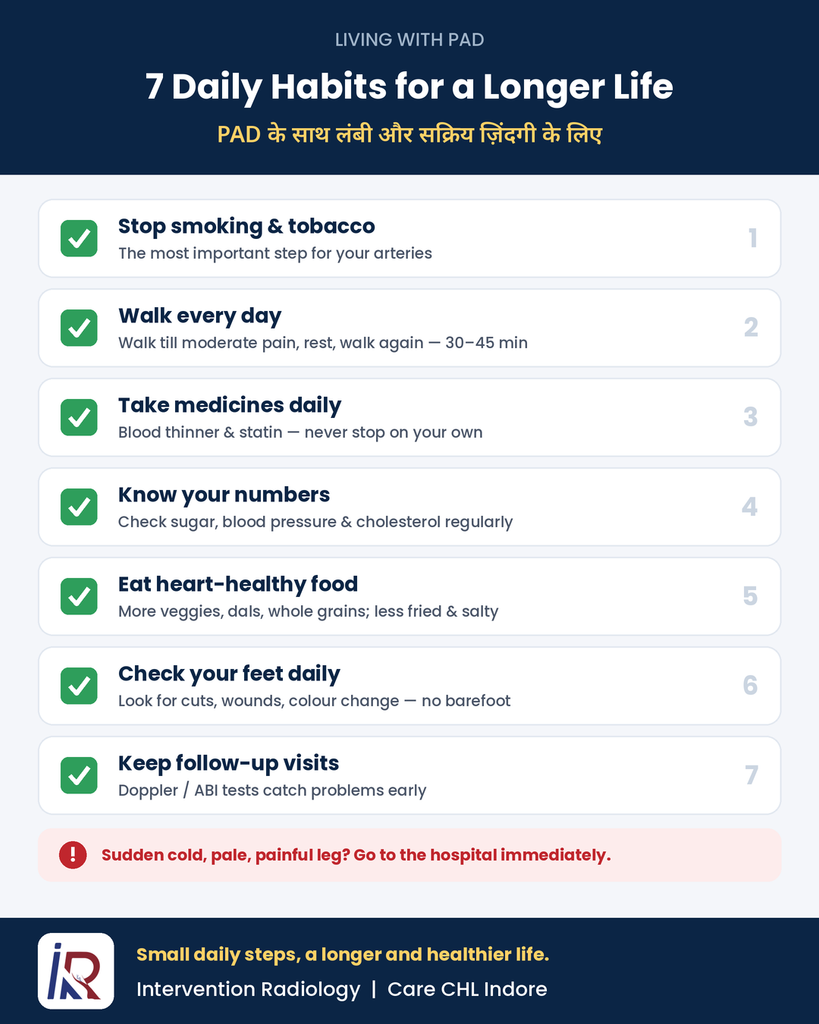
7 daily habits for a longer life with PAD
- Stop smoking and tobacco completely. This is the most important step.
- Walk every day, using the walk–rest–walk method.
- Take your medicines daily, especially the blood thinner and statin.
- Know your numbers: sugar, blood pressure and cholesterol, checked regularly.
- Eat heart-healthy food: more vegetables, fruits, whole grains, dals and nuts; less fried food, sweets and salt.
- Check your feet every day: look for cuts, blisters, colour change or wounds. Never walk barefoot.
- Keep your follow-up visits: repeat Doppler or ABI tests catch problems before they become serious.
Living well with PAD
A PAD diagnosis can feel heavy at first. But many people find it becomes a turning point: they quit smoking, start walking, and take control of their health. Many go on to live long, full and active lives, travelling, working and spending time with family.
You don’t have to manage it alone. A team approach, with your family doctor, Interventional Radiologist, diabetologist and cardiologist working together, gives the best results.
PAD treatment at Care CHL Indore
At Intervention Radiology Indore, PAD care at Care CHL Indore is led by Dr. Alok Kumar Udiya, Interventional Radiologist. The focus is on finding PAD early, restoring blood flow with minimally invasive techniques, and helping patients protect their limbs and their long-term health.
What patients can expect:
- Detailed assessment of the leg arteries with Doppler and angiography
- Balloon angioplasty and stenting through a pinhole, without a large cut
- Limb-salvage treatment for non-healing wounds and critical limb ischaemia
- Coordination with diabetes, heart and wound-care specialists
- Clear guidance on medicines, walking and foot care, plus regular follow-up
Book a consultation with Dr. Alok Kumar Udiya at Care CHL Indore if you have leg pain while walking, cold feet or a wound that will not heal.
Frequently asked questions
1. Can someone with PAD live a long life? Yes. Many people with PAD live long, active lives, especially when it is found early and they stop smoking, take their medicines, walk regularly and keep sugar, blood pressure and cholesterol under control.
2. What is the life expectancy of someone with PAD? There is no single number. It depends on your age, stage of PAD, smoking, diabetes, and heart and brain health. Good treatment and lifestyle changes can greatly improve the outlook.
3. Is PAD a serious condition? Yes. PAD is a sign of narrowed arteries throughout the body, so it raises the risk of heart attack and stroke. But it is very treatable, and the risks can be lowered.
4. Does PAD get worse over time? It can, especially if you keep smoking or your diabetes is poorly controlled. With treatment, many people stay stable for years and their walking improves.
5. Can PAD be reversed? The plaque cannot usually be removed completely, but symptoms can improve a lot. Walking builds natural bypass channels, medicines slow progression, and angioplasty can open blocked arteries.
6. Can PAD lead to amputation? In advanced, untreated PAD, yes. Timely treatment to restore blood flow, along with good wound and foot care, can prevent most amputations.
7. Is walking good for PAD? Yes. Regular walking is one of the best treatments for PAD leg pain. Use the walk–rest–walk method and gradually increase your distance.
8. When does PAD need angioplasty? Angioplasty is considered when leg pain limits your daily life despite medicines and walking, or when there is rest pain, a non-healing wound or gangrene.
9. Is angioplasty for PAD safe? For most patients, yes. It is done through a pinhole under local anaesthesia, usually with a short hospital stay. Your doctor will explain your individual risks.
10. Where can I get PAD treatment in Indore? You can consult Dr. Alok Kumar Udiya, Interventional Radiologist at Intervention Radiology Indore, Care CHL Indore, for PAD assessment and minimally invasive treatment.
Conclusion
So, can someone with PAD live a long life? Yes, and many do. PAD is a warning sign for your whole circulation, not a final verdict. When it is caught early and managed well, with no smoking, daily medicines, regular walking, good sugar and blood pressure control, and timely angioplasty when needed, people with PAD can protect their legs, their heart and their future.
Don’t ignore leg pain while walking, cold feet or a wound that won’t heal. The earlier you act, the better your outlook.
Consult Dr. Alok Kumar Udiya, Interventional Radiologist at Intervention Radiology Indore, Care CHL Indore, for expert PAD care.
Disclaimer: This article is for general information only and is not a substitute for medical advice. Please consult a qualified doctor for diagnosis and treatment of your condition.