
“I don’t have diabetes, so my leg pain can’t be a circulation problem.”
Many people think this way. Peripheral arterial disease (PAD) is often linked with diabetes, so people without diabetes tend to ignore the warning signs.
Yes, you can absolutely have PAD without diabetes. Smoking, high blood pressure, high cholesterol, age and family history can all block the leg arteries — even if your sugar levels are perfectly normal. In fact, a large number of people with PAD do not have diabetes at all.
This guide explains what causes PAD without diabetes, the signs to watch for, how it is diagnosed, and how it can be treated — often without big surgery.
What Is PAD?
Peripheral arterial disease (PAD) is a condition in which the arteries carrying blood to the legs and feet become narrow or blocked.
The most common reason is atherosclerosis — a slow build-up of fat, cholesterol and calcium (plaque) inside the artery walls. As the arteries narrow, the leg muscles and feet do not get enough blood, especially during walking.
PAD is not just a leg problem. The same process that blocks leg arteries can also affect the heart and brain arteries. So PAD is a warning sign of higher risk of heart attack and stroke.
Also Read: Save Limb, Save Life: How Diabetic Foot Ulcers Are Treated Without Amputation
Why Is PAD Linked So Strongly With Diabetes?
Diabetes speeds up artery damage, and people with diabetes often have PAD in the smaller arteries below the knee. That is why PAD is commonly discussed alongside diabetes.
But diabetes is only one of several risk factors. The others are just as important — and some, like smoking, are even stronger.
What Causes PAD Without Diabetes?
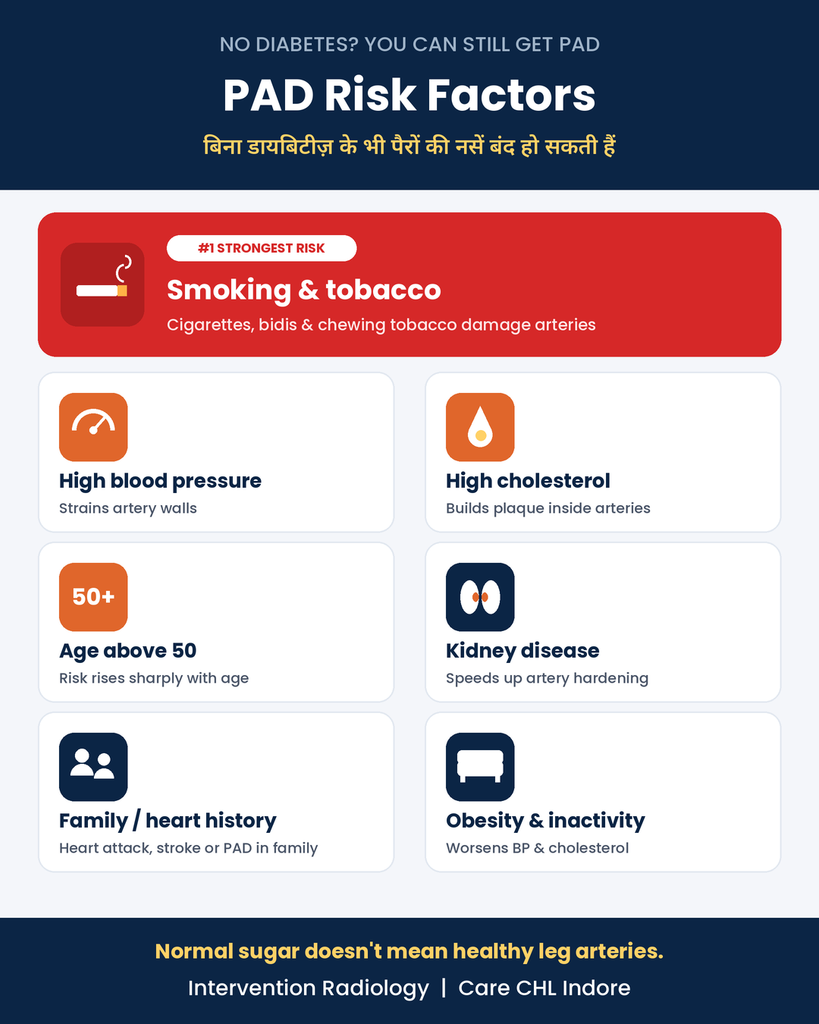
1. Smoking and tobacco use Smoking is the single strongest risk factor for PAD. Cigarettes, bidis and chewing tobacco damage the inner lining of arteries and make blood more likely to clot. Smokers can develop PAD many years earlier than non-smokers.
2. High blood pressure Long-term high BP strains and damages artery walls, making it easier for plaque to build up.
3. High cholesterol High LDL (“bad”) cholesterol and triglycerides feed the plaque that narrows the arteries.
4. Age The risk of PAD rises sharply after the age of 50, and even more after 65.
5. Kidney disease Chronic kidney disease speeds up hardening and calcification of arteries.
6. Family history and existing heart disease If close family members had PAD, heart attack or stroke at a young age — or if you already have heart disease or have had a stroke — your risk is higher.
7. Obesity and an inactive lifestyle Extra weight and lack of exercise worsen BP, cholesterol and overall artery health.
Also Read: Top 7 Effective Methods for Gangrene Treatment Without Surgery
Less Common Causes in People Without Diabetes
Not every leg artery blockage is due to plaque. Especially in younger people, doctors also look for:
- Buerger’s disease (thromboangiitis obliterans): Inflammation and clotting in small and medium arteries of the legs and arms, seen almost only in young tobacco users. It can cause toe ulcers and gangrene.
- Blood clots (embolism): A clot from the heart, for example due to an irregular heartbeat, can suddenly block a leg artery.
- Popliteal artery entrapment: A muscle or tendon behind the knee compresses the artery, usually in young, active people.
- Inflammation of blood vessels (vasculitis) and other rare artery conditions.
| Risk factor | How it harms leg arteries | Can you change it? |
|---|---|---|
| Smoking / tobacco | Damages artery lining, promotes clots | Yes — quitting is the most powerful step |
| High blood pressure | Strains and weakens artery walls | Yes — with medicines and lifestyle |
| High cholesterol | Builds plaque inside arteries | Yes — with diet, exercise and medicines |
| Kidney disease | Speeds up artery hardening | Partly — with good control |
| Obesity / inactivity | Worsens BP, cholesterol, artery health | Yes — with activity and weight control |
| Age / family history | Increases overall risk | No — but regular check-ups help |
Key takeaway: If you smoke, have high BP or high cholesterol, or are over 50, you can develop PAD even with normal sugar levels.
Signs of PAD Without Diabetes
The symptoms of PAD are the same whether or not you have diabetes. Many people have no symptoms in the early stage. Watch for:
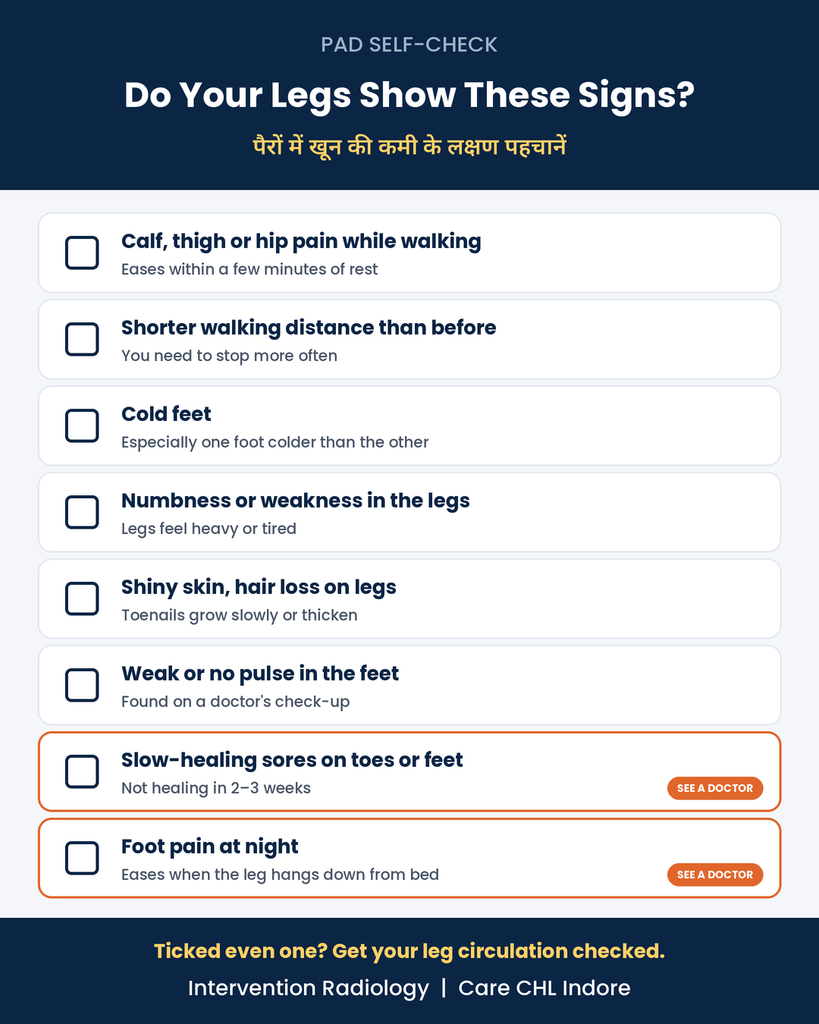
- Cramping, aching or tiredness in the calf, thigh or hip while walking that eases within a few minutes of rest (claudication)
- Being able to walk a shorter distance than before without stopping
- Cold feet, especially one foot colder than the other
- Numbness or weakness in the legs
- Shiny skin, hair loss on the legs, slow-growing toenails
- Weak or absent pulses in the feet
- Sores on toes or feet that heal slowly or not at all
- Pain in the toes or foot at night, eased by hanging the leg down from the bed — a sign of severe PAD
People often blame these symptoms on age, arthritis or “weakness”. If walking regularly brings on leg pain that settles with rest, get your circulation checked.
Also Read: Top PAD Symptoms in Legs: Identifying Peripheral Artery Disease Early
How Is PAD Diagnosed?
- Pulse check of the legs and feet
- Ankle-brachial index (ABI): A simple, painless test that compares BP at the ankle and the arm. It is especially reliable in people without diabetes, because their arteries are less likely to be falsely stiff from calcium.
- Arterial Doppler ultrasound: Shows exactly where the arteries are narrowed or blocked, and how severe it is.
- CT angiography: Gives a detailed map of the leg arteries to plan treatment.
- Blood tests: Cholesterol, sugar and kidney function to check overall risk.
Treatment for PAD Without Diabetes
1. Lifestyle changes
- Stop smoking and all tobacco — the most important step.
- Walk regularly. A structured walking programme can help the legs build new small blood vessels and improve walking distance.
- Eat a heart-healthy diet and keep a healthy weight.
2. Medicines Your doctor may prescribe medicines to thin the blood, lower cholesterol and control BP. These reduce the risk of heart attack and stroke as well as protecting the legs.
3. Opening the blocked artery If symptoms limit daily life, or there is rest pain, a non-healing wound or gangrene, the blocked artery may need to be opened.
How Interventional Radiology Treats PAD
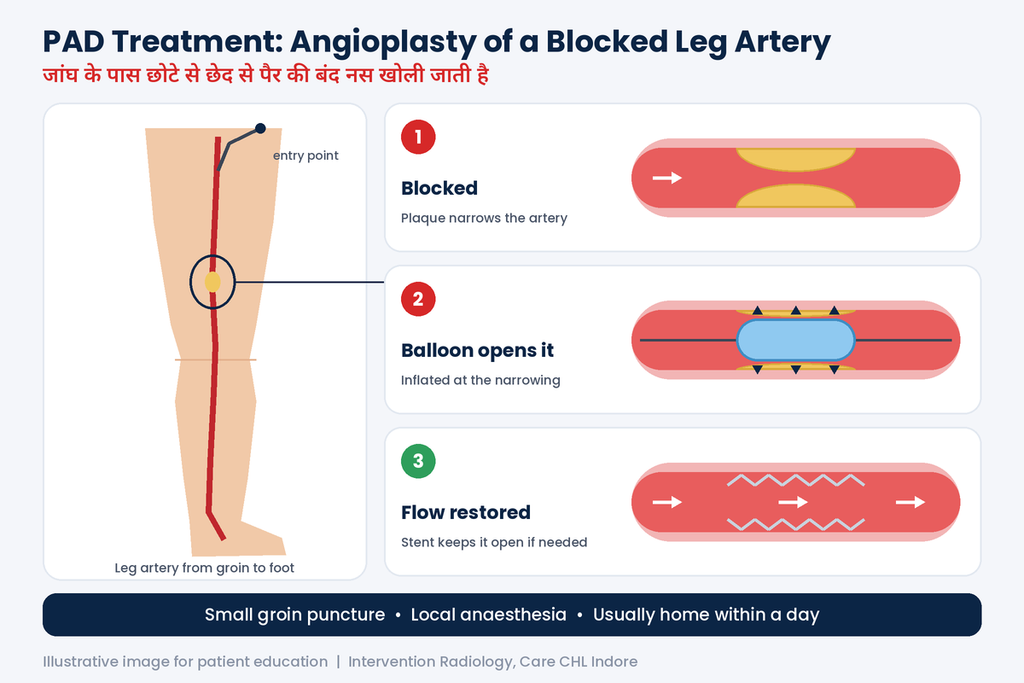
An Interventional Radiologist can open blocked leg arteries from inside, without a large surgical cut:
- A small puncture is made in the groin under local anaesthesia.
- A thin wire and catheter are guided to the blockage using live X-ray.
- A tiny balloon is inflated to open the narrowed artery (angioplasty).
- A stent may be placed to keep the artery open.
- Blood flow to the leg improves, often reducing pain and helping wounds heal.
Most patients go home within a day and return to routine activities quickly. Some long or complex blockages may need bypass surgery, which your care team will discuss.
How to Lower Your Risk of PAD Without Diabetes
- Quit smoking and all forms of tobacco — it is never too late.
- Check your BP regularly and keep it under control.
- Get your cholesterol tested, especially after 40.
- Walk at least 30 minutes on most days.
- Eat more vegetables, fruits, whole grains and less fried and salty food.
- Keep a healthy weight and limit alcohol.
- If you are over 50 and smoke or have high BP or cholesterol, ask your doctor about an ABI test.
Red Flags: See a Doctor Urgently
- Sudden cold, pale, painful or numb leg or foot — this is an emergency
- Black or dark blue toes
- A foot or toe wound not healing in 2 weeks
- Pain in the foot at rest or at night
- Walking distance shrinking quickly
PAD Treatment in Indore at Care CHL Indore
Whether or not you have diabetes, leg pain while walking, cold feet or a slow-healing wound deserve attention. The Intervention Radiology Indore team at Care CHL Indore evaluates and treats PAD with image-guided procedures such as angioplasty and stenting.
Dr. Alok Kumar Udiya, Interventional Radiologist, works with physicians, cardiologists and vascular teams to restore blood flow and help patients walk comfortably again.
Frequently Asked Questions
Can you have PAD without diabetes? Yes. Smoking, high blood pressure, high cholesterol, age, kidney disease and family history can all cause PAD in people without diabetes.
What is the biggest risk factor for PAD without diabetes? Smoking and tobacco use are the strongest risk factors. Quitting greatly lowers the risk of the disease getting worse.
Can young people get PAD? Yes, though it is less common. Young tobacco users can develop Buerger’s disease, and conditions like artery entrapment or clots can also block leg arteries.
Is PAD dangerous if I don’t have diabetes? Yes. PAD can lead to non-healing wounds and gangrene, and it also signals a higher risk of heart attack and stroke.
How is PAD diagnosed? With a pulse check, ankle-brachial index (ABI), Doppler ultrasound and, if needed, CT angiography.
Can PAD be treated without surgery? Often, yes. Many blockages can be opened with angioplasty and stenting done by an Interventional Radiologist through a small puncture.
Where can I get PAD treatment in Indore? PAD treatment is available at Care CHL Indore through the Intervention Radiology team led by Dr. Alok Kumar Udiya, Interventional Radiologist.
Conclusion
PAD is not only a diabetic’s disease. If you smoke, have high BP or high cholesterol, or are getting older, your leg arteries can narrow even with perfectly normal sugar levels.
The good news: PAD without diabetes is often easier to detect with simple tests, and it can be treated well with lifestyle changes, medicines and, when needed, minimally invasive angioplasty.
Leg pain while walking, cold feet or a wound that won’t heal? Consult the Intervention Radiology team at Care CHL Indore.
Disclaimer: This article is for general awareness only and is not a substitute for medical advice. Please consult your doctor for advice specific to your condition.