
A small cut on the toe. A blister from new shoes. For most people, these heal on their own. But in diabetes, a minor foot wound can turn into a serious infection — and sometimes into gangrene.
Many families are unsure: Is this just an infection, or is it gangrene?
An infected diabetic foot means germs have entered the skin, tissue or bone, but the tissue is still alive and can heal with treatment. Gangrene means the tissue has died, usually because of poor blood supply, infection, or both. Infection can often be treated with antibiotics and wound care. Gangrene needs urgent action — often restoring blood flow and removing dead tissue — to save the rest of the foot.
This guide explains the difference between diabetic foot vs gangrene, how to recognise each, and how they are treated.
Why Are Diabetic Feet at Higher Risk?
Diabetes affects the feet in three main ways:
- Nerve damage (neuropathy): You may not feel cuts, blisters or burns, so injuries go unnoticed.
- Poor blood circulation (PAD): Narrowed leg arteries mean less oxygen and fewer infection-fighting cells reach the foot, so wounds heal slowly.
- Weaker immunity: High blood sugar makes it harder for the body to fight infection.
Together, these turn a small wound into a big problem very quickly.
Also Read: Save Limb, Save Life: How Diabetic Foot Ulcers Are Treated Without Amputation
What Is an Infected Diabetic Foot?
An infected diabetic foot means bacteria have entered a wound, ulcer, crack or nail edge and are spreading. It can affect:
- Skin and soft tissue (cellulitis)
- Deeper tissues, forming a pus pocket (abscess)
- Bone (osteomyelitis), especially under long-standing ulcers
Signs of an infected diabetic foot:
- Redness spreading around a wound
- Warmth and swelling
- Pus or cloudy discharge
- Bad smell from the wound
- Pain or tenderness (may be absent if nerves are damaged)
- Fever, chills or unusually high sugar levels
The skin may look red, pink or swollen — but the tissue is still alive. With timely treatment, it can heal.
Also Read: How to Save a Diabetic Foot From Amputation | Modern Minimally Invasive Solutions
What Is Gangrene?
Gangrene means death of body tissue. It happens when tissue does not get enough blood supply, or when a severe infection destroys it. In diabetes, gangrene usually starts in the toes or heel.
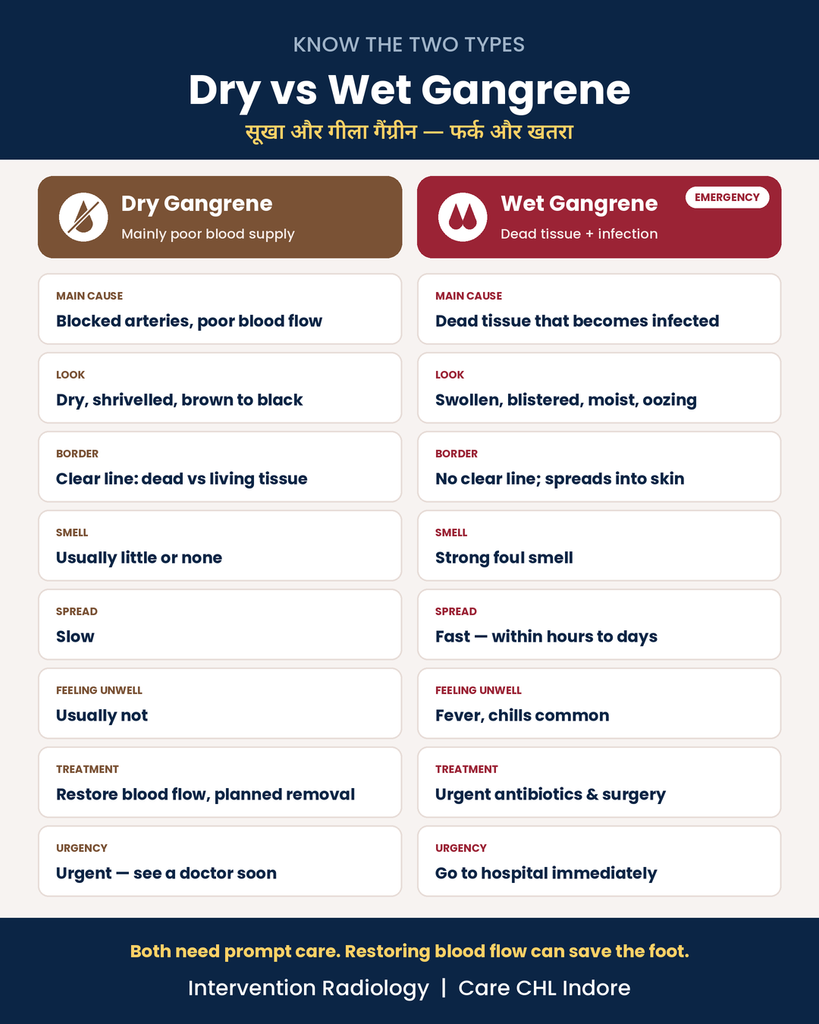
Dry gangrene
- Caused mainly by poor blood supply (blocked leg arteries)
- Skin becomes dry, shrivelled, and brown, purple or black
- Usually has a clear line between dead and living tissue
- Spreads slowly; may not smell
- Foot often feels cold
Wet gangrene
- Dead tissue that has become infected
- Area is swollen, blistered, moist and oozing
- Strong foul smell
- Can spread very fast — within hours to days
- Fever and feeling very unwell are common
- This is a medical emergency
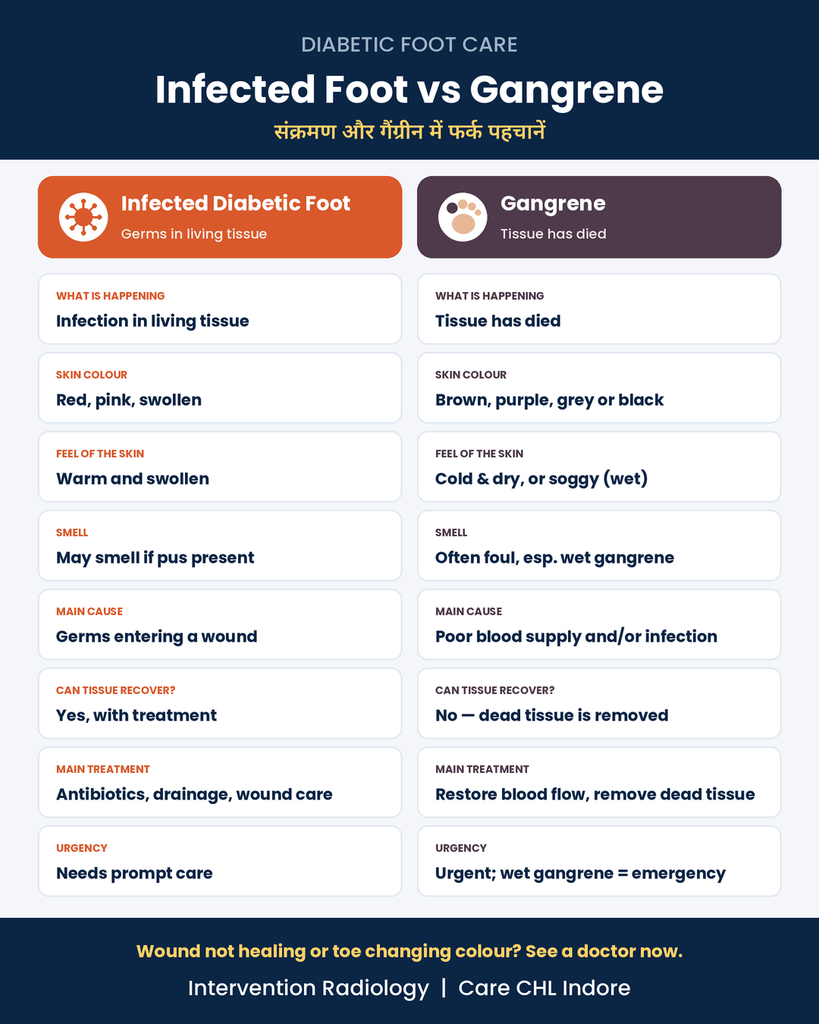
Infected Diabetic Foot vs Gangrene: Key Differences
| Feature | Infected diabetic foot | Gangrene |
|---|---|---|
| What is happening | Infection in living tissue | Tissue has died |
| Skin colour | Red, pink, swollen | Brown, purple, grey or black |
| Feel of the skin | Warm and swollen | Cold and dry (dry) or soggy and swollen (wet) |
| Smell | May smell if pus present | Often foul smell, especially wet gangrene |
| Pain | Present, or absent with nerve damage | Severe, or none if nerves and tissue are dead |
| Main cause | Germs entering a wound | Poor blood supply and/or severe infection |
| Can tissue recover? | Yes, with treatment | No — dead tissue must be removed |
| Main treatment | Antibiotics, drainage, wound care | Restore blood flow, remove dead tissue |
| Urgency | Needs prompt care | Urgent; wet gangrene is an emergency |
How Does an Infected Foot Turn Into Gangrene?
Infection and poor circulation feed each other:
- A small wound gets infected.
- Infection causes swelling, which presses on tiny blood vessels.
- If leg arteries are already narrowed, the area gets even less blood.
- Without enough oxygen, tissue starts to die.
- Dead tissue becomes a home for more infection — leading to wet gangrene.
This is why checking blood flow is just as important as treating infection. A diabetic foot wound that is not healing may be a sign that the leg arteries are blocked.
Also Read: Top Diabetic Foot Ulcer Treatment Options: Effective Solutions for Healing and Prevention
How Doctors Tell Them Apart
- Foot examination: Colour, warmth, swelling, smell, pulses and sensation
- Blood tests: Sugar levels, signs of infection and kidney function
- Wound swab or tissue culture: To find which germ is causing infection and choose the right antibiotic
- X-ray or MRI: To check for bone infection or gas in tissues
- Doppler ultrasound and ankle/toe pressures: To check blood flow to the foot
- CT or catheter angiography: A detailed map of blocked leg arteries, used to plan treatment
Treatment for an Infected Diabetic Foot
- Antibiotics — tablets for mild infection, injections for serious infection
- Drainage of pus and cleaning of the wound
- Removal of unhealthy tissue (debridement) to help healing
- Offloading — special footwear or dressings to take pressure off the wound
- Tight sugar control
- Blood flow check — if circulation is poor, it must be improved for the wound to heal
Treatment for Gangrene
- Urgent assessment of the extent of dead tissue and infection
- Restoring blood flow to the foot whenever possible
- Removal of dead tissue — this may mean removing a toe or part of the foot (minor amputation) to save the rest
- Strong antibiotics for wet gangrene
- Emergency surgery if wet gangrene is spreading quickly
The goal is always to save as much of the foot and leg as possible.
How Interventional Radiology Helps Save the Foot
In people with diabetes, the blocked arteries are often small vessels below the knee. An Interventional Radiologist can open these from inside, without a big surgical cut:
- A small puncture is made in the groin under local anaesthesia.
- A thin wire and catheter are guided to the blockage using live X-ray.
- A tiny balloon opens the narrowed artery (angioplasty); a stent may be placed in some arteries.
- Better blood flow helps wounds heal, limits the spread of gangrene, and can turn a major amputation into a smaller one — or avoid it altogether.
This is called limb salvage. It works best when done early, often alongside wound care, antibiotics and surgery as a team.
Daily Foot Care to Prevent Infection and Gangrene
- Check both feet every day, including between the toes and the soles. Use a mirror or ask family.
- Wash feet in lukewarm water and dry well, especially between the toes.
- Never walk barefoot — not even at home, in temples or on the terrace.
- Wear soft, well-fitting footwear; check inside shoes before wearing.
- Do not cut corns or calluses yourself, and avoid home remedies on wounds.
- Keep sugar, BP and cholesterol under control, and stop smoking.
- See a doctor for any wound that is not healing within a week.
Emergency Warning Signs: Go to the Hospital Immediately
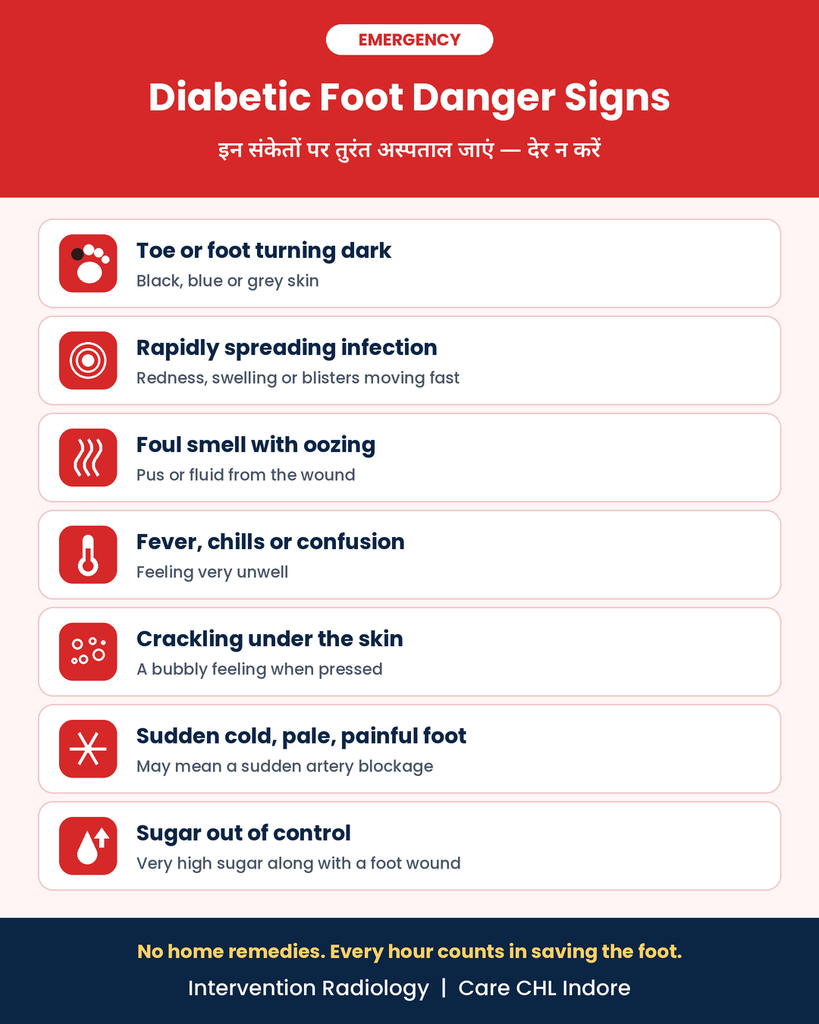
- A toe or part of the foot turning black, blue or grey
- Rapidly spreading redness, swelling or blisters
- Foul smell with oozing from the foot
- Fever, chills, confusion or feeling very unwell
- Crackling feeling under the skin when pressed
- A foot that is suddenly cold, pale and painful
- Very high sugar levels that are hard to control along with a foot wound
Do not wait or try home remedies. Every hour counts in saving the foot.
Diabetic Foot and Gangrene Care in Indore at Care CHL Indore
Whether it is an infected diabetic foot, a non-healing wound or early gangrene, the Intervention Radiology Indore team at Care CHL Indore focuses on one goal: saving the limb.
Dr. Alok Kumar Udiya, Interventional Radiologist, assesses blood flow to the foot and performs limb-saving angioplasty when arteries are blocked, working with diabetologists, surgeons and wound-care teams for complete care.
Frequently Asked Questions
What is the difference between an infected diabetic foot and gangrene? An infected diabetic foot has living tissue with germs in it, usually red, warm and swollen. Gangrene is dead tissue, usually black, brown or grey, caused by poor blood supply, infection or both.
Can an infected diabetic foot turn into gangrene? Yes. If infection is not treated quickly, or if blood flow to the foot is poor, the tissue can die and gangrene can develop.
Is gangrene always treated by amputation? Not always. Dead tissue must be removed, but restoring blood flow early can limit how much needs to be removed and often prevents major amputation.
What is the difference between dry and wet gangrene? Dry gangrene is dry, shrivelled and dark, usually from poor blood supply. Wet gangrene is swollen, oozing and foul-smelling because the dead tissue is infected. Wet gangrene is an emergency.
Can a diabetic foot wound heal without good blood flow? Healing is very difficult without good blood flow. That is why checking and treating blocked arteries is a key part of diabetic foot care.
How can angioplasty help diabetic foot gangrene? Angioplasty opens blocked leg arteries, improving blood supply so wounds can heal and the spread of gangrene can be limited.
Where can I get diabetic foot and gangrene treatment in Indore? Limb-saving care is available at Care CHL Indore through the Intervention Radiology team led by Dr. Alok Kumar Udiya, Interventional Radiologist.
Conclusion
The key difference in diabetic foot vs gangrene is simple: infection affects living tissue that can heal, while gangrene means tissue has already died. Both need prompt care — and both are closely linked to blood flow.
Early treatment of infection, regular foot checks, and restoring blood supply when arteries are blocked can save the foot and protect your ability to walk.
Diabetic foot wound not healing, or a toe changing colour? Consult the Intervention Radiology team at Care CHL Indore without delay.
Disclaimer: This article is for general awareness only and is not a substitute for medical advice. If you notice signs of gangrene or a rapidly spreading foot infection, seek emergency care immediately.