
Heavy, aching legs by evening. A wound near the ankle that just won’t heal. A parent with diabetes whose foot has started to feel cold and numb. A relative who’s just been told an artery in the neck is “blocked” and stroke risk is high. A dialysis patient whose fistula has stopped working properly.
These are the everyday problems that send people searching online for a vascular surgeon in Indore — and if you’re reading this, there’s a good chance one of these situations sounds familiar.
Here’s what most people don’t realise until they start researching: the field of vascular care has changed dramatically over the last two decades. Many conditions that once meant a big surgical incision, general anaesthesia, and weeks of recovery can now be treated through a needle-sized puncture, under local anaesthesia, with patients walking out the same day. This is the world of interventional radiology — and it is why an increasing number of patients in Indore are choosing an Interventional Radiologist over, or alongside, a traditional vascular surgeon.
This guide will walk you through everything you need to know: what a vascular surgeon actually treats, how an interventional radiologist differs from — and often complements — a traditional vascular surgeon, the most common vascular conditions seen in Indore, and how to find the right specialist for your condition. You’ll also meet Dr. Alok Kumar Udiya, a Senior Consultant Interventional Radiologist and Endovascular Surgeon at CARE CHL Hospital, Indore (located near LIG Square), who has spent his career helping patients across central India avoid unnecessary open surgery through advanced, image-guided vascular treatment.
Let’s begin.
What Is a Vascular Surgeon? Understanding the Basics
A vascular surgeon is a doctor who specialises in diagnosing and treating diseases of the vascular system — the network of arteries, veins, and lymphatic vessels that carry blood and fluid throughout the body, everywhere except the heart and brain’s own internal circulation (which fall under cardiology and neurology/neurosurgery respectively, though there is overlap with neurovascular conditions like stroke and brain aneurysms).
Broadly, vascular specialists diagnose and manage:
- Arterial disease — narrowing or blockage of arteries that supply blood to the legs, kidneys, intestines, or brain
- Venous disease — problems with the veins that return blood to the heart, such as varicose veins or blood clots
- Aneurysms — abnormal bulging or weakening of an artery wall that can rupture if untreated
- Dialysis access problems — malfunctioning fistulas or grafts used for kidney dialysis
- Diabetic vascular complications — poor circulation in the legs and feet that can lead to non-healing wounds
Historically, all of this was treated exclusively through open surgery — long incisions, direct visualisation of the blood vessel, and manual repair. Today, a large proportion of these same conditions can be treated through endovascular (inside-the-vessel) techniques, performed using X-ray, ultrasound, or CT guidance instead of a scalpel. This is where interventional radiology comes in.
Also Read: Best Vascular Surgeon in Indore: Dr. Alok Kumar Udiya
Vascular Surgeon vs. Interventional Radiologist in Indore: What’s the Difference?
This is one of the most common questions patients ask before choosing a specialist, so let’s address it directly.
The Traditional Vascular Surgeon
A traditional vascular surgeon is trained primarily in open surgical techniques — making an incision, directly accessing the diseased blood vessel, and repairing or bypassing it by hand. This training also typically includes some endovascular skills in modern surgical curricula, but the foundation remains surgical.
The Interventional Radiologist / Endovascular Surgeon
An Interventional Radiologist is a physician trained in both diagnostic imaging (ultrasound, CT, MRI, X-ray/fluoroscopy) and in performing minimally invasive, image-guided procedures through a tiny needle puncture — usually in the wrist or groin — rather than an open incision. Using real-time imaging as a “GPS,” the interventional radiologist navigates thin catheters and wires through the blood vessels to the exact site of disease, then treats it from the inside: opening blockages with balloons and stents, sealing aneurysms with coils or grafts, closing diseased veins with lasers or glue, or dissolving clots with clot-busting medication delivered directly at the site.
Many interventional radiologists — including those trained in advanced fellowship programmes — are also referred to as Endovascular Surgeons, reflecting the fact that they perform true surgical-level vascular interventions, just through a needle rather than a blade.
Why This Matters for You
| Traditional Open Vascular Surgery | Interventional Radiology (Endovascular) | |
|---|---|---|
| Access | Open incision | Needle-sized puncture |
| Anaesthesia | Usually general/spinal | Usually local |
| Hospital stay | Several days | Same-day or overnight |
| Scarring | Visible surgical scar | Minimal to none |
| Recovery | Weeks | Days |
| Guidance | Direct vision | Real-time imaging (ultrasound/X-ray) |
In practice, the best vascular care in Indore today comes from specialists who can offer both perspectives — recommending open surgery when it is genuinely the better option, but defaulting to minimally invasive, endovascular treatment whenever it can achieve the same result more safely. This is exactly the approach followed by Dr. Alok Kumar Udiya at Intervention Radiology Indore, based at CARE CHL Hospital.
Also Read: Top Endovascular Surgeon in Indore: Expert Care for Vascular Health
Common Vascular Conditions Treated in Indore
If you’re searching for a vascular surgeon in Indore, chances are you or a loved one is dealing with one of the following conditions.
1. Varicose Veins & Chronic Venous Insufficiency
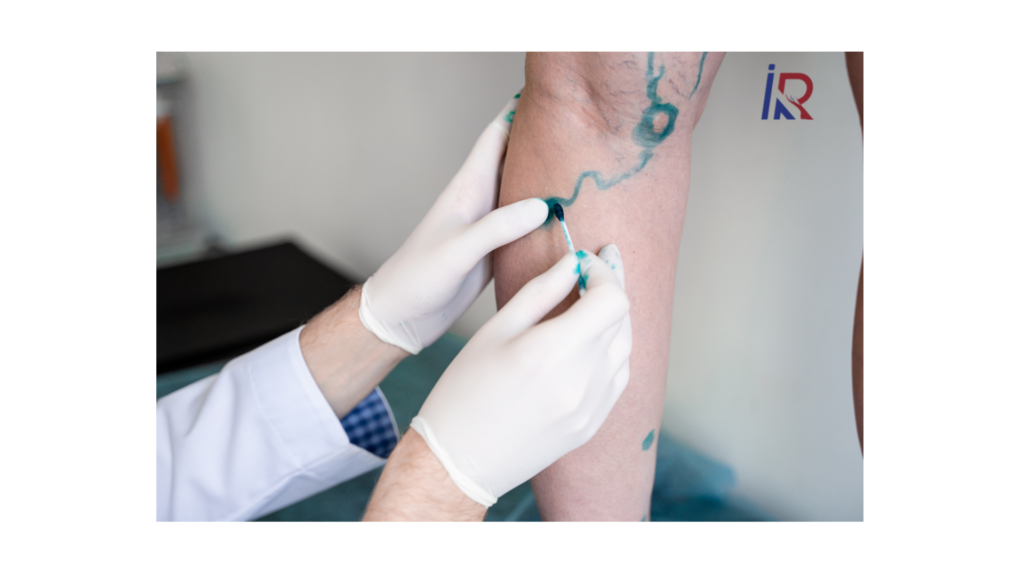
Bulging, twisted, dark-blue veins in the legs — often accompanied by heaviness, aching, swelling, and night cramps. Left untreated, advanced cases can lead to skin discolouration and ulcers near the ankle. Today’s treatment of choice is minimally invasive: endovenous laser ablation (EVLA), radiofrequency ablation (RFA), and ultrasound-guided foam sclerotherapy — all performed as outpatient procedures.
2. Peripheral Artery Disease (PAD)
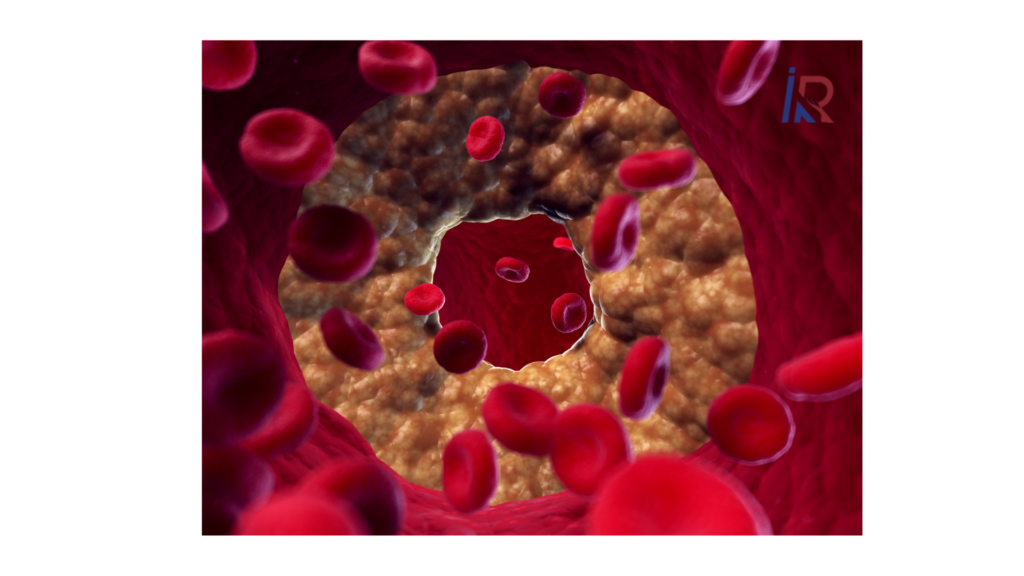
PAD occurs when arteries supplying the legs become narrowed by plaque (atherosclerosis), reducing blood flow. It typically presents as cramping leg pain while walking that eases with rest (claudication), cold feet, or slow-healing wounds. Indian studies show PAD is significantly underdiagnosed — community-based research puts prevalence in the general population anywhere from roughly 5% to over 25%, rising to around 18% among people with type 2 diabetes, a very relevant statistic given Indore’s high diabetes burden. PAD is treated with angioplasty and stenting in most cases today, reserving bypass surgery for the most complex blockages.
3. Deep Vein Thrombosis (DVT)
A blood clot forming in a deep leg vein, causing sudden swelling, pain, warmth, and redness — a genuine medical emergency because part of the clot can travel to the lungs (pulmonary embolism). Modern treatment includes catheter-directed thrombolysis and mechanical thrombectomy, which can clear the clot directly from within the vein.
Also Read: Expert Endovascular Surgeon in Indore: Advanced Vascular Care for Better Outcomes
4. Carotid Artery Disease
Narrowing of the carotid arteries in the neck due to plaque build-up is a major, often silent, cause of stroke. Depending on severity, this is managed with medication, carotid artery stenting, or surgical endarterectomy.
5. Aortic and Other Aneurysms
A weakened, bulging section of the aorta or another major artery that carries a risk of life-threatening rupture if untreated. Many aneurysms — including complex brain (cerebral) aneurysms — can now be treated with coiling, flow-diverter placement, or endovascular aneurysm repair (EVAR) instead of open surgery.
6. Dialysis Fistula and Access Problems
Patients on haemodialysis depend on a well-functioning AV fistula or graft. When it narrows, clots, or fails, fistuloplasty (balloon angioplasty of the fistula) and related interventions can restore function without creating an entirely new access site.
7. Diabetic Foot and Critical Limb Ischemia
Poor circulation combined with diabetic nerve damage can lead to foot ulcers that refuse to heal and, in severe cases, threaten the limb. Restoring blood flow through angioplasty of the leg arteries is often the single most important step in saving the foot and avoiding amputation.
Signs You May Need to See a Vascular Surgeon in Indore
Do not wait to get evaluated if you notice:
- Leg pain, cramping, or heaviness that worsens with walking and improves with rest
- Visible bulging, twisted veins, or persistent leg swelling
- A wound or ulcer near the ankle or foot that isn’t healing within 2-3 weeks
- Cold, pale, or numb feet, especially if you have diabetes
- A sudden painful, swollen leg (possible DVT — seek care immediately)
- A pulsating lump in the abdomen or elsewhere (possible aneurysm)
- Dizziness, slurred speech, or a “mini-stroke” (TIA) — possible carotid disease
- A dialysis fistula that has become difficult to use, or shows reduced thrill/flow
- A family history of aneurysms, blood clots, or vascular disease
If any of these apply to you, an evaluation by an experienced Interventional Radiologist in Indore can help identify the problem early — when treatment is simplest, safest, and most effective.
Also Read: Endovascular Surgeons vs. Vascular Surgeons: What’s the Difference?
Minimally Invasive Vascular Treatments Available in Indore
At Intervention Radiology Indore, patients have access to the full spectrum of modern, image-guided vascular treatments, including:
- Angioplasty & Stenting — opening narrowed arteries with a balloon and, where needed, a supporting stent
- Endovenous Laser Ablation (EVLA) & Radiofrequency Ablation (RFA) — for varicose veins, performed under local anaesthesia
- Ultrasound-Guided Foam Sclerotherapy — needle-based closure of diseased veins
- Carotid Artery Stenting — reducing stroke risk without open neck surgery
- Mechanical Thrombectomy — direct clot removal for DVT and acute limb ischemia
- Aneurysm Coiling and flow-diverter placement for cerebral and other aneurysms
- AV Fistuloplasty — restoring dialysis access without new surgery
- Diabetic limb salvage angioplasty — restoring circulation to prevent amputation
- IVC filter placement — for patients at risk of pulmonary embolism who cannot take blood thinners
Every procedure is performed under real-time ultrasound or fluoroscopic (X-ray) guidance, allowing millimetre-level precision with minimal risk to surrounding tissue.
Meet Dr. Alok Kumar Udiya — Interventional Radiologist & Endovascular Surgeon in Indore
If you are looking for a trusted vascular surgeon in Indore, Dr. Alok Kumar Udiya is one of the most credentialed interventional and endovascular specialists in central India.
Education and Training
- MBBS — M.G.M. Medical College, Indore
- MD (Radiodiagnosis) — Lady Hardinge Medical College, Delhi University
- PDCC (Neuro-Intervention) — Sanjay Gandhi Post Graduate Institute of Medical Sciences (SGPGIMS), Lucknow, with hands-on training in hepatobiliary, peripheral vascular, and neurovascular interventions
- PDCC (Hepatobiliary Interventional Radiology) — Institute of Liver and Biliary Sciences (ILBS), New Delhi
- FINR — Fellowship in Interventional Neuroradiology, University of Zurich, Switzerland, training directly under Professor Anton Valavanis in the endovascular management of stroke and aneurysms
- EBIR — European Board of Interventional Radiology certified
Professional Memberships
Dr. Udiya is a life member of the Indian Radiological and Imaging Association (IRIA) and the Indian Society of Vascular and Interventional Radiology (ISVIR), and a corresponding member of the European Society of Radiology (ESR).
Experience and Recognition
With 8+ years of dedicated experience in interventional radiology and endovascular surgery, Dr. Udiya has authored and co-authored numerous peer-reviewed publications in journals including Neurology India, the British Journal of Radiology, World Neurosurgery, and the Asian Journal of Neurosurgery, and was awarded a Gold Medal in Pathology and Pediatrics during his medical training. He is recognised for his expertise across neuro-intervention, vascular intervention, dialysis and fistula care, and oncology intervention.
Areas of Expertise Relevant to Vascular Care
- Peripheral, renal, and carotid arterial interventions
- Varicose vein ablation (laser and radiofrequency)
- Carotid artery stenting and ICAD (intracranial atherosclerotic disease) stenting
- Cerebral aneurysm coiling and flow-diverter placement
- Dialysis and fistula-related interventions
- GI, renal, and bronchial artery bleed embolization
- Tumour embolization and radiofrequency ablation (liver, breast, lung)
Dr. Udiya’s Approach
Precision: Every procedure is guided by real-time imaging for pinpoint accuracy.
Personalisation: Treatment plans are built around each patient’s specific vascular anatomy, symptoms, and lifestyle — not a one-size-fits-all protocol.
Compassion: Patients are walked through every step of diagnosis and treatment so they feel informed and confident, not just treated.
Learn more about his full background on the About Us page.
Why Choose Intervention Radiology Indore at CARE CHL Hospital (LIG Square)?
If you live in Indore or anywhere in central India, you no longer need to travel to Mumbai, Delhi, or Ahmedabad for advanced vascular care.
Intervention Radiology Indore operates out of CARE CHL Hospital, one of Madhya Pradesh’s most established and trusted healthcare institutions — a 225-bedded, NABH-accredited, multi-specialty hospital that has served the region since 2001.
What patients gain by choosing this centre:
- Advanced imaging infrastructure — high-resolution ultrasound, CT and MR angiography for precise diagnosis
- A dedicated interventional suite built for image-guided vascular procedures
- NABH accreditation, reflecting hospital-wide standards for patient safety and quality
- Two convenient locations for consultations (detailed below)
- A multidisciplinary environment — nephrology, cardiology, oncology, and general/vascular surgery departments all under one roof, useful when vascular disease overlaps with kidney, heart, or cancer care
- A doctor who is internationally trained yet accessible, with consultations conducted in Hindi and English
Clinic Locations, Timings & How to Book
CARE CHL Hospital (near LIG Square) 📍 AB Road, near L.I.G. Square, RSS Nagar, Indore, Madhya Pradesh – 452008 🕙 Consultation hours: 10:00 AM – 5:00 PM
Evening Clinic — Panama Tower 📍 403, Panama Tower, Geeta Bhawan Square, near Crown Palace, South Tukoganj, Indore, Madhya Pradesh – 452001 🕕 Consultation hours: 6:00 PM – 8:00 PM
📞 Call/WhatsApp: +91 99993 78980 ✉️ Email: dralokudiya@gmail.com 🌐 Website: interventionradiologyindore.com
The LIG Square location is a well-known landmark on AB Road, making the hospital easy to find for patients travelling from anywhere in Indore, Dewas, Ujjain, or the wider Malwa region.
What to Expect During Your Vascular Consultation
Step 1: Clinical Evaluation
Dr. Udiya will review your symptoms, medical history, and risk factors (diabetes, smoking, hypertension, family history) and perform a focused physical examination.
Step 2: Imaging Diagnosis
Depending on your condition, this may include a Doppler ultrasound (painless, no radiation, ideal for veins and superficial arteries), CT angiography, or MR angiography to map the exact location and severity of the vascular problem.
Step 3: Personalised Treatment Plan
Based on the findings, you’ll receive a clear explanation of your options — lifestyle and medical management, a minimally invasive endovascular procedure, or, when genuinely necessary, referral for open surgery.
Step 4: The Procedure (If Needed)
Most endovascular procedures are done under local anaesthesia, take between 30 minutes and 1.5 hours, and allow you to walk on the same day.
Step 5: Recovery and Follow-Up
Most patients return to desk-based work within 1-2 days and to physically demanding work within a week. Follow-up imaging is scheduled to confirm the treatment has worked as intended.
Understanding Costs and Insurance
The cost of vascular treatment in Indore varies significantly depending on the specific condition, the procedure required, the materials used (such as the type of stent or catheter), and whether treatment is done on an outpatient or inpatient basis. Many vascular procedures — particularly those considered medically necessary, such as angioplasty for PAD, DVT treatment, or aneurysm repair — are covered by health insurance and government health schemes, though coverage details vary by provider and policy. Purely cosmetic vein treatments may not be covered.
The most reliable way to understand your specific costs is a consultation, where Dr. Udiya’s team can review your diagnosis and insurance coverage and give you a clear, individualised estimate.
Myths and Facts About Vascular Surgery
Myth: “Vascular surgery” always means a big operation with a long scar. Fact: The majority of vascular conditions today — from varicose veins to many arterial blockages and even brain aneurysms — are treated through needle-sized punctures using endovascular techniques.
Myth: Leg pain while walking is just a normal sign of ageing. Fact: Pain, cramping, or heaviness in the legs while walking that eases with rest can be a classic symptom of Peripheral Artery Disease and should be evaluated, not ignored.
Myth: If a wound doesn’t hurt, it isn’t serious. Fact: Diabetic foot ulcers caused by poor circulation are often painless due to nerve damage, yet they are among the most limb-threatening vascular emergencies.
Myth: You need to travel to a metro city for advanced vascular treatment. Fact: Indore is home to internationally trained interventional radiologists and endovascular specialists, including Dr. Alok Kumar Udiya, offering the same techniques available in major metros.
Myth: An interventional radiologist is not a “real” vascular specialist. Fact: Interventional radiologists undergo rigorous training in vascular anatomy, disease, and image-guided treatment, and are often the first choice for the most complex, minimally invasive vascular procedures worldwide.
Frequently Asked Questions
Who is the best vascular surgeon in Indore?
While “best” depends on your specific condition, patients across Indore and central India consistently seek out Dr. Alok Kumar Udiya at CARE CHL Hospital for vascular and endovascular care because of his international training (including a fellowship in Zurich, Switzerland), EBIR certification, and extensive experience across arterial, venous, and neurovascular interventions.
What is the difference between a vascular surgeon and an Interventional Radiologist in Indore?
A traditional vascular surgeon primarily performs open surgery, while an Interventional Radiologist treats the same range of vascular conditions using image-guided, minimally invasive techniques through a small needle puncture — often with less pain, no visible scarring, and a much faster recovery. Many patients now receive the best outcomes when both approaches are available under one roof, as they are at Intervention Radiology Indore.
Is vascular treatment painful?
Most modern endovascular procedures are performed under local anaesthesia and are associated with minimal discomfort — most patients describe the sensation as mild pressure rather than pain.
How much does vascular surgery cost in Indore?
Costs vary widely depending on the diagnosis and procedure. Book a consultation at CARE CHL Hospital, LIG Square, for a personalised assessment and cost estimate.
Do I need surgery for varicose veins or a blocked artery, or are there non-surgical options?
In the majority of cases today, minimally invasive options — including laser ablation, radiofrequency ablation, and angioplasty/stenting — can treat these conditions as effectively as open surgery, with a much shorter recovery.
Where is Dr. Alok Kumar Udiya’s clinic located?
Dr. Udiya consults at CARE CHL Hospital, near LIG Square, RSS Nagar, Indore (10 AM-5 PM), and at an evening clinic at Panama Tower, Geeta Bhawan Square (6 PM-8 PM).
How do I book an appointment?
Call or WhatsApp +91 99993 78980, email dralokudiya@gmail.com, or visit the Contact Us page on the Intervention Radiology Indore website.
Conclusion: Expert Vascular Care Is Closer Than You Think
Whether you’re dealing with painful varicose veins, a leg that cramps with every walk, a stubborn diabetic wound, a dialysis fistula that’s stopped working, or you’ve simply been told you need to “see a vascular surgeon,” the reality is that Indore now offers the same advanced, minimally invasive vascular care available in India’s largest metros.
Dr. Alok Kumar Udiya, Interventional Radiologist and Endovascular Surgeon at CARE CHL Hospital, LIG Square, brings internationally trained expertise, a personalised approach, and access to the full range of modern endovascular treatments — so you can get an accurate diagnosis and, in most cases, walk out the same day.
Don’t wait for symptoms to worsen. Early evaluation is almost always simpler, safer, and more effective than treating advanced complications later.
Book Your Vascular Consultation Today
📍 CARE CHL Hospital, AB Road, near LIG Square, RSS Nagar, Indore, MP 452008 (10 AM-5 PM) 📍 Evening Clinic, 403 Panama Tower, Geeta Bhawan Square, Indore, MP 452001 (6 PM-8 PM) 📞 +91 99993 78980 🌐 interventionradiologyindore.com 👨⚕️ Dr. Alok Kumar Udiya — Interventional Radiologist & Endovascular Surgeon
Take the first step toward healthier circulation. Book your consultation with the trusted team at Intervention Radiology Indore today.
Disclaimer: This blog is intended for educational purposes only and does not constitute medical advice. Please consult a qualified medical professional for diagnosis and treatment of any health condition.