
A Diabetic Foot problem may start with a small wound, swelling, black patch, burning sensation, or numbness. Many patients ignore it in the beginning because there is little or no pain. But in diabetes, even a small foot wound can become serious if blood flow is poor or infection spreads.
The good news is that many diabetic foot cases can be managed before they reach amputation stage. Modern treatment, especially minimally invasive vascular procedures, can help improve blood flow, support wound healing, and reduce the risk of limb loss.
If you are searching for advanced diabetic foot treatment in Indore, DR. ALOK KUMAR UDIYA, specialist in Intervention Radiology Indore, provides minimally invasive vascular care at Care CHL Indore.
What is Diabetic Foot?
Diabetic Foot is a condition where diabetes affects the foot due to nerve damage, poor blood circulation, infection, or non-healing wounds.
Diabetes can reduce blood flow and damage nerves, making foot wounds harder to heal and increasing the risk of infection and amputation.
Common diabetic foot problems include:
- Non-healing wounds
- Foot ulcers
- Blackening of toes
- Swelling
- Pus or infection
- Numbness
- Burning sensation
- Cold foot
- Pain while walking
- Gangrene
Also Read: Diabetic Foot: Early Signs, Warning Symptoms & When to See a Specialist

Why Diabetic Foot Can Lead to Amputation
A diabetic foot becomes dangerous mainly because of three reasons:
1. Poor Blood Flow
Diabetes can damage blood vessels. When blood flow to the foot reduces, oxygen and nutrients do not reach the wound properly. As a result, the wound does not heal.
2. Nerve Damage
Many diabetic patients lose sensation in the feet. They may not feel pain even if there is injury, cut, burn, or shoe bite.
3. Infection
A small wound can get infected. If infection spreads deep into tissue or bone, the risk becomes higher.
Foot ulcers in diabetes can develop because of neuropathy and peripheral artery disease, and complications may include infection, gangrene, and amputation.
Also Read: Top Diabetic Foot Ulcer Treatment Options: Effective Solutions for Healing and Prevention
Warning Signs You Should Not Ignore
Visit a doctor urgently if you notice:
- Wound not healing for more than 7–10 days
- Black or blue color of toe
- Pus or bad smell from wound
- Swelling in foot
- Fever with foot infection
- Severe pain or burning
- Numbness in foot
- Cold foot
- Skin color change
- Pain while walking that improves with rest
These signs may mean poor blood circulation or serious infection.
Also Read: 10 Diabetic Foot Problems & Expert Tips to Manage Them
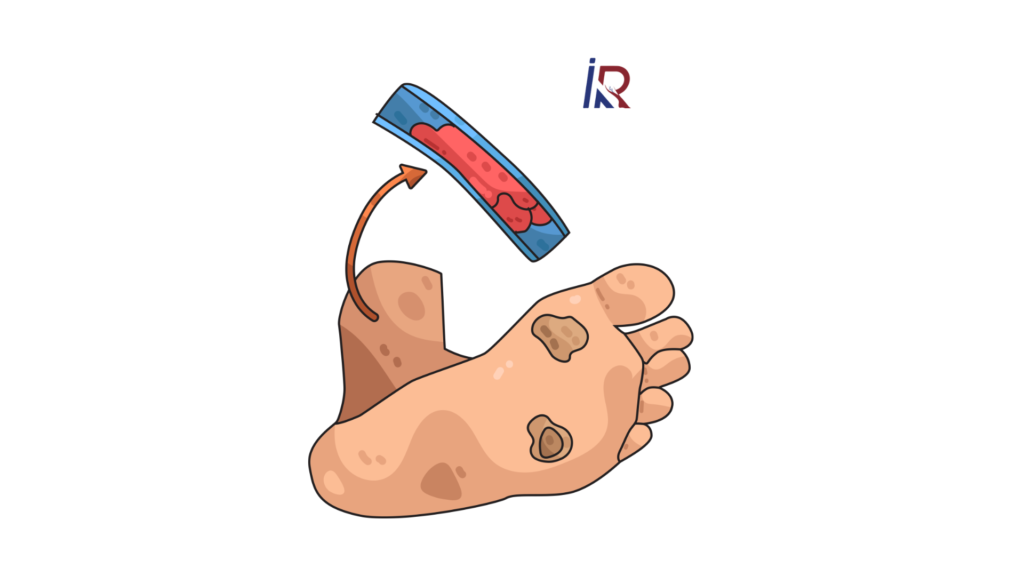
Can Diabetic Foot Be Saved From Amputation?
Yes, in many cases, diabetic foot can be saved if treatment starts early.
The goal is to:
- Control infection
- Improve blood circulation
- Heal the wound
- Protect the foot from pressure
- Control blood sugar
- Prevent further damage
Studies and clinical reviews show that prompt intervention, preventive care, wound care, and vascular treatment can help reduce diabetic foot-related amputations.
Role of Minimally Invasive Treatment in Diabetic Foot
In many diabetic foot cases, the main issue is blocked blood vessels in the leg. When arteries are blocked, the wound does not heal even after medicines and dressing.
This is where Intervention Radiology Indore becomes very important.
Interventional radiology uses image-guided techniques to open blocked blood vessels without major open surgery.
Modern Minimally Invasive Solutions for Diabetic Foot
1. Peripheral Angiography
This test helps doctors see the blocked blood vessels in the leg. It shows where the blockage is and how severe it is.
2. Peripheral Angioplasty
Peripheral angioplasty is a minimally invasive treatment where a small balloon is used to open blocked leg arteries. This helps restore blood flow to the foot.
Better blood flow helps wounds heal faster and reduces the risk of amputation.
3. Stenting
In selected cases, a small metal tube called a stent may be placed to keep the artery open.
4. Drug-Coated Balloon Treatment
In some cases, special balloons may be used to reduce the chance of re-narrowing of the artery.
5. Wound Care Support
Along with vascular treatment, proper wound care, dressing, infection control, and sugar control are also necessary.

Why Blood Flow Matters in Diabetic Foot
No wound can heal properly without blood supply. Blood carries oxygen, nutrients, and healing cells.
If blood vessels are blocked, even the best medicines and dressings may not work properly. That is why checking blood circulation is very important in every serious diabetic foot case.
Patients with diabetes and peripheral artery disease are at higher risk of major limb amputation, especially when blood flow is poor.
Diabetic Foot Treatment in Indore
For patients in Indore and nearby areas, early consultation can make a major difference.
At Care CHL Indore, DR. ALOK KUMAR UDIYA provides advanced care for diabetic foot-related vascular problems through Intervention Radiology Indore.
Patients from Indore, Dewas, Ujjain, Mhow, Dhar, Ratlam, Khandwa, and nearby regions can consult for diabetic foot evaluation, blood flow assessment, and minimally invasive treatment planning.
Why Choose DR. ALOK KUMAR UDIYA?
DR. ALOK KUMAR UDIYA is experienced in image-guided vascular and minimally invasive procedures.
Patients choose him for:
- Diabetic foot vascular evaluation
- Peripheral angiography
- Peripheral angioplasty
- Limb-saving minimally invasive treatment
- Advanced care at Care CHL Indore
- Focus on avoiding major surgery when possible
When Should a Diabetic Patient Visit an Interventional Radiologist?
A diabetic patient should consult an interventional radiologist if:
- Foot wound is not healing
- Toe is turning black
- Foot feels cold
- There is pain while walking
- There is repeated infection
- Doppler shows poor blood flow
- Doctor suspects blocked leg arteries
- Amputation has been suggested and patient wants vascular evaluation
Before deciding amputation, blood flow should be properly checked wherever medically possible.
Diabetic Foot Treatment Approach
| Problem | Treatment Approach |
|---|---|
| Poor blood flow | Angiography, angioplasty, stenting |
| Infection | Antibiotics, drainage, wound care |
| Non-healing ulcer | Blood flow correction + dressing |
| Numbness | Diabetes control, foot protection |
| Black toe/gangrene | Urgent vascular evaluation |
| Repeated wounds | Footwear correction, sugar control, regular follow-up |
How to Prevent Diabetic Foot Amputation
1. Check Your Feet Daily
Look for cuts, swelling, color change, blisters, cracks, or wounds. CDC recommends daily foot checks for people with diabetes.
2. Do Not Walk Barefoot
Even a small injury can become serious.
3. Control Blood Sugar
High sugar slows healing and increases infection risk.
4. Wear Proper Footwear
Avoid tight shoes, hard slippers, or footwear that causes pressure.
5. Do Not Ignore Small Wounds
A small wound in diabetes should be treated early.
6. Get Blood Flow Checked
If the wound is not healing, ask your doctor about Doppler, angiography, or vascular evaluation.
7. Avoid Self-Treatment
Do not apply harsh chemicals, hot water, or home remedies on diabetic wounds.
Common Mistakes Patients Make
Many diabetic foot patients delay treatment because they think:
- “It is just a small wound.”
- “There is no pain, so it is not serious.”
- “Dressing alone will heal it.”
- “Black toe will become normal.”
- “Amputation is the only option.”
These assumptions can be dangerous. Early vascular evaluation can sometimes save the limb.
FAQs
1. What is Diabetic Foot?
It is a foot problem caused by diabetes-related nerve damage, poor blood flow, infection, or non-healing wounds.
2. Can diabetic foot be treated without amputation?
Yes, many cases can be treated without amputation if diagnosed early and managed properly.
3. What is the role of angioplasty in diabetic foot?
Angioplasty opens blocked leg arteries and improves blood flow to the foot, which helps wound healing.
4. When should I visit a doctor for diabetic foot?
Visit immediately if there is a non-healing wound, black toe, swelling, pus, fever, cold foot, or walking pain.
5. Who provides diabetic foot vascular treatment in Indore?
You can consult DR. ALOK KUMAR UDIYA, specialist in Intervention Radiology Indore, at Care CHL Indore.
6. Is angioplasty a major surgery?
No. It is a minimally invasive procedure done through a small puncture, usually without large cuts.
7. Can a black toe be saved?
It depends on blood flow, infection, and tissue damage. Early vascular evaluation is very important.
8. Is diabetic foot painful?
Not always. Due to nerve damage, some patients may not feel pain even with serious wounds.
9. Why is my diabetic foot wound not healing?
Common reasons include poor blood flow, infection, high sugar, pressure on wound, or nerve damage.
10. Where can I get diabetic foot treatment in Indore?
For advanced vascular care, visit Care CHL Indore and consult DR. ALOK KUMAR UDIYA for Intervention Radiology Indore treatment options.
Conclusion
A Diabetic Foot should never be ignored. A small wound can become serious if blood flow is poor or infection spreads. But with early diagnosis, proper wound care, sugar control, and minimally invasive vascular treatment, many patients can avoid amputation.
For patients in Indore, DR. ALOK KUMAR UDIYA at Care CHL Indore provides advanced care through Intervention Radiology Indore for diabetic foot, blocked leg arteries, and limb-saving treatment options.
Early action can save your foot, your mobility, and your quality of life.