
You’ve probably seen them — dark blue or purple, rope-like, bulging veins that twist and turn just beneath the skin of the legs. Maybe you’ve noticed them on your own legs and dismissed them as “just a cosmetic issue.” Maybe they ache at the end of a long day, or your legs feel heavy and tired even after a full night’s rest.
These are varicose veins — and while they are incredibly common, they are far more than a beauty concern. Left untreated, varicose veins can lead to chronic leg pain, skin changes, swelling, blood clots, and even open wounds (ulcers) that refuse to heal.
The good news? You no longer need surgery to treat varicose veins.
Thanks to remarkable advances in Intervention Radiology, varicose veins can today be treated with minimally invasive procedures — no general anesthesia, no hospital stay, no long recovery, and no surgical scars. This complete guide will take you through everything you need to know: what varicose veins are, why they happen, what complications they cause, and most importantly — how to get rid of them without going under the knife.
Whether you are in Indore or anywhere in central India, expert care is available right here at Intervention Radiology Indore, led by Dr. Alok Kumar Udiya at CARE CHL Hospital Indore.
Let’s dive in.
What Are Varicose Veins?
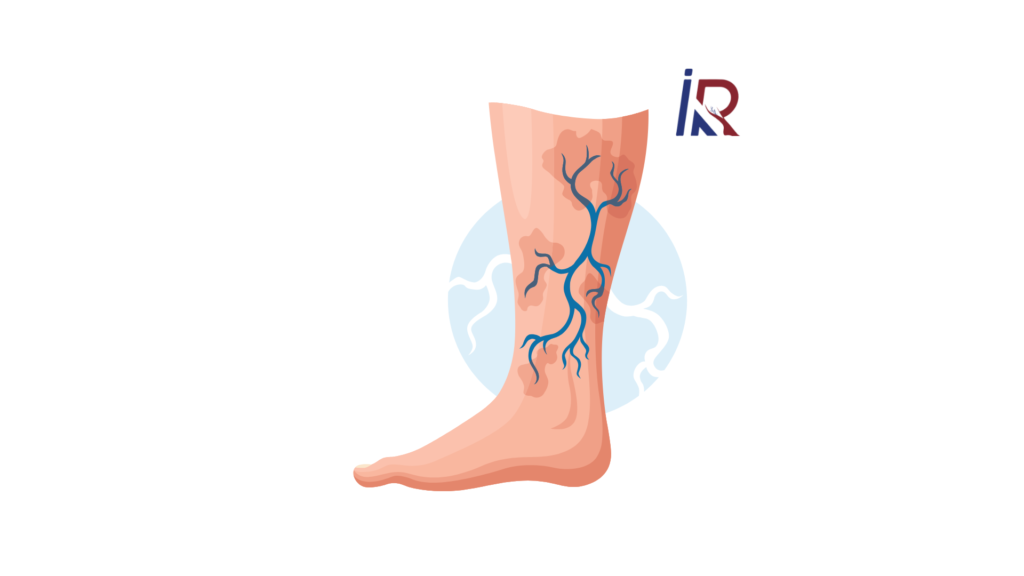
Varicose veins are enlarged, twisted, and swollen veins that most commonly appear in the legs and feet. They develop just under the skin and are usually visible as bluish-purple or dark red bulges.
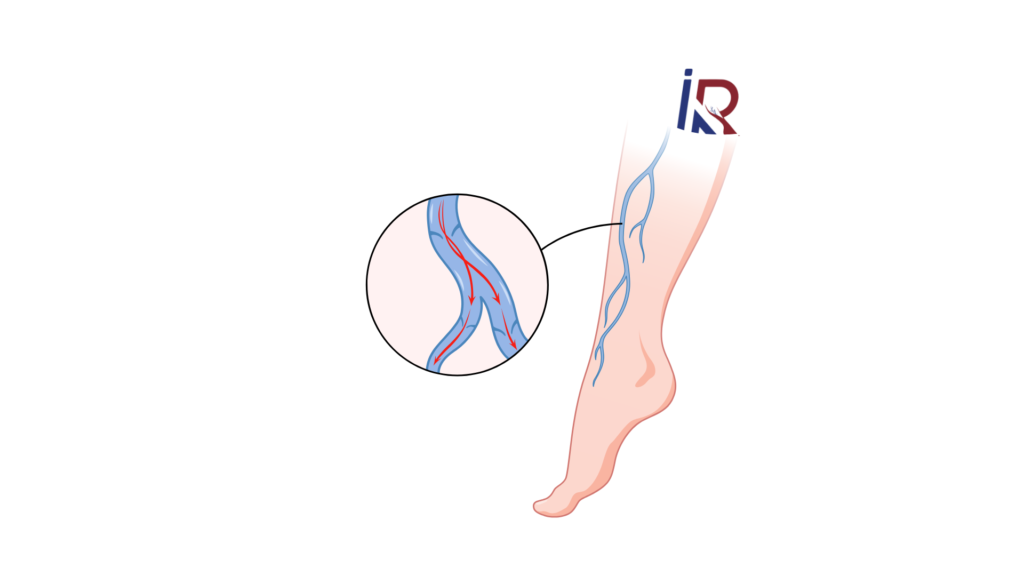
Under normal circumstances, veins carry blood from all parts of the body back to the heart. The veins in our legs have a particularly tough job — they must push blood upward, against the force of gravity. To do this, they rely on a series of tiny one-way valves that open to let blood flow upward and then close to prevent it from flowing back down.
When these valves become weak or damaged, blood is no longer pushed efficiently toward the heart. Instead, it pools in the vein, causing the vein to stretch, swell, and become twisted — and a varicose vein is born.
Also Read: Varicose Veins Symptoms: Early Signs, Causes & When to See a Doctor
Varicose Veins vs. Spider Veins — What’s the Difference?
Many people confuse varicose veins with spider veins. Here is a simple distinction:
- Varicose Veins: Large, bulging, raised above the skin surface, often painful or uncomfortable. Found mainly on the legs.
- Spider Veins (Telangiectasias): Smaller, flat, web-like patterns of red, blue, or purple lines. Usually cosmetic and not painful. Can appear on legs and face.
Both conditions involve abnormal veins, but varicose veins are the more serious of the two and are more likely to cause symptoms and complications.
How Common Are Varicose Veins?
Varicose veins are extremely common. Worldwide, they affect:
- Approximately 23% of adults
- Up to 40% of women and 25% of men at some point in their lives
- People as young as their twenties and thirties — though risk increases with age
In India, millions of people suffer from varicose veins, yet a large number go undiagnosed or untreated because they believe it is “just a cosmetic issue” or assume the only solution is a major surgery.
What Causes Varicose Veins?
Several factors can weaken the vein walls and valves, leading to varicose veins:
1. Prolonged Standing or Sitting
Jobs that require long hours of standing — teachers, nurses, factory workers, security guards — or long hours of sitting — IT professionals, office workers, drivers — increase pressure on leg veins significantly.
2. Age
As we age, the vein walls and valves naturally lose elasticity and strength, making varicose veins more likely.
3. Pregnancy
During pregnancy, the volume of blood in the body increases dramatically, putting extra pressure on leg veins. Hormonal changes also relax vein walls. Many women first develop varicose veins during pregnancy.
4. Genetics and Family History
Varicose veins run in families. If one or both of your parents had them, your risk is significantly higher.
5. Obesity
Excess body weight puts added pressure on the veins in the lower body, weakening the valves over time.
6. Female Gender
Women are more likely to develop varicose veins than men, partly due to hormonal influences during menstruation, pregnancy, and menopause.
7. Previous Blood Clots or Vein Injuries
Damage to the vein from prior deep vein thrombosis (DVT) or injury can impair valve function.
Also Read: Varicose Veins: Causes, Symptoms & The Best Non-Surgical Treatments in 2026
Symptoms: How Do You Know You Have Varicose Veins?
Varicose veins don’t always announce themselves with dramatic symptoms. Some people have visibly bulging veins with no discomfort at all. Others have significant symptoms even without obvious visible veins (called “hidden” or deep varicose veins).
Common symptoms include:
- Visible bulging veins — dark blue or purple, twisted, raised above skin
- Aching or heavy legs — especially after standing for long periods
- Leg swelling — particularly around the ankles and feet by evening
- Burning, throbbing, or cramping in the lower legs
- Itching around the vein
- Skin discolouration — brownish or reddish patches around the ankle
- Restless leg feeling — an uncomfortable urge to move the legs, especially at night
- Leg fatigue — legs that feel exhausted even without heavy physical activity
If you experience any of these symptoms — especially skin changes or ulcers near the ankle — it is important to see a specialist promptly.
Also Read: Varicose Veins Pain Relief | Complete Guide to Reduce Pain, Swelling & Discomfort
Complications: Why You Should Not Ignore Varicose Veins
Many people make the mistake of ignoring varicose veins for years, dismissing them as “just looks.” This can be a costly mistake. Untreated varicose veins can lead to serious complications:
1. Chronic Venous Insufficiency (CVI)
When the veins chronically fail to return blood efficiently, the condition progresses to chronic venous insufficiency — causing persistent swelling, skin changes, and significant quality-of-life impairment.
2. Skin Changes and Eczema
The pooled blood causes inflammation in the surrounding skin, leading to itching, redness, and eczema-like patches.
3. Lipodermatosclerosis
The skin and fat beneath the skin around the lower leg harden and become scarred — a painful, disfiguring complication of long-standing varicose veins.
4. Venous Ulcers
The most serious complication — chronic wounds that develop near the ankle due to severe venous insufficiency. These ulcers are notoriously difficult to heal and can remain open for months or even years.
5. Superficial Thrombophlebitis
The blood pooling in varicose veins can clot, causing painful inflammation of the vein — called superficial thrombophlebitis.
6. Deep Vein Thrombosis (DVT)
In some cases, the clot can extend into deep veins, causing DVT — a potentially life-threatening condition if the clot travels to the lungs (pulmonary embolism).
7. Bleeding
Varicose veins just under the skin can bleed significantly — even from a minor scratch or bump.
The message is clear: varicose veins are a medical condition, not just a cosmetic one, and they deserve timely treatment.
Diagnosis: How Are Varicose Veins Evaluated?
Before recommending treatment, your doctor will perform a thorough evaluation:
Clinical Examination
Your doctor will visually examine your legs while you stand, looking for visible varicose veins, skin changes, and swelling.
Duplex Ultrasound
This is the most important diagnostic test for varicose veins. A duplex ultrasound uses sound waves to create images of the blood vessels and measures the direction of blood flow. It can identify:
- Which veins are diseased
- Exactly where the faulty valves are located
- Whether there is reflux (blood flowing backward)
- The depth and size of the affected veins
- Whether deep veins are also involved
This test is completely painless, takes about 30–45 minutes, and gives the treating doctor a precise “road map” of your venous system — essential for planning the right treatment.
At CARE CHL Hospital Indore, Dr. Alok Kumar Udiya uses state-of-the-art duplex ultrasound to map your varicose veins with exceptional accuracy before recommending a treatment plan.
Traditional Treatment: Surgery and Why People Fear It
For decades, the standard surgical treatment for varicose veins was vein stripping — a procedure where the surgeon made multiple incisions in the leg and physically pulled out the diseased vein using a metal rod.
While effective, vein stripping is associated with significant drawbacks:
- General or spinal anesthesia required
- Multiple surgical incisions along the leg
- Significant post-operative pain for days to weeks
- Bruising and swelling that can last for weeks
- Risk of nerve damage causing numbness or tingling
- Long recovery time — patients often unable to work for 2–4 weeks
- Visible scarring on the legs
- Risk of infection and wound complications
- Hospitalization of 1–3 days
It is no wonder that many patients with varicose veins delay seeking treatment when they believe surgery is the only option. Thankfully, that is no longer the case.
The Modern Revolution: Minimally Invasive Treatments for Varicose Veins
Interventional Radiology has completely transformed the treatment of varicose veins over the past two decades. Today, several highly effective, minimally invasive procedures can eliminate varicose veins with a needle prick instead of a scalpel — right in the outpatient clinic, under local anesthesia, with patients walking out the same day.
Here are the main options:
1. Endovenous Laser Ablation (EVLA / EVLT)
What it is: Endovenous Laser Ablation is one of the most popular and proven treatments for varicose veins. It uses laser energy delivered inside the vein to destroy it from within.
How it works:
- The leg is cleaned and local anesthetic is injected along the vein
- A thin laser fiber is inserted into the diseased vein through a tiny needle puncture (no incision)
- The laser fiber is activated and slowly withdrawn, delivering laser energy that heats and collapses the vein wall
- The destroyed vein is naturally absorbed by the body over the following weeks
- Blood is automatically rerouted to healthier veins
- The procedure takes 30–60 minutes
- The patient walks out of the clinic on their own
Advantages:
- Only a tiny needle puncture — virtually no scar
- Done under local anesthesia (tumescent anesthesia)
- No hospitalization required
- Immediate walking and normal activity
- Very high success rates (over 95%)
- Low risk of complications
2. Radiofrequency Ablation (RFA)
What it is: Radiofrequency Ablation (RFA) works on the same principle as laser ablation but uses radiofrequency (heat) energy instead of laser energy to close the diseased vein.
How it works:
- Under ultrasound guidance, a thin catheter (flexible tube) is inserted into the vein through a small puncture
- Tumescent local anesthesia is injected around the vein
- The radiofrequency catheter heats the vein wall to approximately 120°C in controlled segments
- The heated vein collapses and seals shut
- The body gradually absorbs the closed vein
- Takes 45–60 minutes
Advantages:
- Less post-procedure pain and bruising compared to laser in some patients
- Faster return to normal activity
- Excellent cosmetic outcome
- Very high long-term success rates
- Guided by real-time ultrasound for precision
3. Ultrasound-Guided Foam Sclerotherapy (UGFS)
What it is: Sclerotherapy involves injecting a special chemical solution (sclerosant) directly into the varicose vein. The chemical irritates the vein wall, causing it to swell, stick together, and eventually scar and disappear.
In foam sclerotherapy, the sclerosant is mixed with air to create a foam — which is more effective than liquid because it displaces blood, stays in contact with the vein wall longer, and works on larger veins.
How it works:
- Under ultrasound guidance, a needle is inserted into the vein
- Foam sclerosant is injected into the vein
- The foam fills the vein and causes it to spasm and close
- Multiple veins can be treated in a single session
- No anesthesia needed for most sessions
- The patient walks immediately after the procedure
Advantages:
- Completely needle-based — no cuts at all
- Ideal for smaller varicose veins and residual veins after laser/RFA treatment
- Multiple veins treated in one session
- Very cost-effective
- Can be repeated if needed
4. VenaSeal (Cyanoacrylate Glue Closure)
What it is: VenaSeal is one of the newest and most innovative treatments for varicose veins. It uses a medical-grade glue (cyanoacrylate) to seal the diseased vein shut — no heat, no chemicals, no anesthesia injections around the vein.
How it works:
- A thin catheter is inserted into the vein through a small skin puncture
- Medical glue is delivered at precise intervals along the vein
- The glue immediately seals the vein walls together
- The vein is permanently closed
- The body absorbs it over time
Advantages:
- No tumescent anesthesia needed (just one small local injection at the entry point)
- No risk of heat-related nerve injury
- Immediate return to full activity
- No compression stockings needed post-procedure in most cases
- Excellent for patients who cannot tolerate anesthesia injections
5. Ambulatory Phlebectomy (Micro-Phlebectomy)
What it is: For large surface varicose veins that branch off the main vein, ambulatory phlebectomy is used alongside ablation procedures. Very tiny punctures (1–2mm) are made in the skin, and the visible varicose vein segments are removed using a small hook — all under local anesthesia.
Advantages:
- Punctures so small they need no sutures and leave virtually no scars
- Excellent cosmetic result for bulging surface veins
- Done in the outpatient clinic under local anesthesia
- Combined with EVLA or RFA for comprehensive treatment
Which Treatment Is Right for You?
The right treatment depends on several factors, including:
- The size and location of the affected veins
- The severity of venous reflux
- The depth of the vein (superficial vs. deep)
- Your overall health and medical history
- Your symptoms and goals (cosmetic vs. symptomatic relief)
Dr. Alok Kumar Udiya at Intervention Radiology Indore performs a comprehensive duplex ultrasound evaluation and designs a personalized treatment plan for each patient. In many cases, a combination of techniques — for example, EVLA for the main vein and foam sclerotherapy for tributary veins — gives the best result.
What to Expect: Before, During, and After the Procedure
Before the Procedure
- Consultation and duplex ultrasound mapping of your veins
- Simple blood tests if required
- No fasting needed (only local anesthesia is used)
- Wear or bring loose, comfortable clothing
- Arrange a ride home as a precaution (though most patients can drive themselves)
During the Procedure
- You lie on a procedure table, usually face down or on your side
- The leg is cleaned and local anesthesia is administered
- The doctor uses real-time ultrasound to guide every step
- You feel minimal discomfort — most patients rate pain as 1–2 out of 10
- The procedure takes 45 minutes to 1.5 hours
- You remain awake and relaxed throughout
After the Procedure
- You are encouraged to walk immediately after the procedure
- A compression bandage or stocking is applied
- Mild bruising, soreness, or tightness in the treated leg for a few days — normal and expected
- Simple painkillers (like paracetamol or ibuprofen) if needed
- Return to work in 1–2 days for desk jobs; 3–5 days for physically demanding work
- Avoid heavy lifting, hot baths, and long flights for 1–2 weeks
- Follow-up duplex ultrasound at 1 week and 3 months to confirm vein closure
- Compression stockings to be worn for 1–2 weeks as advised
Lifestyle Changes to Support Treatment and Prevent Recurrence
Minimally invasive treatment is highly effective, but certain lifestyle changes help maintain results and prevent new varicose veins from forming:
Exercise Regularly: Walking, cycling, and swimming are excellent for improving circulation and strengthening calf muscles — your natural “venous pump.”
Maintain a Healthy Weight: Reducing excess weight significantly decreases pressure on leg veins.
Elevate Your Legs: When resting, elevate your legs above the level of your heart to help blood flow back toward the heart.
Avoid Long Periods of Standing or Sitting: If your job requires prolonged standing or sitting, take short breaks every 30–45 minutes to walk around and flex your ankles.
Wear Compression Stockings: Medical-grade compression stockings support vein function and are especially useful during long flights or extended standing.
Avoid High Heels: Low-heeled or flat shoes encourage calf muscle activity, which aids venous return.
Stay Hydrated: Good hydration keeps blood thin and flowing smoothly through the veins.
Why Choose Intervention Radiology Indore?
If you are living with varicose veins in Indore or central India, you no longer need to travel to Mumbai or Delhi for world-class treatment. Intervention Radiology Indore at CARE CHL Hospital Indore brings the latest minimally invasive varicose vein treatments right to your doorstep.
About Dr. Alok Kumar Udiya
Dr. Alok Kumar Udiya is one of central India’s most experienced and respected interventional radiologists. With deep expertise in vascular and non-vascular interventional procedures, Dr. Udiya has helped hundreds of patients in Indore and surrounding regions eliminate varicose veins safely and effectively — without surgery.
His approach is built on three pillars:
Precision: Every procedure is guided by real-time ultrasound imaging, ensuring pinpoint accuracy and minimizing any risk to surrounding structures.
Personalization: No two patients are the same. Dr. Udiya designs a customized treatment plan based on each patient’s unique venous anatomy, symptoms, and lifestyle.
Compassion: Dr. Udiya and his team take time to explain every step of the diagnosis and treatment process, ensuring patients feel informed, comfortable, and confident before, during, and after their procedure.
At CARE CHL Hospital Indore — one of the most advanced and trusted healthcare facilities in Madhya Pradesh — patients have access to state-of-the-art imaging, a fully equipped intervention suite, and a dedicated team committed to delivering the best possible outcomes.
Myths and Facts About Varicose Veins
Myth: Varicose veins are just a cosmetic problem. Fact: They are a medical condition that can cause pain, swelling, skin damage, and serious complications like blood clots and ulcers.
Myth: Only older people get varicose veins. Fact: Varicose veins can develop in people in their twenties and thirties, especially those with a family history or jobs involving prolonged standing.
Myth: Surgery is the only cure. Fact: Modern minimally invasive techniques like EVLA, RFA, and foam sclerotherapy are equally or more effective than surgery — and far safer.
Myth: Varicose veins always come back after treatment. Fact: With proper treatment and lifestyle modifications, recurrence rates are very low. Long-term success rates for EVLA and RFA exceed 90–95%.
Myth: Compression stockings alone can cure varicose veins. Fact: Compression stockings help manage symptoms and slow progression but do not eliminate varicose veins. They are a supportive measure, not a cure.
Myth: Crossing your legs causes varicose veins. Fact: There is no scientific evidence that crossing your legs causes varicose veins. The main causes are genetics, prolonged standing/sitting, pregnancy, and obesity.
When Should You See a Doctor?
Do not delay seeking evaluation if you notice:
- Visible bulging or twisted veins on your legs
- Persistent leg heaviness, aching, or fatigue
- Swelling of the ankles or feet, especially by evening
- Skin darkening or browning near the ankle
- Itching or eczema over the veins
- Any open sore or wound near the ankle that is slow to heal
- A sudden, hard, painful lump over a vein (possible clot)
- Significant bleeding from a vein after minor injury
The earlier you seek treatment, the simpler and more effective the procedure — and the lower the risk of long-term complications.
The Cost of Doing Nothing
Many patients in India delay varicose vein treatment for years — sometimes decades — because they do not consider it serious enough. But the cost of inaction is real:
- Worsening pain and discomfort that limits daily activities
- Skin damage that becomes permanent
- Venous ulcers that require months of wound care and are extremely expensive to treat
- Time lost from work due to worsening symptoms
- Reduced quality of life — inability to stand for long, wear certain clothing, or enjoy physical activities
Treating varicose veins early — especially with today’s minimally invasive options — is far simpler, faster, and more affordable than treating their late complications.
Conclusion: A Life Free From Varicose Veins Is Possible — Without Surgery
Varicose veins are not something you have to live with. They are not a natural, inevitable part of ageing that you must simply endure. They are a treatable medical condition — and today, treatment has never been easier, safer, or more accessible.
Whether your varicose veins are causing you pain, swelling, skin changes, or simply affecting your confidence, the answer is the same: seek evaluation early and explore the minimally invasive options available to you.
At Intervention Radiology Indore, Dr. Alok Kumar Udiya and his expert team at CARE CHL Hospital Indore are ready to help you walk away from varicose veins — literally — with a procedure that takes less than an hour, leaves virtually no scar, and gets you back to your normal life the very next day.
No surgery. No hospital stay. No long recovery.
Just expert care, modern technology, and a fresh pair of legs.
Book Your Consultation Today
📍 CARE CHL Hospital Indore 🌐 interventionradiologyindore.com 👨⚕️ Dr. Alok Kumar Udiya — Senior Interventional Radiologist
Take the first step toward healthier, pain-free legs. Book your duplex ultrasound evaluation today and find out which minimally invasive treatment is right for you.
Disclaimer: This blog is intended for educational purposes only and does not constitute medical advice. Please consult a qualified medical professional for diagnosis and treatment of any health condition.