
It often starts quietly — a slight tingling in the toes at night, a feeling of walking on cotton, or feet that feel cold even in summer. Many people with diabetes ignore these signs for months or years.
But these small changes can be the first symptoms of diabetic neuropathy in the feet — nerve damage caused by high blood sugar over time.
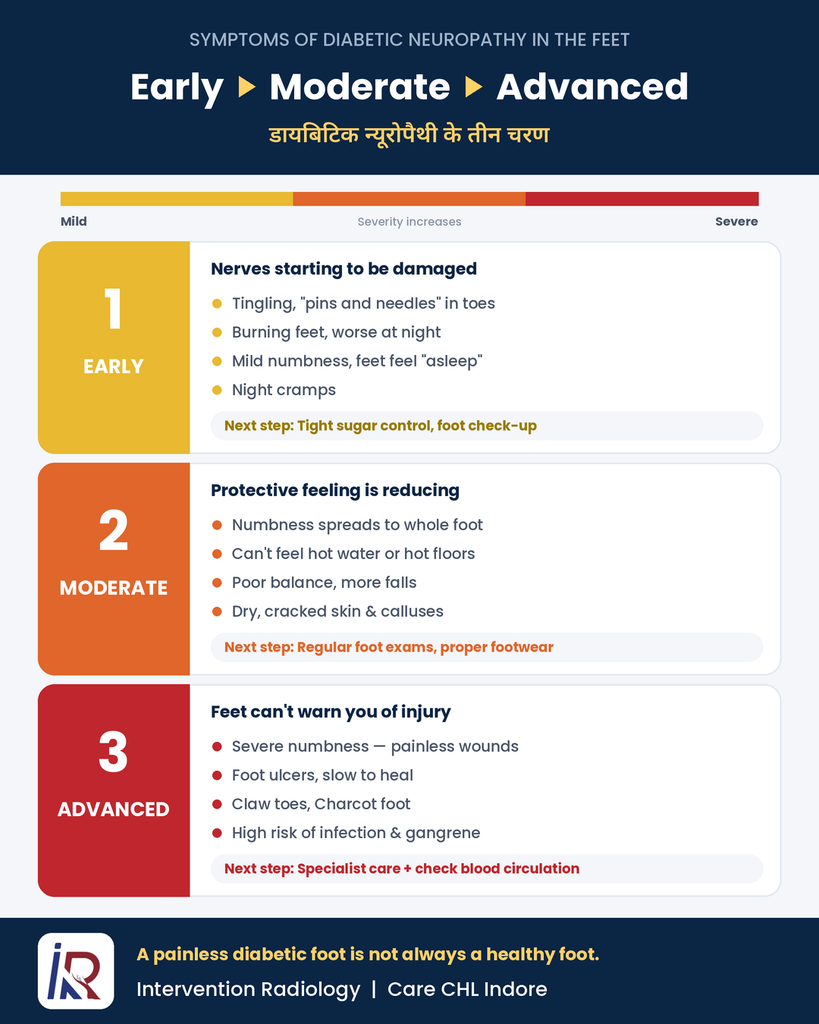
Early diabetic neuropathy usually causes tingling, burning, “pins and needles” or mild numbness in the toes. As it progresses, numbness spreads, balance worsens and pain may become constant. In advanced stages, people may not feel injuries at all, leading to wounds, ulcers, foot deformities and a high risk of infection. Catching it early gives you the best chance to protect your feet.
This guide explains the symptoms stage by stage — early, moderate and advanced — how diabetic neuropathy differs from poor blood circulation, which tests confirm it, and when to see a specialist.
What Is Diabetic Neuropathy?
Diabetic neuropathy is nerve damage caused by diabetes. Over years, high blood sugar damages the nerves and the tiny blood vessels that feed them.
The most common type is diabetic peripheral neuropathy, which affects the longest nerves in the body first — the ones that reach the feet. That is why symptoms usually start in the toes and slowly move upwards, often affecting both feet in a “sock” pattern. Later, the hands can be affected in a “glove” pattern.
Three kinds of nerves can be damaged:
- Sensory nerves — control feeling (touch, pain, temperature, vibration)
- Motor nerves — control the small muscles of the feet
- Autonomic nerves — control sweating, skin moisture and blood flow in the feet
Damage to each type causes different symptoms, which is why diabetic neuropathy can look so different from person to person.
Also Read: An Infected Diabetic Foot vs Gangrene: How to Tell the Difference
Who Is at Higher Risk?
- People who have had diabetes for many years
- Those with poorly controlled blood sugar (high HbA1c)
- Smokers
- People with high blood pressure or high cholesterol
- People with kidney disease
- Those who are overweight or physically inactive
- People who drink alcohol heavily
Diabetic neuropathy can also be present at the time type 2 diabetes is first diagnosed, because blood sugar may have been high for years without anyone knowing.
Early Symptoms of Diabetic Neuropathy in the Feet
Early symptoms are often mild and come and go. They are easy to blame on tiredness, age or “weak nerves” — but this is the best time to act.
- Tingling or “pins and needles” in the toes or soles, especially at night
- Burning feet, often worse when lying in bed
- Mild numbness — feet feel “asleep” or like you are walking on cotton or a thick sock
- Sharp, shooting or electric-shock-like pains that come suddenly
- Feet feel cold to you, even if they feel warm to touch
- More sensitive skin — even a bedsheet touching the feet can feel uncomfortable
- Cramps in the feet or calves, especially at night
These symptoms usually affect both feet equally and start at the toes, slowly moving upwards.
Why the early stage matters: At this stage, good sugar control, stopping smoking and regular foot care can slow down further nerve damage and protect your feet for many years.
Early Signs of Diabetic Foot Problems in Women
The symptoms of diabetic neuropathy in the feet are largely the same in men and women. However, women sometimes notice:
- Burning and tingling being mistaken for tiredness from long hours of standing at home or work
- Foot pain blamed on footwear, especially narrow sandals or heels
- Cracked heels and dry skin being treated only as a cosmetic problem
Any persistent tingling, burning or numbness in a woman with diabetes should be checked, rather than assumed to be “normal fatigue”.
Moderate Symptoms: When Neuropathy Progresses
If nerve damage continues, symptoms become more constant and start to affect daily life:
- Numbness spreads from the toes to the whole foot and ankle
- Loss of feeling for temperature — you may not notice hot bath water or a hot floor
- Reduced sense of vibration and position — harder to know where your feet are without looking
- Poor balance, especially in the dark or on uneven ground; more trips and falls
- Pain that becomes constant, disturbing sleep
- Weak foot muscles — toes may start to curl or bend
- Dry, cracked skin and reduced sweating on the feet
- Calluses forming at pressure points under the foot
At this stage, small injuries such as a blister from new shoes or a stone in the shoe may go unnoticed.
Also Read: Diabetic Nerve Pain vs Poor Blood Circulation in the Feet: How to Tell the Difference
Advanced Symptoms: The Most Dangerous Stage
In advanced diabetic neuropathy, the feet may lose protective sensation almost completely. Paradoxically, pain may actually decrease — not because things are better, but because the nerves can no longer send pain signals.
- Complete or near-complete numbness — cannot feel cuts, burns or blisters
- Foot ulcers, often on the sole, big toe or ball of the foot, that may be painless
- Foot deformities such as claw toes, hammer toes or bunions
- Charcot foot — bones in the foot weaken and collapse, causing a swollen, warm, red and misshapen foot
- Repeated infections in wounds that heal slowly
- High risk of gangrene and amputation, especially if blood circulation is also poor
A painless foot is not a healthy foot. If you have diabetes and your feet have become numb, daily foot checks are essential.
Diabetic Neuropathy Stages at a Glance
| Stage | Main symptoms | What it means | What to do |
|---|---|---|---|
| Early | Tingling, burning, mild numbness, night cramps | Nerves starting to be damaged | Tight sugar control, foot check-up, stop smoking |
| Moderate | Spreading numbness, poor balance, constant pain, dry skin, calluses | Protective feeling is reducing | Regular foot exams, proper footwear, pain treatment |
| Advanced | Severe numbness, painless ulcers, deformities, Charcot foot | Feet can’t warn you of injury | Specialist foot care, wound care, check blood circulation |
Nerve Damage in the Foot: When to Worry
See a doctor soon if you notice:
- Numbness or tingling that does not go away
- Pain that disturbs your sleep
- Any wound, blister or crack that does not heal within a week
- A foot that becomes red, warm and swollen without injury
- A change in the shape of your foot or toes
- Trouble walking or frequent falls
Diabetic Neuropathy vs Poor Blood Circulation: Don’t Confuse the Two
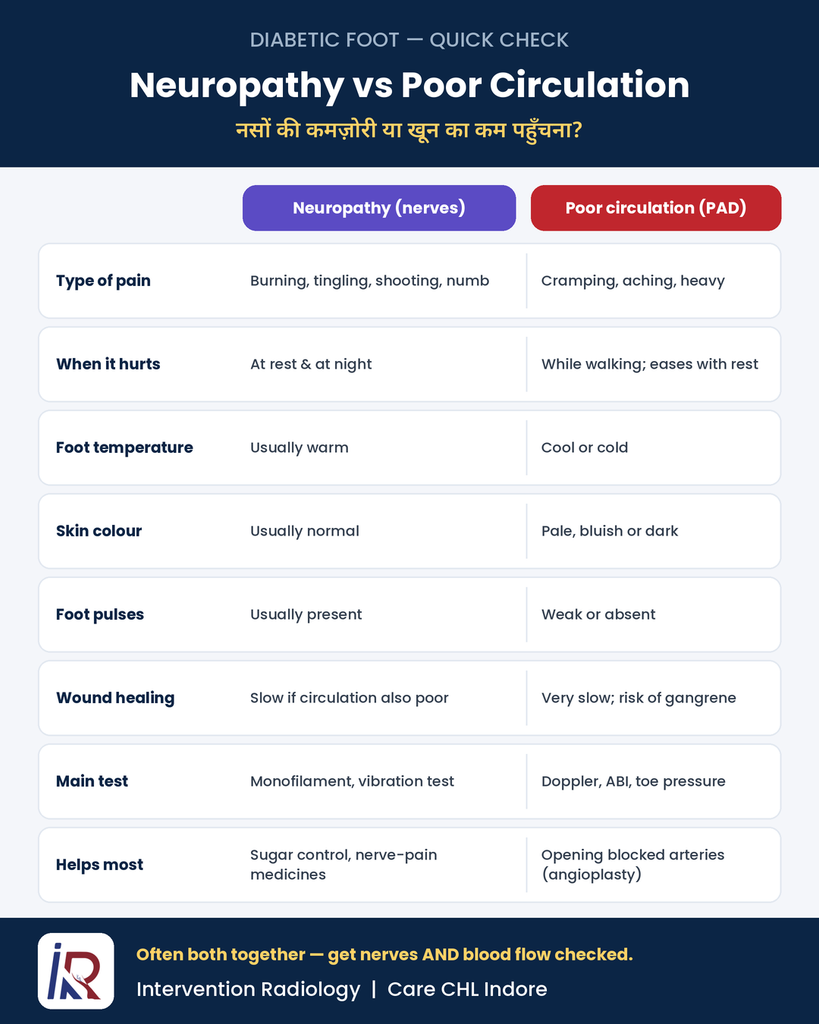
Many people with diabetes have foot pain caused not by nerves, but by blocked leg arteries — a condition called peripheral arterial disease (PAD). Very often, both problems exist together.
| Feature | Diabetic neuropathy | Poor blood circulation (PAD) |
|---|---|---|
| Type of pain | Burning, tingling, shooting, numb | Cramping, aching, heavy |
| When it hurts | At rest and at night | While walking; eases with rest |
| Foot temperature | Usually warm | Cool or cold |
| Skin colour | Usually normal | Pale, bluish or dark |
| Foot pulses | Usually present | Weak or absent |
| Wound healing | Slow if circulation also poor | Very slow; risk of gangrene |
Can Poor Blood Circulation Cause Nerve Damage?
Yes. Nerves need a steady blood supply to stay healthy. When the small and large arteries of the legs are narrowed, nerves receive less oxygen, which can worsen nerve damage. At the same time, neuropathy can hide the warning pain of poor circulation, so a serious blockage may go unnoticed until a wound appears.
Why Diabetes Causes Poor Blood Circulation
High blood sugar, along with high cholesterol, high BP and smoking, damages the inner lining of arteries. Fat and calcium build up, making the arteries stiff and narrow — especially the small arteries below the knee. This reduces blood flow to the feet.
Also Read: Save Limb, Save Life: How Diabetic Foot Ulcers Are Treated Without Amputation
Why This Matters: Saving the Foot
A foot with neuropathy alone can usually heal small wounds with good care. But a foot with neuropathy plus poor circulation is at much higher risk of non-healing ulcers, infection, gangrene and amputation.
That is why every person with diabetic neuropathy — especially with a wound, cold feet or weak pulses — should also have their blood flow checked.
How Interventional Radiology Helps
Nerve damage itself cannot be “opened up”, but blocked arteries can. When poor circulation is found, an Interventional Radiologist can:
- Map the blocked arteries using Doppler ultrasound and angiography
- Open narrowed or blocked leg arteries with balloon angioplasty, sometimes with a stent, through a small puncture in the groin
- Restore blood flow to the foot so that wounds can heal and the risk of amputation falls
This is a key part of limb salvage — saving the foot in people with diabetes.
How to Test for Diabetic Neuropathy in the Feet
Most tests are simple, quick and painless:
- Monofilament test — a thin nylon thread is pressed on different spots of the sole to check whether you can feel light touch. This is one of the most important screening tests.
- Vibration test — a tuning fork is placed on the big toe to check vibration sense.
- Pin-prick and temperature tests — to check sharp and hot/cold sensation.
- Ankle reflex test — a reflex hammer checks reflexes, which are often reduced in neuropathy.
- Nerve conduction study — measures how fast nerves carry signals; done when the diagnosis is unclear.
Tests for blood circulation (equally important):
- Checking foot pulses
- Ankle-brachial index (ABI) and, in diabetes, toe pressure
- Arterial Doppler ultrasound to find blockages
- CT angiography if treatment is being planned
Everyone with diabetes should have a foot examination at least once a year, and more often if neuropathy is already present.
Can Diabetic Neuropathy Be Reversed?
Nerve damage is usually long-term, but its progress can be slowed and symptoms controlled:
- Keep blood sugar in the target range (HbA1c as advised by your doctor)
- Control BP and cholesterol
- Stop smoking and limit alcohol
- Medicines for nerve pain, prescribed by your doctor
- Physiotherapy and balance exercises to reduce falls
- Proper footwear and custom insoles to protect pressure points
- Treat poor circulation if present, as better blood flow supports healing
Daily Foot Care for Diabetic Neuropathy
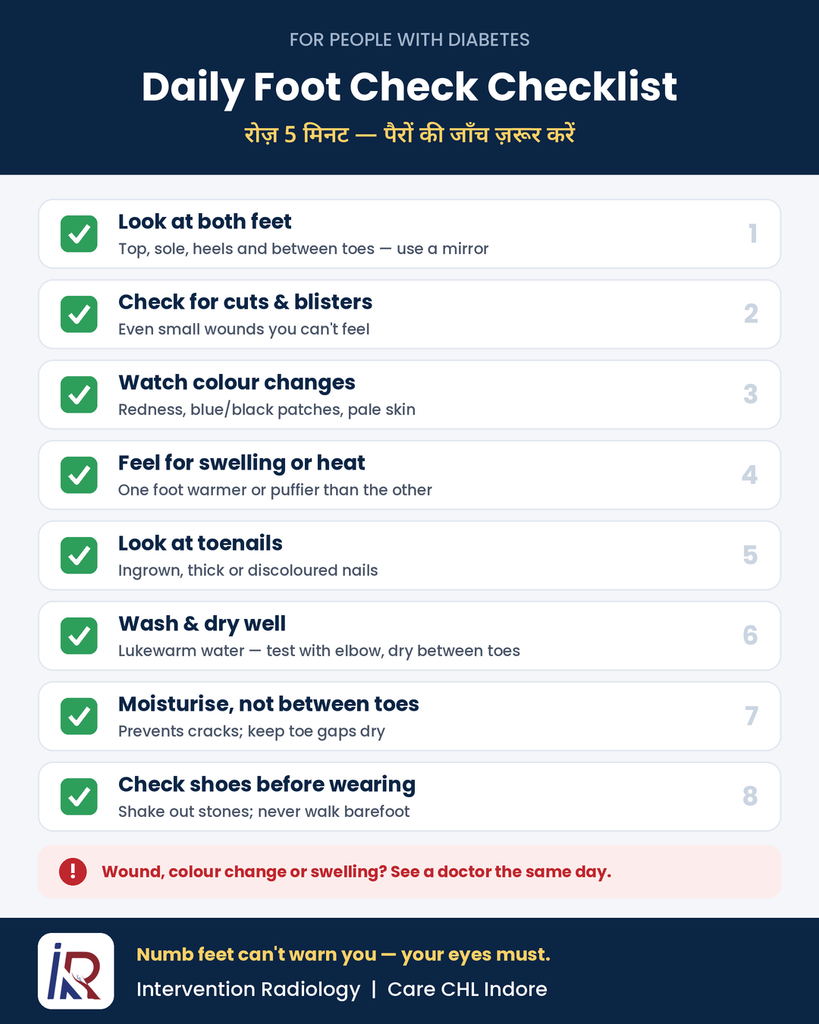
- Check both feet every day — tops, soles, heels and between toes. Use a mirror or ask a family member.
- Wash in lukewarm water — test the temperature with your elbow, not your foot.
- Dry well, especially between the toes.
- Moisturise dry skin, but not between the toes.
- Never walk barefoot — not at home, temples or on the terrace.
- Wear soft, well-fitting shoes and check inside before wearing.
- Cut nails straight across; don’t cut corns or calluses yourself.
- Avoid hot water bags, heaters or soaking numb feet.
Red Flags: See a Doctor Urgently
- A wound, blister or ulcer that is not healing in 1–2 weeks
- Redness, swelling, warmth or pus in the foot
- A toe or part of the foot turning dark, blue or black
- A foot that is suddenly cold, pale and painful
- A swollen, warm, misshapen foot (possible Charcot foot)
- Fever with a foot wound
Diabetic Foot Care in Indore at Care CHL Indore
If you have symptoms of diabetic neuropathy in the feet — especially along with cold feet, slow-healing wounds or a change in skin colour — it is important to check your blood circulation too.
At Care CHL Indore, the Intervention Radiology Indore team led by Dr. Alok Kumar Udiya, Interventional Radiologist, evaluates blood flow to the legs and feet and performs limb-saving angioplasty when arteries are blocked. The team works closely with diabetologists, neurologists and wound-care specialists so that both nerves and circulation are looked after.
[ADD VERIFIED DETAILS: qualifications, years of experience, procedures performed, and facilities such as Doppler ultrasound, cath lab and wound-care unit. Do not add numbers or claims that are not verified.]
Frequently Asked Questions
What are the first symptoms of diabetic neuropathy in the feet? Tingling, burning, “pins and needles” and mild numbness in the toes, often worse at night, are the most common early symptoms.
What are the stages of diabetic neuropathy in the feet? Early (tingling, burning), moderate (spreading numbness, poor balance, constant pain) and advanced (severe numbness, painless ulcers, deformities and Charcot foot).
Why do my feet burn at night if I have diabetes? Damaged nerves send abnormal pain signals, which often feel worse at rest and at night when there are fewer distractions.
Can diabetic neuropathy be cured? Nerve damage is usually long-term, but good sugar control, medicines and foot care can slow it down and reduce symptoms.
How is diabetic neuropathy tested? With simple tests like the monofilament test, tuning-fork vibration test and reflex check. A nerve conduction study is done if needed.
Can poor blood circulation cause nerve damage? Yes. Narrowed arteries reduce oxygen to nerves and can worsen nerve damage. Both problems often occur together in diabetes.
Why is a numb foot dangerous? Because you may not feel cuts, burns or blisters. Small wounds can turn into ulcers and infections without you noticing.
Where can I get diabetic foot circulation checked in Indore? Blood flow assessment and limb-saving treatment are available at Care CHL Indore through the Intervention Radiology team led by Dr. Alok Kumar Udiya, Interventional Radiologist.
Conclusion
The symptoms of diabetic neuropathy in the feet usually begin with tingling, burning and mild numbness, then slowly progress to constant pain, poor balance and, finally, loss of protective feeling. In the advanced stage, painless wounds and deformities can put the foot at serious risk.
The earlier you act — with good sugar control, daily foot checks and regular examinations — the better you can protect your feet. And because poor circulation often hides behind nerve damage, getting your blood flow checked can make the difference between healing and losing a foot.
Burning, numb or slow-healing feet with diabetes? Consult the Intervention Radiology team at Care CHL Indore.
Disclaimer: This article is for general awareness only and is not a substitute for medical advice. Please consult your doctor for advice specific to your condition.